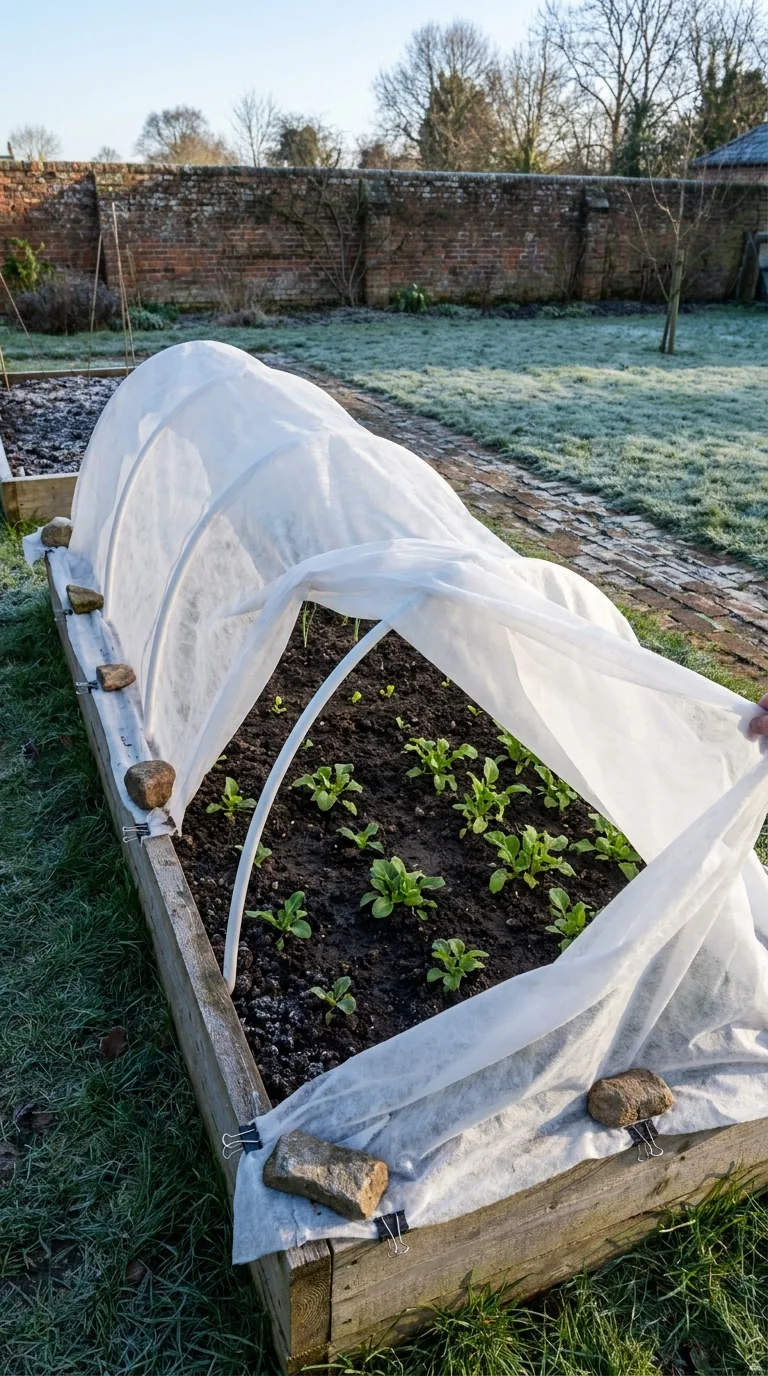
Frost protection reduces risk; it does not turn a tender plant into a hardy one. The best approach combines suitable plant choice, sensible positioning, forecast checks and protection matched to the likely cold. A light fleece cover may help through a modest spring frost, while a tropical plant facing a prolonged hard freeze needs a genuinely frost-free place. Decide which situation you have before relying on a cover.
UK gardens vary substantially by region, elevation, exposure and local topography. Even neighbouring gardens can have different frost pockets. A calendar date provides a planning guide rather than a guarantee. Keep tender plants movable where practical, and have protection ready before a cold evening. Trying to find hoops and repair torn fleece in the dark is a preventable part of many frost losses.
Identify plants that actually need attention
Check the plant's hardiness and its current growth. Tender vegetables such as tomatoes and courgettes need different treatment from established hardy shrubs. New shoots and blossom can be vulnerable even on a plant whose woody framework survives winter well. Young greenhouse-grown plants may also be less prepared for outdoor conditions than established specimens of the same type.
Make a short priority list: tender containers, newly planted specimens, vulnerable emerging shoots and blossom you can realistically cover. Do not spend limited time wrapping reliably hardy plants while leaving tender seedlings exposed. A clear list also helps if someone else will protect the garden while you are away. Include where covers are stored and which plants should be moved indoors.
Hardening off helps indoor-raised plants adjust to outdoor light, wind and temperature, but it does not make a frost-sensitive species frost-proof. Continue watching forecast conditions during the transition. If a cold period is likely, pause the move outdoors or bring trays back to suitable protection. A few extra sheltered days may be less damaging than recovering from a frozen batch of seedlings.
Understand the garden's colder spots
Cold air can collect in low areas or behind barriers, creating a frost pocket. Observe where frost remains longest after a cold night and where tender growth has previously been damaged. A sheltered position near a suitable wall may be milder, but do not assume every wall provides enough protection for every plant. Aspect, exposure, building temperature and the severity of the event all matter.
Use a minimum thermometer in a representative location if it helps you learn the garden. Its placement affects the reading, so keep it consistent and understand that leaf or soil temperatures can differ from the reported air temperature. A general forecast for the nearest town may not fully describe a low, exposed plot. Local observations refine planning but do not replace a forecast of a major cold spell.
Do not create a frost pocket accidentally when redesigning fences or hedges. Where cold-air flow is relevant, discuss it as part of the layout, especially on sloping sites. Avoid removing structural or boundary features casually just because cold air may collect nearby. A planting change or a different position for tender pots may be the simpler response.
Use the forecast as a risk signal
Check overnight lows, duration of cold, wind and the next several days, not only one temperature icon. A brief dip below freezing differs from several nights of severe cold with little daytime thaw. Clear, calm conditions can produce ground frost even when a standard air forecast looks marginal. Allow a sensible margin for local conditions rather than waiting for a forecast exactly matching a plant's stated limit.
Forecast uncertainty increases with lead time. Use an early warning to prepare materials, then refine the action nearer the event. Do not leave tender plants out simply because yesterday's forecast looked mild. Equally, avoid keeping everything sealed under covers for a week after the risk has passed. Protection works best as an active routine with checking, ventilation and removal when suitable.
If you are using a seasonal planting calendar, treat its dates as background planning information. The immediate decision to plant out tender crops should also consider current soil conditions, local forecasts and available protection. A warm afternoon can make a cold-risk decision feel safer than it is. Check the coming night before emptying every seed tray into a permanent bed.
Fit fleece so that it stays useful overnight
Use suitable horticultural fleece or another appropriate breathable cover. Inspect it for holes, wet tangled areas and weak fastenings before the event. Drape or support it so that it protects the plant without crushing delicate growth. Where hoops are used, make sure they are stable and do not leave sharp ends exposed. Secure edges carefully so that wind cannot simply lift the whole cover away.
A cover reaching the ground can retain some warmth released from the soil beneath. An isolated little cap over the upper leaves may provide much less benefit. Leave sufficient space for the plant and avoid tightening material around fragile shoots. Follow the cover's guidance and remember that its protection is limited; doubling a thin layer does not create a heated greenhouse.
Weigh or peg edges with suitable materials that will not damage plants or create a trip hazard. Check the forecast wind as well as temperature. A lightweight sheet that works on a still night may fail in gusty conditions. Keep a practical opening for inspection so that you can uncover or ventilate without dismantling the entire arrangement each morning.
Use cloches and cold frames with ventilation
A cloche or cold frame can shelter small crops and seedlings, but temperatures can rise quickly in sun. Open or ventilate as appropriate during milder daytime conditions, then close before evening cold. Do not leave a clear cover tightly shut simply because the previous night was frosty. Heat stress and poor airflow can damage plants while you are trying to protect them.
Position covers securely, and consider how rainwater will move around them. A cloche that keeps rain off also changes watering needs. Check the medium or soil rather than assuming outside rainfall reached covered roots. Avoid water collecting in trays beneath seedlings. Protection from cold is more successful when roots remain in a suitable, aerated environment rather than a saturated one.
An unheated greenhouse provides shelter but is not automatically frost-free. During hard or prolonged cold, its temperature can still fall below freezing. Know its limits before storing tender plants there. If heating is required, use equipment designed and installed for the setting, with suitable ventilation and electrical safety. Do not improvise open flames or indoor appliances in an unsuitable garden structure.
Move containers before they become difficult to handle
Small tender pots are often easiest to protect by moving them to a suitable frost-free space. Check light and temperature requirements as well as the absence of frost. A warm dark cupboard may keep leaves from freezing while creating another serious problem. Prepare the overwintering position before bringing plants in, and inspect them for pests.
For larger containers remaining outside, choose a sheltered position where appropriate and protect the pot to reduce rapid root-zone cooling. Wrap the container rather than sealing all foliage in impermeable plastic. Keep drainage openings functional. A decorative wrap that traps rain around the base can cause waterlogging, which is a separate winter threat.
Move heavy pots safely and early. A trolley, pot feet or help from another person may be needed, but check stability and the route. Do not attempt to lift an awkward saturated tub in darkness during a frost warning. If a pot cannot be moved, that limitation should influence the plant choice and protection plan before winter arrives.
Protect roots without burying crowns
A suitable organic mulch can moderate conditions around roots, particularly for plants for which that approach is appropriate. Apply to a suitable surface and keep material away from vulnerable stems and crowns. The correct method varies by plant. A moisture-holding mound around a species that dislikes winter wet may create rot rather than helpful insulation.
Do not assume that a root mulch protects all exposed top growth or blossom. It addresses a different part of the plant. A container may need protection around its sides as well as an appropriate surface treatment. Decide which tissues are at risk and choose the method accordingly. Combining measures can help, but only if each has a clear purpose.
Some tender perennial plants are better lifted and stored using species-specific methods, while others can remain with suitable protection in favourable gardens. Check the individual plant's requirements rather than applying one wrapping method to dahlias, bananas, tree ferns and pelargoniums alike. Their storage, moisture and ventilation needs are not identical.
A worked plan for a spring cold warning
Suppose a gardener has six tomato seedlings in pots, a newly planted courgette and a small flowering fruit bush. The forecast indicates a possible overnight frost. The seedlings can return to a suitable sheltered growing space. The courgette needs secure temporary protection or, if conditions are unsuitable, planting should have been delayed. The fruit bush may be covered where practical, with the cover removed or opened for daytime conditions and pollinator access when appropriate.
Prepare before dusk: inspect covers, place supports, move the pots and secure edges. In the morning, check temperatures and plant condition before uncovering. If another cold night follows, repeat the process without leaving plants overheated during the day. This is a sequence of specific actions for specific plants, not a recommendation to wrap every bed in the garden.
For a prolonged severe freeze, reassess the plan. A light cover suitable for a marginal night may be inadequate. The practical response may be to move more plants, use a genuinely protected structure or accept that some tender outdoor planting is too risky. Protection has limits, and recognising them before planting is part of successful garden planning.
Avoid common protection mistakes
| Mistake | Why it fails | Better approach |
|---|---|---|
| Trusting an unheated greenhouse to remain frost-free | Shelter does not guarantee a safe minimum temperature | Monitor conditions and provide appropriate protection |
| Leaving a clear cloche closed in sunshine | Temperatures and humidity can rise quickly | Ventilate according to conditions |
| Covering only the top of a plant loosely | Wind and cold air can enter easily | Fit and secure suitable coverage carefully |
| Ignoring drainage in wrapped pots | Roots may remain saturated | Keep outlets clear and check moisture |
Avoid stimulating vulnerable soft growth with unnecessary late feeding. Keep care matched to the plant and season. Do not prune every tender shrub hard in autumn merely to make wrapping easier; the previous season's framework may have a protective role for some plants. Check species-specific pruning advice before altering the plant to fit a cover.
Respond calmly after a frosty night
Allow plants to thaw naturally and assess the damage over time. Blackened or scorched leaves can look dramatic while lower buds or roots remain alive. Do not immediately discard a valuable perennial solely because its top growth looks poor. Recovery depends on the species, severity and remaining living tissue, and some effects may not become clear immediately.
Avoid hasty hard pruning while further frost is likely. When appropriate for the species and conditions, remove clearly damaged material back to healthy growth. Maintain suitable moisture without keeping an injured root zone saturated. Feeding is not an instant antidote to frozen tissue. Watch for new growth and protect it if another cold spell is forecast.
Check sheltering places for pests as the weather changes. Vulnerable seedlings under covers may also attract slugs and snails. Use targeted slug and snail management where actual damage occurs, rather than leaving protected plants uninspected for days. A cover solves only part of the plant's environment.
Learn from the event
Record which plants were damaged, where they stood, the protection used and the local minimum if measured. Compare sheltered and exposed positions cautiously, recognising that individual plants differ. Repair torn covers and put them away clean and dry when no longer needed. Keep the useful supports together so that the next warning requires less preparation.
Use the experience to refine planting choices and timing. A plant that needs repeated emergency rescue may be better grown in a movable container or replaced with something suited to the site. Good frost planning reduces last-minute effort by matching the garden's cold risks with plants and protection you can manage reliably.

