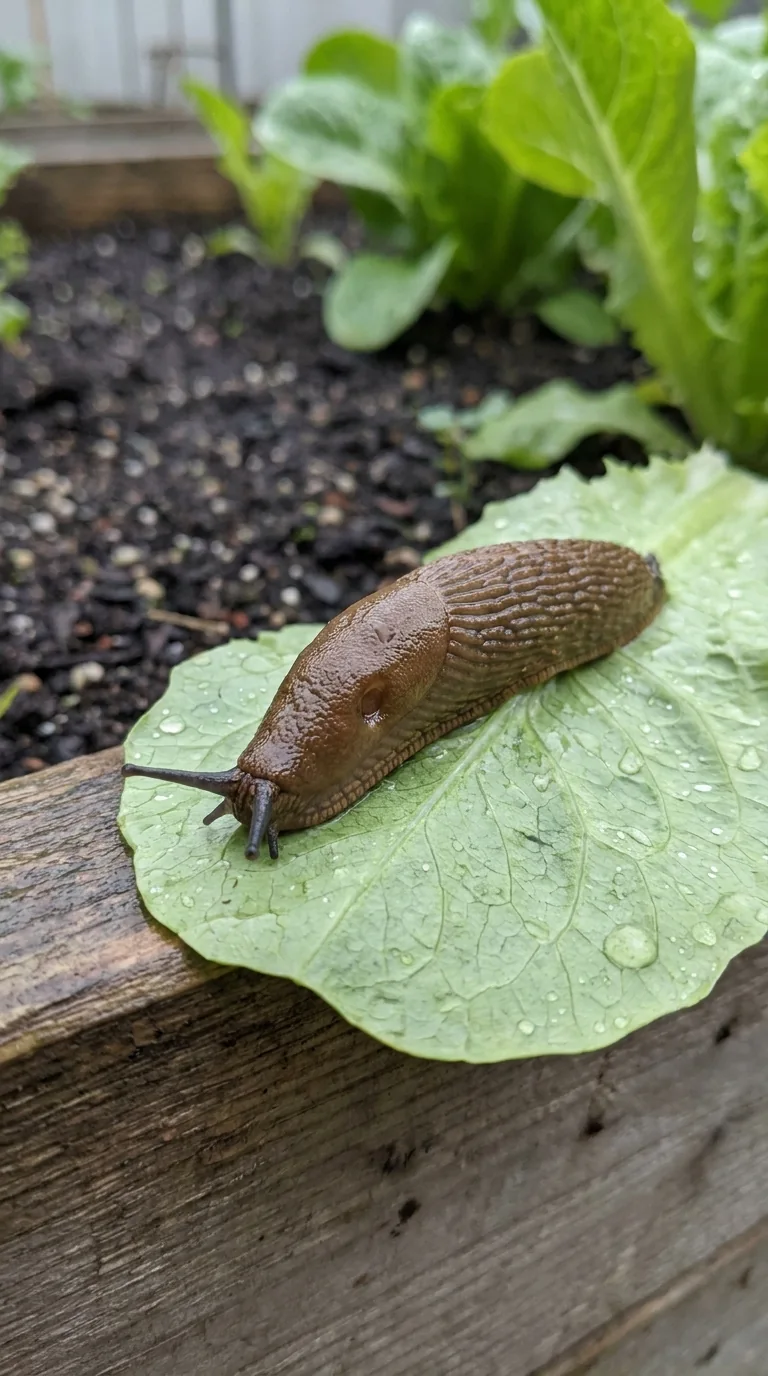
Managing slugs and snails starts with protecting vulnerable plants, rather than trying to remove every mollusc from the garden. They are part of the garden's food web, and many feed mainly on decaying material. A few species can cause frustrating damage to soft seedlings and preferred plants. The useful goal is to reduce losses at those sensitive points while maintaining a garden that supports predators and healthy growth.
A single barrier or household remedy rarely provides a complete answer. Begin by checking that the damage is actually caused by slugs or snails, identify which plants need help and combine practical growing changes with observation. A small tray of newly emerged lettuce needs a different response from a mature shrub with a few ragged leaves. Spend effort where damage threatens establishment or the usable harvest.
Confirm what is eating the plant Look for irregular ragged holes, missing young leaves and slime trails, but do not assume every damaged leaf proves slug feeding. Caterpillars, birds, flea beetles and weather can create other patterns. Check underneath leaves, around pot rims and at the soil surface. A seedling that disappears overnight may have been eaten, uprooted by a bird or lost to stem disease. Examine the remaining stem and nearby soil before choosing a response.
A torchlight inspection after dusk during mild damp weather can reveal feeding that is invisible during the day. Compare the damaged area with nearby undamaged plants and look for fresh changes rather than old holes. Photograph or mark affected leaves if needed. The purpose is not to identify every species perfectly, but to establish whether molluscs are active around the vulnerable crop. Action based on evidence is more useful than repeatedly treating an imagined cause.
Decide how much damage matters Some leaf nibbling is compatible with a healthy, productive garden. Mature plants often tolerate a level of damage that would destroy a small seedling. Set priorities around plants that are repeatedly stripped, newly planted vegetables and crops where feeding spoils the part you intend to harvest. A few holes in older ornamental leaves do not necessarily justify intervention across the entire border.
Keep the scale of the problem in view. Count surviving plants and record whether new growth is being lost. If ten lettuces remain healthy despite minor holes, the current approach may already be sufficient. If most transplants disappear within two nights, the vulnerable stage needs better protection. This distinction prevents spending money on products without defining success. The aim is enough healthy growth to establish and harvest, not a guarantee that every leaf will remain untouched.
Raise sturdier transplants where appropriate For vegetables that tolerate transplanting, raising plants in pots or modules can reduce the time spent as tiny exposed seedlings in a bed. Grow them in good light with sensible spacing and watering so stems are sturdy. Plant out when roots hold the compost together without becoming congested. A larger plant may tolerate some feeding better, although size does not make it immune to severe damage.
Do not apply this approach indiscriminately to crops normally sown in place, such as many root vegetables. Instead, prepare the seedbed carefully and concentrate monitoring on the emerging row. For module-grown crops, inspect the tray before planting because slugs can hide beneath cells and travel with transplants. Check the planting area, including old pots and loose boards nearby. Moving a vigorous seedling into a known feeding hotspot without changing anything may simply postpone the loss.
Keep propagation areas easy to inspect Arrange trays and pots so you can lift and examine them rather than creating inaccessible stacks. Clean unused containers and remove rotting plant debris from immediately around vulnerable seedlings. A simple clear space beside a tray helps you notice activity. Raised staging can improve access, but it is not automatically slug-proof, especially where leaves, supports or stored material form bridges from the ground.
Avoid turning the entire garden into a bare sterile surface. Decomposers and predators need habitat, and removing every leaf or log can undermine the wider system. Concentrate tidying where it has a direct purpose: around seed trays, the base of a tender transplant or the entrance to a greenhouse. Keep habitat areas and composting spaces elsewhere. This targeted approach supports biodiversity while making the crop's most vulnerable stage easier to manage.
Water with both plants and timing in mind Water according to the crop's needs, not as a slug deterrent that leaves seedlings drought-stressed. Where practical, morning watering allows the surface to become less wet before nightfall. Aim water at the roots rather than soaking the entire area unnecessarily. New transplants still need enough water to settle their rootballs; a dry planting hole can cause failure independent of any feeding damage.
Check soil or compost before watering again. Repeated shallow evening sprinkling may maintain a moist surface without adequately wetting the roots. A more deliberate application to the root zone can make better use of water. Weather and container size still determine frequency. During a hot spell, a plant that genuinely needs water should receive it. The principle is efficient care with thoughtful timing, not withholding water in the hope that slugs will disappear.
Inspect at times when activity is visible Make short targeted searches around the plants currently at risk. Damp mild evenings often provide more useful observations than a midday inspection during dry weather. Use a torch and examine the underside of pots, the edges of covers and the immediate surface around seedlings. Wear gloves if preferred and wash hands after handling garden animals and soil, especially before preparing food.
Where appropriate, move collected slugs and snails to a less vulnerable part of your own garden, such as an established composting area. Some may return, so relocation is not a guaranteed permanent barrier. Do not dump garden animals into neighbouring plots or natural habitats. Keep the focus on the threatened crop and continue checking new growth. A few minutes of observation across several evenings can reveal whether the damage is declining or whether a different protection method is needed.
Treat popular barriers as experiments Copper tape, eggshells, sharp grit, wool pellets and rough mulches are often promoted as dependable slug barriers. Their performance in real gardens is variable, and some widely repeated claims are not supported by convincing garden-scale results. Moisture, gaps, bridges of leaves and the presence of animals already inside a barrier can all affect what happens. A material that appears repellent in one setting does not automatically protect every crop.
If trying a barrier, use a small manageable trial and judge fresh damage rather than trusting the product's appearance. Check whether leaves touch surrounding plants or soil and whether the barrier remains continuous. Do not assume that adding a thicker layer will solve a method that is failing. Avoid buying large quantities before seeing a useful result in your own setting. A barrier can be part of a plan, but it should not replace regular checks during a seedling's most vulnerable period.
Use physical covers for a defined purpose A suitable cloche or other protective cover may help shelter sturdy transplants, but it needs ventilation and inspection. Check that animals have not already been enclosed with the crop. Secure the cover against wind and ensure it does not crush growth. A closed transparent structure can overheat quickly in sunshine, so monitor the temperature as well as feeding damage.
Fine mesh and rigid guards serve different purposes, and neither should be described as universally slug-proof. Gaps at soil level, buried animals and leaves crossing the boundary can defeat a simple enclosure. Choose a design you can lift and inspect easily. Keep fixing materials safe for wildlife, avoiding loose netting that can trap birds or mammals. The most useful cover is one whose limits you understand and whose condition you are willing to check.
Encourage predators through a varied garden Ground beetles, birds, frogs, toads and other wildlife can contribute to a functioning garden food web. Provide varied planting and suitable undisturbed shelter, and avoid broad interventions that damage animals you want to encourage. A garden pond, where appropriate and safely planned, can support wildlife, but it is not an instant control device or a reason to introduce animals from elsewhere.
Predators do not eliminate every feeding slug, and their presence does not mean no crop protection will be needed. Think of habitat as a long-term part of garden health. Keep some sheltered areas while making the immediate seedling zone easier to inspect. Avoid expecting a hedgehog, frog or bird to perform a guaranteed service on demand. A resilient garden combines habitat with sensible plant choice and focused protection, rather than relying entirely on one helpful species.
Consider biological controls only with clear limits Where damage remains serious, a commercial biological control may be considered for a defined area using the current product's instructions. Check which organisms it targets, the required soil conditions, application timing, storage and expiry. A living product cannot be treated like an indefinitely stored bottle on a shed shelf. Conditions need to support its activity for the application to be worthwhile.
Do not assume a treatment aimed at slugs will also control snails, or that a biological label means no effect on other slug species. Target the area where vulnerable plants actually need protection. Keep soil conditions within the product's stated requirements rather than watering blindly. Product availability and instructions can change, so read the current label rather than copying an old recipe. If the weather or soil is unsuitable, improving crop establishment and monitoring may be the better immediate action.
Avoid damaging household remedies Salt, concentrated cleaning products and improvised chemical mixtures are poor choices around soil and plants. A substance that harms a slug can also damage roots or other organisms. Do not apply kitchen materials simply because they are familiar or described online as natural. Likewise, a bait or trap can catch unintended animals, create maintenance demands and require frequent inspection; it is not automatically a harmless passive solution.
This guide prioritises cultural care, suitable physical protection and observation. If considering any commercial pesticide, its current authorisation, label and suitability matter, and it should not be treated as a routine default. Broad application across a garden is a different decision from a narrowly targeted response. Do not combine unverified recipes in the hope of increasing effectiveness. One clear, monitored intervention is easier to assess than several changing treatments whose individual effects cannot be distinguished.
Change planting choices where losses repeat If a particular ornamental is stripped every season in a damp shaded corner, consider whether it is well matched to that position. Plants with tougher or less appealing foliage may be more practical, although no general list guarantees immunity. Choose alternatives for the light, soil and moisture available, not only for a claim of slug resistance. A plant unsuitable for the site will remain vulnerable to other stresses.
Vegetable choices can also reduce frustration. Raise a manageable number of healthy transplants, avoid overcrowding and allow room to inspect the bed. Try the most vulnerable crops in a more accessible place rather than repeating them in the same hidden corner. Keep a few useful spares during the establishment period where space allows. This is a way of matching the growing method to the garden, not a requirement to abandon every plant that has ever been nibbled.
Keep a simple comparison
If evaluating a change, keep the rest of the growing method reasonably consistent. Compare similar plants in comparable conditions rather than a strong transplant in sun with a weak seedling in shade. Record fresh damage and survival over several checks, including the weather. A result from one wet week remains local evidence, but it is more useful than a claim based only on whether a slug crossed a material once. Stop a method that is costly or difficult to maintain without giving a meaningful reduction in crop loss.
Review the result and adjust After choosing a method, record the date, weather and number of healthy plants. Check fresh growth over the following days and repeat short observations when conditions favour activity. A successful outcome might be seedlings establishing with minor damage, rather than a garden with no visible molluscs. If plants still decline without fresh feeding, reconsider the diagnosis instead of adding another slug treatment automatically.
Water stress can cause poor establishment and make damaged plants slower to recover. The overwatering and underwatering guide helps separate those problems from feeding losses. Keep the response proportionate: identify the cause, protect vulnerable stages, support healthy growth and retain useful habitat. A few targeted actions that you can maintain consistently are more dependable than an elaborate barrier system whose condition is never checked after installation.

