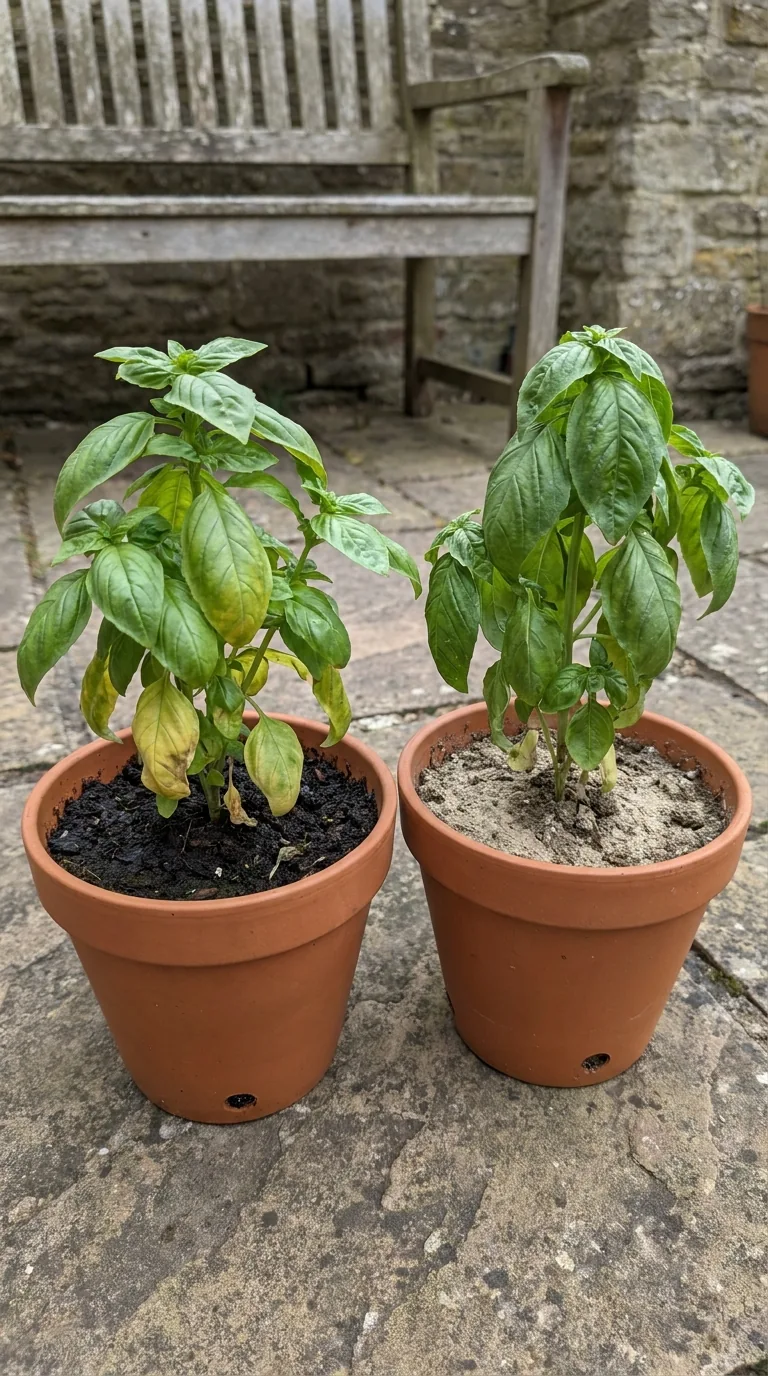
A wilting plant may need water, but it may also have roots that are too wet to function well. Yellow leaves, drooping stems and poor growth occur in both situations, which makes diagnosis from foliage alone unreliable. The most useful next step is to inspect the soil or compost and consider the plant's recent conditions before reaching for the watering can.
Overwatering is not simply using a large quantity once, and underwatering is not defined by the number of days since the last drink. The important issue is the root environment over time. A freely draining pot watered thoroughly may be healthier than one given small daily top-ups that remain cold and saturated. Plant type, growing stage, weather, container size and drainage all influence the right response.
Start with the pattern and the history Ask when the change began and what happened beforehand. Was the plant recently repotted, moved indoors, exposed to wind or left during a dry weekend? Has the weather become cooler while watering continued unchanged? Is only one pot affected, or are plants across an entire bed declining? These details help separate a local container problem from a wider environmental event.
Look at which leaves are changing. Older leaves naturally age, while widespread rapid yellowing or collapse deserves closer attention. Brown edges can follow several types of stress and do not prove drought by themselves. Note whether the plant wilts only in strong midday sun or remains wilted the next morning. Avoid diagnosing from a single photograph or one damaged leaf. A simple record of symptoms and conditions can reveal a more useful pattern than a list of supposedly definitive visual signs.
Check moisture below the surface Feel the growing medium beneath the top layer where it is safe and practical. A dry-looking surface can cover wet compost, especially in a deep container. Conversely, a light shower can wet the top while the rootball remains dry. Lift a small pot to assess its weight and compare it with how it feels after thorough watering and drainage. This becomes a useful guide with practice.
In a garden bed, check soil near the roots without damaging them, rather than judging an unrelated patch beside the path. Moisture varies with shade, plant cover and drainage. A basic moisture meter may offer another clue, but readings depend on the instrument, medium and placement. Do not let one number replace observation. Combine the result with touch, pot weight and the plant's recent history before deciding whether to add or withhold water.
Recognise evidence of inadequate water A dry rootball, unusually light pot and wilted foliage together support a diagnosis of water shortage. Compost may have pulled away from the pot wall, allowing water to bypass it down the sides. Leaves may become dull, curl or develop dry margins, but those symptoms are supporting evidence rather than a stand-alone test. New transplants can suffer even when surrounding garden soil seems moist if their original rootballs have dried.
Plants in small pots, hanging baskets, windy sites or greenhouses may use water quickly. A mature plant with dense roots can exhaust its supply much faster than a newly potted seedling. Check whether the container is sheltered from rain beneath eaves or foliage. If only the top is watered lightly, lower roots may still be dry. The question is whether water reaches the active root zone, not whether the plant was technically watered yesterday.
Recognise evidence of prolonged excess water Compost that remains saturated, a heavy pot that never seems to lighten and water collecting in a decorative outer pot suggest excessive moisture or poor drainage. Leaves may yellow or wilt because damaged roots cannot supply them properly. Adding more water to that wilt can make the problem worse. Cool conditions, low light and a large volume of unrooted compost can all slow drying.
A sour smell, decaying stem base or soft roots warrants closer assessment, although no single feature identifies the cause with certainty. Waterlogging and root disease can produce similar symptoms, and they may occur together. Check whether holes are blocked, the pot is standing in a saucer or garden soil remains waterlogged after rain. Overwatering may be a management problem, a container problem or a symptom of a site that cannot drain; correcting only the schedule may be insufficient.
Inspect roots only when it will help For a manageable potted plant, gently slide out the rootball if symptoms and moisture checks justify it. Support the plant and avoid pulling by the stem. Examine both the outer roots and the centre of the compost. A dry centre can remain hidden inside an apparently wet pot, while dense roots around the edge can restrict infiltration. Do not repeatedly unpot a healthy plant just to check it.
Healthy roots vary in colour by species and age, so pale roots are not the only healthy possibility. Firmness and the presence of decay are often more useful than colour alone. Soft, easily sloughing roots or a badly rotten stem base suggest serious trouble. If an established garden shrub is declining, excavating all its roots can cause further damage. Assess drainage, planting depth and history first, and seek a reliable diagnosis where the problem is persistent or valuable plants are affected.
Rehydrate a genuinely dry container carefully Move a stressed movable plant out of harsh sun and drying wind while it recovers, keeping it in suitable light rather than deep darkness. Water slowly in stages so the growing medium has time to absorb moisture. If water immediately runs down the sides, check whether the central rootball remains dry instead of assuming drainage proves the job is complete.
For suitable small pots with very dry compost, a brief controlled soak can help rewet the rootball, followed by full drainage. Do not leave the plant submerged indefinitely, and do not apply this indiscriminately to plants whose crowns or roots dislike prolonged wetness. Check again after watering to confirm moisture has reached the roots. Some leaves will not regain their original appearance even if the plant recovers, so judge new growth and firmness rather than expecting brown tissue to turn green again.
Help a wet plant regain a suitable root environment Stop automatic watering and remove standing water from saucers or decorative containers. Ensure drainage holes are open and the pot is not sitting where they are sealed against a surface. Move the plant to appropriate light and temperature, avoiding a sudden blast of heat intended to dry it rapidly. The aim is gradual restoration of a healthy root environment, not forcing the leaves to lose water faster.
Repot only when the condition warrants it. A badly unsuitable medium, severe overpotting or damaged roots may need correction, but repotting every slightly wet plant adds unnecessary stress. Choose a suitable draining medium and a pot matched to the remaining root system. Remove clearly dead tissue carefully with clean tools where appropriate. If there is suspected root disease, identify the problem and avoid spreading affected compost or water among plants. Recovery depends on living roots and stems, so some severely decayed plants cannot be rescued.
Check pot size and drainage together A small plant in a much larger pot may have roots occupying only a small part of the compost. If the whole container is repeatedly soaked, unused wet medium can remain around the roots for too long. Potting on in sensible stages makes watering easier. Equally, a mature plant tightly packed into a small container may dry rapidly and need a larger suitable root space.
Drainage holes are essential for ordinary container growing, but their presence alone does not guarantee good drainage. Check that holes are open and excess water has somewhere to go. A layer of stones in the bottom does not automatically correct an unsuitable medium or sealed outer pot. Select the compost for the plant and container use. Plants adapted to free-draining conditions need a different root environment from moisture-loving species, so one universal recipe is rarely appropriate for an entire collection.
Distinguish container problems from wet garden soil In a bed, standing water may reflect compacted soil, a high water table, an obstruction or the natural properties of the site. Do not assume that adding a handful of grit around one plant will solve it. Observe how long water remains after rain and whether neighbouring areas behave similarly. Avoid working or repeatedly walking on saturated soil because compaction can make later management more difficult.
Organic matter can improve many soils over time, but it is not a guaranteed drain. Raised beds or different planting choices may be practical where the root zone remains unsuitable, provided water movement and site limitations are understood. Do not divert drainage onto neighbouring land. If flooding or persistent waterlogging is substantial, obtain suitable site-specific advice. A plant that dislikes wet roots may need a different position rather than repeated emergency treatments in a place that continues to flood.
Allow for weather and seasonal growth Water use changes with light, temperature, wind, humidity and the amount of foliage. A plant actively growing in June may need far more water than the same plant resting in a cool bright place in winter. Indoor heating can dry some plants, while low winter light reduces the demand of others. Calendar-based rules such as twice a week cannot capture those differences reliably.
Peat-free composts vary in their ingredients and moisture behaviour. Learn how a particular mix feels and drains rather than assuming all products behave identically. Group pots with similar needs where practical, but inspect individual plants. Rainfall is not a substitute for checks where foliage, walls or roofs intercept it. After a weather change, review the watering routine immediately. Continuing a summer schedule through a cool wet spell is a common way to create problems that were absent a few weeks earlier.
Do not confuse water stress with every other problem Wilting or yellowing can also follow root damage, disease, pests, nutrient imbalance, low light, temperature shock or natural ageing. If moisture appears suitable, investigate those alternatives rather than alternating between heavy watering and prolonged drying. Inspect leaf undersides, stems and the growing point. Check whether a recent move changed several conditions at once. A plant can also have more than one problem, such as damaged roots and excessive sun.
Avoid giving strong fertiliser as an immediate response to a distressed plant. Feeding does not repair dead roots and may add stress when uptake is poor. First restore suitable growing conditions and identify the cause. Keep treatments separate and record what changed so that any improvement can be interpreted. If the plant remains in decline despite sensible moisture and drainage, seek a crop- or species-specific diagnosis rather than repeating the same rescue steps indefinitely.
Monitor recovery with realistic expectations After correcting a likely water problem, allow time for the plant to respond. Some dry plants regain firmness fairly quickly, while damaged roots may need much longer to support growth. Brown or yellow tissue generally does not become healthy green leaf again. Look for stable stems, healthy growing points and appropriate new growth. Remove dead material when it can be done without stripping the plant of useful foliage.
Record the amount and method of watering, then check the medium before the next application. This develops a routine based on evidence rather than anxiety. If a plant repeatedly cycles between drought and saturation, reconsider the container, medium or position. A slightly larger suitable pot, less exposed location or different plant choice may solve the recurring problem more effectively than increasingly complicated reminders. The right response is the one that keeps the root zone suitable over time.
Establish seedlings without avoidable shock Young transplants need particular attention because their roots occupy a small volume and may not yet reach surrounding moisture. Water the rootball before planting when needed, settle the soil carefully and inspect afterwards. Do not assume a watered bed has automatically rehydrated a dry plug. At the same time, do not create a permanently flooded planting hole around a seedling that needs air as well as water.
The hardening-off guide explains how to reduce stress when moving protected plants outside. Combine gradual acclimatisation with sensible moisture checks, suitable spacing and weather-aware planting. When a plant droops, pause and inspect before acting. The most reliable distinction between too wet and too dry comes from the roots and growing medium, supported by the plant's history, rather than a single symptom on the leaves.

