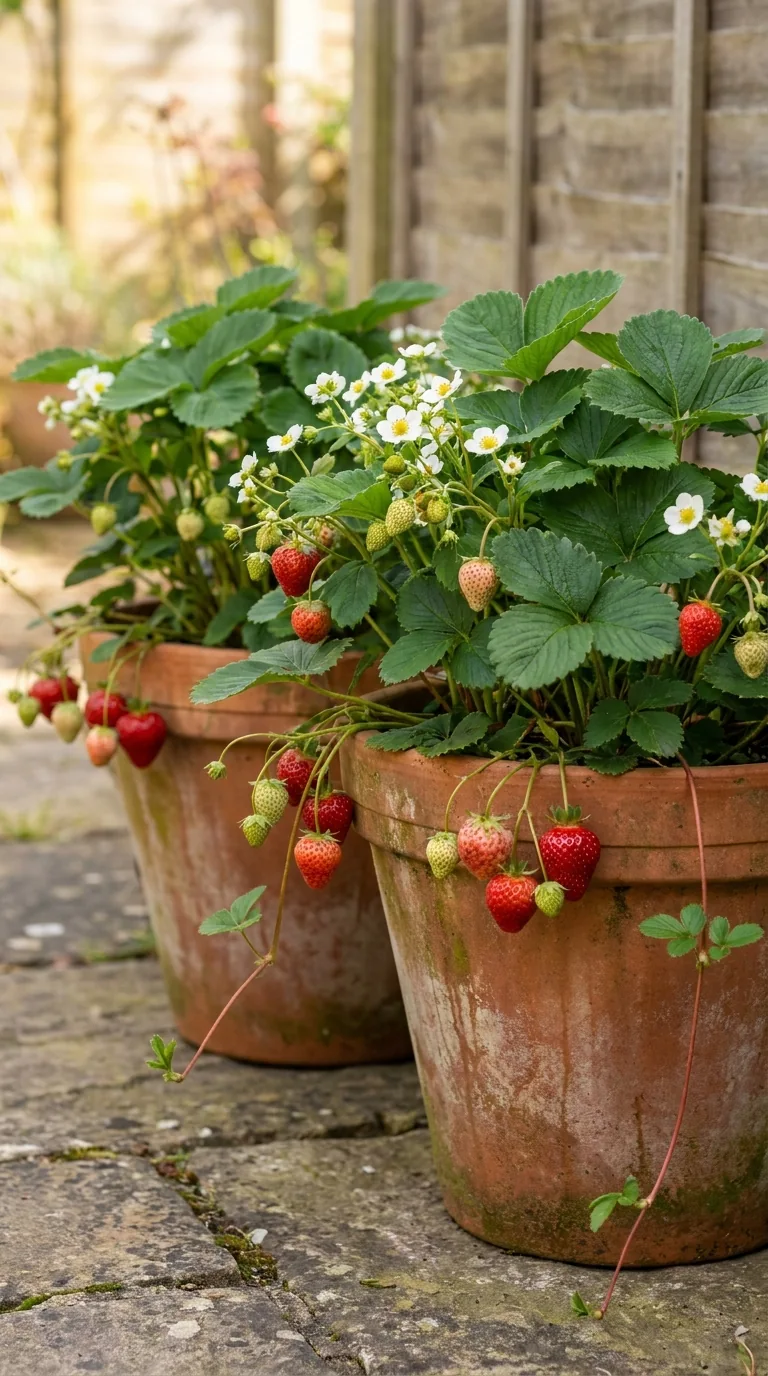
Strawberries suit a patio because their roots can grow in containers while the fruit hangs within easy reach. A few well-managed pots can give worthwhile picking without a dedicated bed, but containers need deliberate watering and renewal. They are not a way to avoid aftercare. The limited root space dries more quickly than garden soil, and an overcrowded collection of runners can soon produce fewer useful berries.
Begin with healthy named plants, enough compost for their roots and a position that receives good light. Choose the strawberry type according to the harvest you want, then manage flowers, runners and water around that choice. A summer-fruiting plant, a perpetual strawberry and a tiny alpine strawberry do not produce the same pattern of fruit, even when grown in identical pots.
Choose a cropping pattern before buying
Summer-fruiting strawberries give their main crop over a relatively concentrated period. Early, mid-season and late varieties can extend the overall season if you have room for several pots. They are useful when you want enough fruit at once for a dessert or preserving. Read the cultivar description for timing in UK conditions, remembering that weather and location can shift the dates.
Perpetual or everbearing types produce flowers and fruit over a longer period, usually in repeated flushes rather than an uninterrupted daily harvest. They may suit occasional patio picking. In colder locations the last flowers may not develop into ripe fruit before autumn weather changes. A long advertised season is an opportunity under suitable conditions, not a guarantee for every balcony.
Alpine strawberries have smaller fruits and a different growth habit. Some are raised from seed, while standard garden strawberries are usually started from plants. Do not expect a packet of alpine seed to produce supermarket-sized berries. Choose the crop that fits how you will use it, and avoid combining several unlabelled types if you later want to renew the collection accurately.
Buy healthy plants and understand their starting point
Look for a firm crown, healthy central growth and roots that hold the compost together without filling the pot as a dense, dry mat. Avoid plants with widespread leaf spotting, collapsing crowns or persistently soggy compost. Certified or reliably sourced planting material reduces the risk of beginning with an avoidable problem, although no plant is guaranteed to remain disease free.
Young pot-grown plants, bare-root runners and cold-stored plants can have different planting and cropping instructions. Follow the supplier's guidance for the particular material rather than applying one rule to every purchase. A small newly rooted runner needs time to establish; a specially prepared plant may be intended for a more specific harvest schedule.
Keep cultivar labels with the pots. They help you identify which plant cropped when and whether you want to keep its runners. If buying a mixed collection, check that each item is labelled individually. Photographs and brief notes at harvest are more dependable than trying to remember which of several similar leaves belonged to the sweetest berry.
Choose containers for roots and watering access
Individual pots, troughs, hanging baskets and purpose-made strawberry planters can all work. The container must have open drainage holes and enough compost to resist rapid drying. A modest individual pot can accommodate one plant, while a trough needs spacing that allows each crown to develop without being buried beneath its neighbours. Follow the plant supplier's spacing and avoid packing plants solely for an immediate display.
A practical starting point for a standard plant is a pot roughly 20–25cm across with useful depth, while a larger volume is easier to keep evenly moist. These are container-management examples, not an exact requirement for every cultivar. Shallow containers and baskets require particularly frequent summer checks. Think about whether you can reach the root zone with a watering can once foliage expands.
In a tall multi-pocket planter, the upper pockets may dry differently from the lower ones. Water does not always distribute evenly through the whole structure. Check each level and avoid assuming that water emerging at the base has reached every rootball. A simple trough may be easier for a beginner to manage than a decorative tower with inaccessible pockets.
Plant the crown at the correct level
Use a suitable peat-free multipurpose or container compost. Moisten it before planting and leave room below the rim for water. Position the strawberry so the roots are covered but the crown sits at the surface. Burying the crown can encourage decay, while leaving roots exposed above the compost allows them to dry. Take time to identify the crown rather than guessing from the longest leaf stalk.
Spread bare roots carefully according to the supplier's instructions and avoid folding them into a tiny hole. With pot-grown plants, retain the rootball and settle compost around it. Firm gently and water to close air gaps. If settling leaves the crown too low, correct the level promptly rather than covering the whole plant with more compost.
Spring and late summer to early autumn are common planting periods, depending on the material and local conditions. Avoid planting into frozen or saturated compost, and give autumn plants enough time to establish before harsh weather. Summer planting can work with appropriate material and close watering, but a hot, windy weekend is a difficult moment to leave newly planted pots unattended.
Position for light, airflow and pollination
Choose a sunny position for the best chance of good ripening and flavour. Light shade is possible, particularly for some alpine types, but standard strawberries generally crop better with more sun. A sheltered patio suits them well if air can move around the leaves. Avoid pushing pots so tightly together that damp fruit rests beneath a dense canopy.
Flowers need pollination for well-shaped fruit. Outdoor plants are generally accessible to visiting insects. If you grow them under cover for earlier production, open vents or doors when conditions permit and consider gentle hand pollination where insect access is limited. Do not keep an insect-proof cover sealed over flowering plants and then assume misshapen fruit proves a fertiliser shortage.
Protect open flowers if a damaging frost is forecast, using appropriate temporary fleece or cover. Remove or open protection during suitable daytime conditions so pollinators can reach the flowers. Protection reduces exposure but does not guarantee every flower will survive. A darkened flower centre after frost may indicate that particular flower will not develop normally.
Water steadily as fruit develops
Containers need regular moisture checks through the growing season. Check beneath the surface and water before the rootball becomes repeatedly dry. Apply water to the compost rather than soaking ripe fruit, and let excess drain away. Large fluctuations between dryness and saturation can reduce plant performance. There is no single daily volume that suits every pot size and weather pattern.
A hanging basket can dry quickly in wind even on a day that is not particularly hot. A pot near a wall may miss rainfall entirely. Dense leaves can also shed rain away from the crown. Check the rootball rather than treating a wet leaf as proof that the container has been watered. Where possible, group pots for convenient inspection without allowing their leaves to smother one another.
During fruit swelling, avoid severe moisture stress. If a pot has dried hard, rewet it gradually and allow drainage rather than adding fertiliser to the dry rootball. Keep the crown clear and remove damaged fruit promptly. After the main harvest, continue watering as needed because the plant still needs healthy roots and foliage for future growth.
Feed according to the potting medium
Fresh compost has an initial nutrient supply. Check its label and the supplier's instructions before adding fertiliser immediately. Once flowering and fruiting are under way, container strawberries may benefit from a suitable high-potassium liquid feed at the product's rate. A feed intended for edible fruiting plants is more appropriate than an improvised mixture of household ingredients.
More feed does not automatically mean sweeter berries. Excess nitrogen can encourage leafy growth at the expense of a balanced crop, and concentrated fertiliser can damage roots. If fruit is poor, inspect light, pollination, watering and plant age as well as nutrition. A heavily shaded plant will not behave like a sunny one simply because you double the feed.
Keep a record of applications if several people care for the pots. This avoids accidental repeated feeding. If using a controlled-release product, account for it when deciding whether additional liquid feed is needed. The most useful routine is a consistent one that matches the product and growing conditions, rather than changing formulations whenever a leaf looks slightly different.
Keep fruit clean and protected
Raise developing berries away from damp compost where practical. A clean suitable surface mulch or a container edge that allows fruit to hang freely can reduce direct contact, but avoid burying the crown. Check underneath clusters, where damaged berries can remain hidden. Remove fruit showing decay promptly so it does not sit against sound berries.
Bird protection should be supported above the plants and kept taut and secure. Loose netting draped among the fruit can trap wildlife and makes picking awkward. Choose an appropriate wildlife-conscious system, inspect it frequently and maintain access for pollination while plants are flowering. A properly managed fruit cage is more convenient than repeatedly pulling a tangled sheet on and off.
Slugs and snails can damage ripe fruit, especially near damp hiding places. Inspect pot rims, undersides and nearby debris. Keep the patio tidy enough to see what is happening without removing every useful garden habitat. Any plant-protection product must be appropriate and currently authorised for strawberries, used exactly according to its label and harvest interval.
Manage runners deliberately
Runners are long stems that produce young plants at nodes. They are useful for propagation, but allowing every runner to root in a fruiting container creates congestion. Remove unwanted runners while they are small, particularly where you want the parent plant to concentrate on establishment and fruiting. Use clean scissors rather than pulling hard on the crown.
To make replacements, select healthy parents that cropped well and show no concerning disease symptoms. Peg a suitable young plantlet into a separate small pot of compost while it remains attached, then keep it watered until rooted. Once it has a sound root system, sever the connecting runner. Do not assume a newly formed plantlet can immediately tolerate drying or a large fruit load.
Propagating from unhealthy old stock can carry problems into the new pots. Periodic renewal with reliable fresh planting material is sensible, especially if the existing collection declines. Standard garden strawberries often become less productive after a few seasons, but the timing varies. Judge actual cropping and plant health rather than discarding a good plant merely because a calendar says it has reached an exact age.
Pick ripe fruit and handle it gently
Harvest when the berry has developed its cultivar's ripe colour and separates with a short stalk attached. Strawberries do not improve in the same way as some fruit after picking, so avoid harvesting hard pale berries expecting them to become equally sweet indoors. Check daily or every other day during the main flush, because ripe fruit can deteriorate quickly in wet or hot conditions.
Use a shallow container and avoid piling berries deeply. Pick in dry conditions when possible, but do not leave overripe fruit indefinitely because the weather is inconvenient. Refrigerate promptly if you will not eat them soon, and wash close to use rather than leaving wet berries packed together. Remove any mouldy or damaged fruit from the batch.
A container crop may provide small repeated harvests rather than large bowls. Record which pots produced useful amounts and when. If you need more fruit at a particular time, choose additional suitable varieties and sufficient root space next season rather than crowding the existing container. Harvest planning starts with plant choice, not only with extra feeding after flowers appear.
After harvest and winter care
Remove dead or badly damaged leaves while retaining healthy growth appropriate to the strawberry type. Traditional post-harvest tidying of summer-fruiting plants is different from cutting back a perpetual plant that is still flowering and cropping. Check the cultivar and avoid applying one severe trimming routine indiscriminately to every pot.
Maintain drainage through autumn and winter. Clear fallen debris and move vulnerable containers away from standing water. Strawberries generally tolerate outdoor winter conditions, but exposed roots in small pots can be more vulnerable than roots in the ground. A sheltered position can help during severe weather, while keeping plants in sufficient light and avoiding unnecessary indoor warmth.
Review the collection before the next season: retain healthy productive plants, root only the runners you need and renew tired compost or pots where appropriate. For another patio fruit requiring a distinctly different growing medium, growing blueberries in the UK explains why acidic compost and suitable water are central to long-term success.

