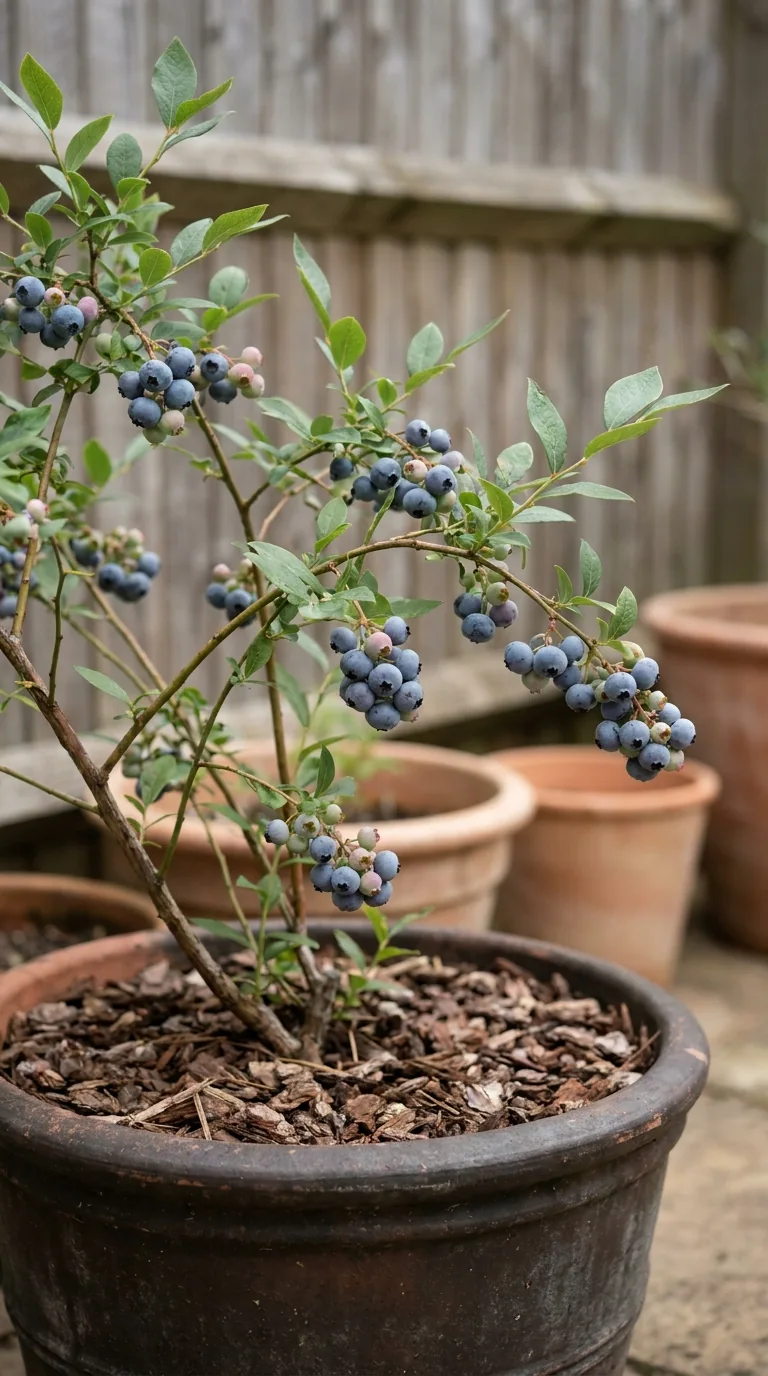
Blueberries are attractive patio fruit bushes, with spring flowers, summer berries and often colourful autumn foliage. Their central requirement is an acidic root environment. If your garden soil is neutral or alkaline, a large container of suitable ericaceous compost is usually a more manageable starting point than trying to change a whole border. A blueberry planted into ordinary compost may survive initially while gradually developing poor growth and yellow leaves.
Container success also depends on water. Blueberries need moisture without waterlogging, and repeated use of hard tap water can make maintaining acidity more difficult. Set up the pot, drainage and water supply before buying several bushes. A smaller collection you can maintain consistently is more productive than many plants competing for the last water in a butt during summer.
Understand acidity before choosing a site
Blueberries commonly need a growing-medium pH around 4.5–5.5. This is considerably more acidic than the conditions preferred by many ordinary garden crops. Test the soil if you plan to plant in the ground, taking representative samples rather than judging acidity from colour or texture. Dark soil is not necessarily acidic, and healthy plants elsewhere in the garden do not prove the site suits blueberries.
If the soil is naturally suitable, a border can provide ample root space and a stable moisture supply. Avoid a position that stays waterlogged in winter. If soil is chalky or otherwise alkaline, do not assume a planting hole filled with ericaceous compost will remain isolated from its surroundings. A container gives clearer control over the root medium and avoids a continuing attempt to acidify an unsuitable area.
Use a peat-free ericaceous compost intended for acid-loving plants. Ordinary multipurpose compost is not an equivalent substitute simply because the bag contains organic ingredients. Avoid adding lime, wood ash or lime-rich rubble. General garden compost and some manures can raise pH or provide an unsuitable nutrient balance, so choose mulch and feed specifically with the blueberry's requirements in mind.
Choose cultivars for the available space
Read mature height and spread before buying. Standard highbush blueberries can become substantial shrubs, while compact selections are easier to accommodate on a small patio. A plant marketed as suitable for containers still needs room, water and periodic repotting. Do not expect the small nursery pot to support it permanently just because it arrived with flowers.
Choose cultivars with overlapping flowering periods if growing more than one. Many blueberries can crop alone to some extent, but a compatible different cultivar can improve pollination and fruiting. A second plant is not useful as a pollen partner if its flowering barely overlaps. Ask the nursery to confirm suitability rather than assuming any two labels form a reliable pair.
Early, mid-season and late cultivars spread the picking season, but late fruiting can be less dependable in a short, cool season. Match the selection to your location and shelter. A hardy bush can still lose flowers to frost or fail to ripen every late berry. Winter survival and reliable cropping are related but different questions.
Choose a container you can maintain
Start with a pot appropriate to the existing rootball and increase the size as the bush grows. A young plant benefits from fresh root space but does not need an enormous volume of wet compost immediately. Mature bushes need generous containers, commonly around 40–50cm across or larger depending on cultivar. Treat those dimensions as a practical planning range rather than an exact capacity guarantee.
Use a stable, frost-resistant pot with open drainage holes. A broad base helps resist wind once the shrub develops. Avoid containers with narrow openings that make repotting a woody rootball difficult. Consider how you will move or access the pot after it is filled and watered; a heavy container beneath a wall may be impossible to inspect from the rear.
Plastic retains moisture well, while unglazed terracotta can dry faster. Either can work with appropriate management. Do not leave the pot standing permanently in a full saucer. If the patio is uneven, make sure the drainage holes are not pressed into trapped debris. Pot feet can help maintain an outlet, but they do not correct a compacted or exhausted growing medium.
Plant at the existing root level
Water the nursery plant before removing it from its container. Put some fresh ericaceous compost into the new pot and check the level before filling around the rootball. Keep the roots just covered and the plant at approximately its previous depth. Do not bury the stem bases deeply beneath new compost. Leave a gap below the rim so water can soak in without spilling immediately.
Gently loosen severely circling outer roots where necessary, but do not shake the whole root system bare without a reason. Fill around it, firm lightly and water to settle. If the compost settles unevenly, adjust the surface while keeping the crown at the correct level. Add a suitable low-pH mulch without piling it against the stems.
Autumn or spring planting is convenient when conditions are moderate, although potted plants can be planted at other suitable times with close aftercare. Avoid working in severe frost or during a hot spell when a newly disturbed rootball will dry rapidly. Label each cultivar and record the planting date, pot size and compost used so later problems can be traced more easily.
Find sun, shelter and room for insects
A sunny, sheltered position generally supports good cropping and fruit ripening. Light shade can be tolerated, but deep shade limits production. Leave space between bushes so light reaches the branches and air circulates. Pressing several pots together may save floor space while making pollination, picking and leaf inspection unnecessarily difficult.
Flowers need access to pollinating insects. If you use temporary protection during a cold spell, remove or open it when conditions permit. Do not keep a fine cover closed throughout flowering and assume a second cultivar alone solves pollination. A greenhouse or enclosed porch requires particular attention to ventilation and insect access.
Avoid the lowest frost pocket if a better position is available. Open flowers can be damaged even when the dormant shrub is hardy. Fleece or another suitable temporary cover may reduce exposure during forecast frost, but it is not an absolute shield. Support it so it does not crush flowers, and remove it appropriately once the immediate risk passes.
Prioritise a suitable water supply
Rainwater is the preferred routine supply where available, especially in hard-water areas. Position and maintain a water butt safely, and plan how long its supply will last during dry weather. Use a covered container to reduce debris and breeding insects. A large blueberry bush in a container can require frequent watering when it carries fruit and the weather is windy or hot.
Check moisture beneath the surface rather than waiting for the bush to wilt. Blueberries have fine roots and do not benefit from repeated severe drying. Water slowly so the rootball is moistened evenly and allow excess to drain. A wet-looking surface mulch can hide dry compost beneath it, while a dry surface does not always mean the lower pot needs a large additional dose.
If rainwater runs out during a drought, use tap water rather than letting the plant dry to the point of damage. Occasional necessary use is preferable to severe water stress. Repeated hard-water use over a long period is a reason to monitor the growing medium and improve your storage plan, not to leave a thirsty plant untreated. Do not improvise strong acid solutions to adjust water without suitable expertise and reliable measurements.
Feed for an acid-loving fruit bush
Use a fertiliser suitable for ericaceous plants and follow its rate and timing instructions. Blueberries do not benefit from an indiscriminate mixture of general fertilisers, ash and homemade feeds. Fresh compost may already contain nutrients, so account for that before applying additional products. More concentrated feed can harm roots rather than produce a larger crop.
Feed during active growth as directed and avoid encouraging a late rush of soft shoots when they will not mature before winter. A plant carrying few berries may have a pollination or pruning issue rather than a nutrient shortage. Check the whole history before increasing the dose. Keep a record if several people share watering and feeding responsibilities.
A suitable low-pH mulch helps maintain the surface and reduce drying. Keep it clear of the stems and check moisture beneath it. In the years between repotting, refreshing a shallow surface layer of compost can be useful if done without damaging the fine roots. It is not a substitute for eventual repotting when the root system fills the container.
Prune to renew useful fruiting wood
Young blueberry plants usually need little pruning beyond removing dead, damaged or weak material. Allow a sound framework to form rather than repeatedly shortening every shoot. Flower buds and leaf buds differ, so look closely before cutting. A general hedge-like trim removes potentially useful growth without improving the structure.
Prune established bushes during late winter or early spring while their form is visible. Remove dead, damaged and crossing branches first. Then consider weak, low growth and a portion of the oldest less productive stems to encourage renewal. Keep a balance of younger vigorous wood and established fruiting branches rather than removing all mature wood at once.
The exact amount depends on plant age and vigour. A small, stressed bush should not receive the same cut as a mature, crowded one. Use clean, sharp secateurs and step back frequently to check the shape. If uncertain, make fewer clearly justified cuts, label or photograph questionable branches and observe their cropping before changing the whole pruning approach.
Diagnose yellow leaves with several checks
Yellowing, especially when veins remain greener, can indicate difficulty taking up nutrients in an unsuitable high-pH root environment. It is a clue rather than a complete diagnosis. Check the compost used, the water source, feeding history and whether the pot contains lime-rich material. A pH test can be more informative than applying several different feeds in succession.
Also inspect moisture and drainage. Roots damaged by persistent wetness or severe drought can produce poor foliage even when the compost is chemically suitable. A pot full of roots may dry very unevenly. Remove the outer cover and check whether it holds trapped water before assuming the plant needs additional nutrients.
Normal autumn colour and leaf fall should not be confused with a summer deficiency. Many blueberries are deciduous, so a red or bronze display followed by leaf drop can be seasonal. Learn your cultivar's habit and compare the timing. Unexpected decline in new spring growth warrants a different investigation from leaves changing as days shorten.
Protect and pick the berries
Birds may take ripening berries before you do. Use a supported, taut, securely fastened net or suitable fruit cage, checking it regularly for trapped wildlife. Avoid loose netting tangled in branches. Install protection with attention to pollination if flowers are still present, and make sure you can open it easily for frequent picking.
A berry that has just turned blue may benefit from a little more time on the bush, depending on cultivar and weather. Taste a few rather than picking every coloured berry immediately. Ripe fruit should release relatively easily with gentle handling. Pick into a shallow container and avoid crushing lower berries beneath a deep pile.
Check clusters frequently because fruit does not ripen all at once. Remove damaged berries and refrigerate promptly if not eating them soon. Freeze surplus in small portions for later use. The yield of a patio bush varies substantially with age, cultivar, pollination and care; avoid planning around a fixed kilogram promise for a newly purchased plant.
Keep the container healthy over winter
Allow the bush to follow its normal seasonal cycle. Do not bring a hardy dormant blueberry into a hot room in an attempt to prevent leaf fall. Check that winter rain drains away and clear fallen debris from the pot surface. In very exposed conditions, shelter the container or insulate the sides to reduce repeated root freezing while leaving drainage clear.
If the pot is under a roof, inspect it on mild days because it may dry even while dormant. Outdoor rainfall cannot reach every sheltered container. Repot when the rootball becomes crowded, using fresh suitable ericaceous medium and an appropriately larger pot. Take the opportunity to check roots and drainage rather than simply adding another layer to the top every year.
Once acidity, water and space are under control, blueberry care becomes a manageable seasonal routine. Keep notes on flowering and picking dates so future cultivar choices suit your patio. If you want another soft fruit with a different root environment and a distinct pruning system, growing raspberries and pruning their canes explains why identifying the cropping type comes first.

