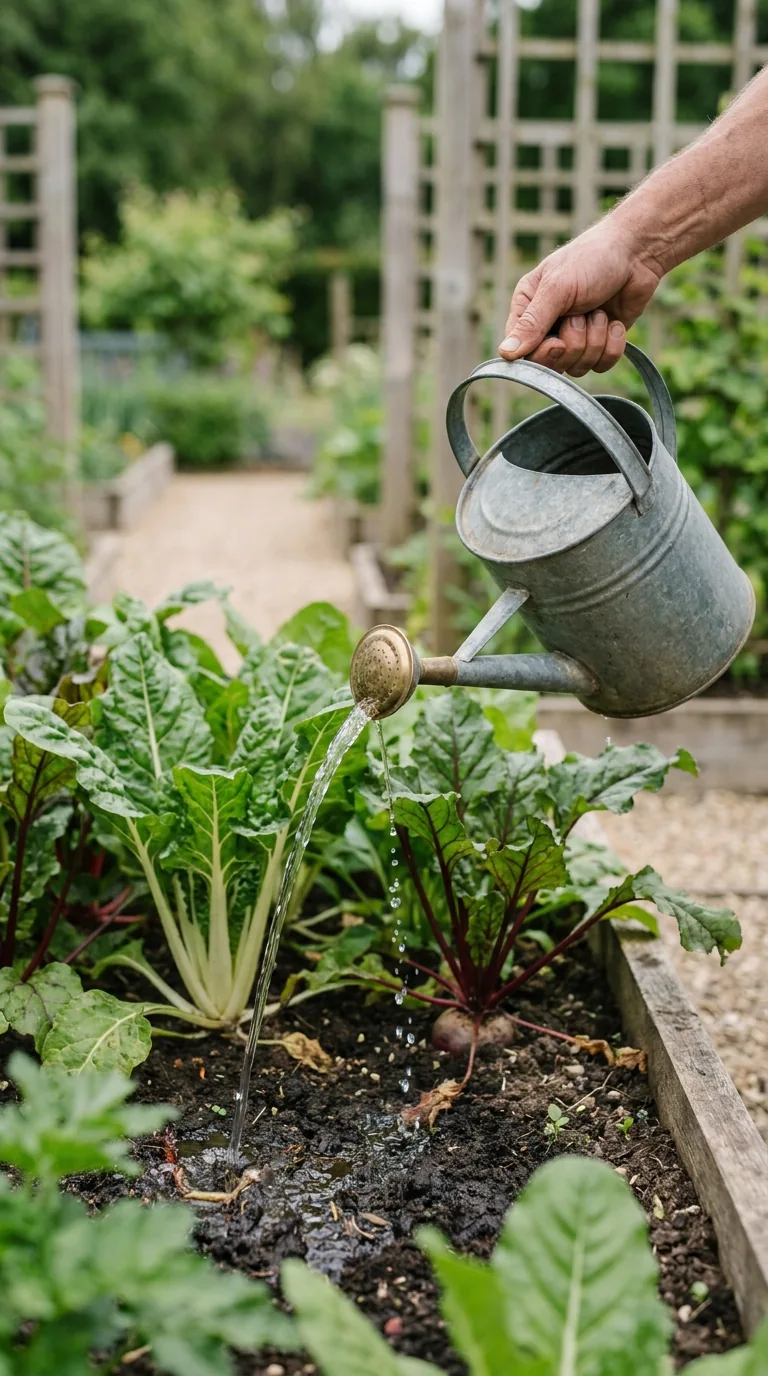
Water vegetables when their root zone needs it, rather than automatically watering the whole garden every day. In the UK, the right frequency changes with rainfall, wind, soil texture, container size and crop stage. A newly sown carrot row, an established onion bed and a fruiting tomato in a pot do not have the same requirements. A useful routine begins with checking moisture and ends with confirming that water reached the intended roots.
Consistent care does not mean an identical quantity at identical intervals. It means responding predictably to the plant's actual conditions. During cool wet weather that may mean no extra water. During a hot dry spell it may mean checking containers more than once a day. The aim is to avoid both prolonged dryness and unnecessary saturation, using water where it changes crop establishment or quality.
Check beneath the surface
Move aside loose mulch and inspect the soil a few centimetres down, taking care not to damage shallow roots. For established crops, consider the deeper active root zone as well. The top centimetre can dry in sun while useful moisture remains below. Conversely, a light shower may darken the surface without reaching deeper roots. Surface colour alone is therefore a poor watering instruction.
Use several points across the bed. The edge beside a warm path may be drier than the centre, and ground beneath an overhanging roof may receive little rain. If one plant wilts, check its individual rootball rather than assuming that every plant in the row has the same moisture. A recently planted module can dry differently from the soil around it, especially when its original growing medium has become hard to rewet.
A trowel, finger or careful small inspection can provide useful information. A moisture meter may add another clue, but contact and medium affect readings. Do not let a single number override an obviously saturated pot or a dry rootball. Learn what the soil feels like in its workable moist state, and compare current conditions with that reference.
Distinguish seedlings from established crops
Germinating seeds and young seedlings have limited roots close to the surface. They need moisture where the seed and first roots are located. Watering a seed drill before sowing can help establish that starting condition. After sowing, maintain suitable moisture with a gentle delivery that does not wash seeds away or create a hard surface crust. Do not interpret advice about deeper, less frequent watering as permission to let a germinating seedbed dry out.
New transplants need water around their rootballs while roots grow into the surrounding soil. Check the rootball itself and the adjacent ground. A damp-looking bed can still contain a dry plug. Water slowly and observe whether the plant's original medium takes up moisture. As establishment progresses, expand the watered area to support roots beyond the original planting hole rather than repeatedly wetting only a tiny spot at the stem.
Established vegetables can draw on a larger soil volume, but crop stage still matters. Rapid leaf growth, flowering, fruit set or root swelling may increase the importance of consistent moisture. Avoid imposing one permanent watering interval from sowing to harvest. Review the routine when plants change size and when the weather pattern changes.
Match attention to the harvested part
| Crop situation | Why moisture matters | What to observe |
|---|---|---|
| Leafy salads | Edible growth depends on sustained leaf production | Root-zone moisture and early signs of stress |
| Peas and beans flowering | Dryness can interfere with pod production | Moisture during flowering and pod development |
| Fruiting tomatoes in pots | The restricted root zone and developing crop need consistent care | Pot weight, actual moisture and drainage |
| Newly sown root crops | Small roots cannot reach deep moisture yet | The seedbed as well as deeper soil |
These priorities do not establish a universal dose. A crop's variety, growing system and local weather still matter. Read crop-specific guidance when planning a demanding planting. If water is limited, make deliberate choices about which crops and stages to support rather than giving every square metre a superficial sprinkling that reaches few active roots.
Do not confuse visible midday wilting with a complete diagnosis. Large leaves can lose water rapidly in heat even when the soil is not dry. Check again in cooler conditions and inspect the root zone before adding more. A plant wilting early in the morning with dry soil presents a different situation from one briefly drooping above already wet ground at noon.
Understand how soil changes the schedule
Sandy soils usually drain and dry faster than clay-rich soils. They may need more frequent monitoring and suitable organic improvement. Clay can hold useful moisture for longer but may become waterlogged if overwatered or compacted. Neither label replaces a direct check. A heavily mulched sandy bed and an exposed compacted clay patch can behave differently from a simple textbook description.
Apply water slowly enough for the soil to accept it. If it pools or runs onto a path, pause and allow infiltration rather than increasing the flow. Very dry soil can wet unevenly, with water following cracks or channels. Use staged watering and inspect the result at more than one point. A large quantity poured quickly is not necessarily a thorough watering of the root zone.
Prevent compaction by using paths and avoiding unnecessary traffic on wet beds. Protect soil with suitable organic matter and mulch where appropriate. Those practices support more manageable moisture conditions, but they do not guarantee that plants never need watering. Treat them as ways to reduce avoidable loss and improve the growing environment over time.
Containers need their own routine
A pot contains a limited water reserve, and its sides can warm in sun. Fruiting plants may occupy the container densely and use water quickly. Check containers frequently during active growth, especially in dry or windy weather. Frequency of checking is not the same as frequency of watering: a pot that remains suitably moist may need nothing added on that visit.
Lift a manageable pot to learn the difference between watered and drying weight. Check beneath the surface, because fibrous peat-free media can look dry above while remaining wet lower down. Keep drainage openings clear and empty trapped water from an ordinary decorative outer pot where the plant is not meant to stand in it. A saturated rootball cannot be fixed by adding another drink whenever leaves droop.
If water runs immediately down the side, investigate whether the rootball has dried and shrunk away from the pot. Rewet gradually according to the plant's needs. Root congestion may also make the pot difficult to manage. A severely undersized container can demand constant rescue watering, so planning an appropriate pot size is part of water management rather than merely an aesthetic choice.
Convert water depth to litres correctly
One millimetre of water across one square metre equals one litre. This comes from the volume: 1 square metre × 0.001 metre is 0.001 cubic metre, or one litre. The relationship helps translate rainfall and irrigation into comparable units. It does not say how much any particular crop needs; that decision still depends on the soil and plant.
For a worked example, a bed measuring 1.2 metres by 3 metres covers 3.6 square metres. An illustrative 10-millimetre application over the whole bed is 36 litres. A 20-millimetre application would be 72 litres. These figures describe delivery volume before accounting for uneven distribution, runoff or other losses. Check the wetted root zone rather than assuming that a calculated amount automatically arrived where required.
If your watering can holds 9 litres, 36 litres means four full cans. That is useful when deciding whether to water the whole bed or target a particular row. Avoid treating an estimated amount as a compulsory daily allocation. A rain event that genuinely wets the rooting depth may remove the need, while a brief drizzle may not contribute enough to replace it.
Choose a delivery method you can verify
A watering can offers control for small beds and new plants. Use a rose for delicate seedlings and a directed flow where appropriate around larger roots. A hose can be effective if it is moved deliberately and the flow is monitored. Avoid leaving it running unattended while assuming that every area receives a similar amount.
Drip irrigation can target the root zone, but inspect emitters and distribution. Catch water from several points for a known period, compare output and check the soil beneath after operation. A blocked emitter may leave one plant dry while the rest are wet. A timer repeats its programme regardless of rainfall unless the system is designed and managed to respond, so adjust it when conditions change.
Sprinklers wet a broad area, including paths and foliage, and distribution can be affected by wind. If using one, measure output with suitable catch containers and check how evenly the water lands. Do not infer a uniform millimetre application simply from the number of minutes it ran. Follow any applicable water-use restrictions and use suitable plumbing arrangements for mains-connected systems.
Choose timing that fits both plant and gardener
Early morning is often convenient because conditions are cooler and plants have water available for the day. Directing water to soil rather than repeatedly soaking foliage also helps avoid unnecessarily wet leaves. Evening watering may be practical, but keep delivery targeted and inspect moisture rather than automatically watering again after a morning application.
If a plant is genuinely dry and severely stressed in the middle of the day, do not leave it without water solely to follow a clock rule. Provide appropriate water to the root zone and address the circumstances. The broader aim is efficient routine care, not withholding a necessary rescue. Afterwards, review whether pot size, shading, mulch or watering access could prevent the repeated emergency.
Conserve water before expanding the planting
Remove competing weeds while small, use suitable mulch over moist soil and repair leaking connectors. Group pots with similar needs where practical, without creating overcrowding or poor light. Position high-demand crops within a manageable distance of the water source. A garden plan that requires carrying many cans up steps twice daily may not remain realistic through a long dry spell.
Collect rainwater in a secure, appropriately installed butt and keep the overflow route safe. Stored water still needs sensible handling, especially around edible crops and propagation. Do not use contaminated water merely because it is available. If uncertain about recycled water suitability, obtain current guidance for the source and crop rather than assuming every household wastewater is interchangeable with clean irrigation water.
When water is scarce, prioritise vulnerable seedlings, recently planted crops and stages where stress threatens the harvest. Consider reducing new sowings until conditions improve. It is easier to maintain a smaller productive area than to keep an oversized plot alive with insufficient supply. Crop choice and planting density are water decisions as much as watering equipment is.
Investigate yellowing before changing the dose
Both excessive wetness and dryness can contribute to poor growth and yellow leaves. Nutrient problems, pests and natural ageing are other possibilities. If the plant remains yellow despite repeated watering, stop and assess the root environment. Use a structured check of why garden leaves turn yellow rather than assuming that more water must be the answer.
Keep a short note of rainfall, watering and unusual symptoms for a problem bed. Record approximate quantities when possible. This helps reveal whether a crop is alternating between saturation and prolonged dryness. Change one aspect of the routine at a time, then check the result. Several simultaneous changes make it difficult to tell which action helped or caused a new problem.
A five-minute watering check
Walk the plot, inspect vulnerable crops, check moisture below the surface and look for blocked drainage or irrigation failures. Water the areas that need it, delivering slowly to roots. Return to a representative spot after it has soaked in and confirm the depth of wetting. That short feedback loop is more useful than watering every bed for a fixed number of minutes and never checking the result.
As the season changes, revise the routine. Smaller plants, cooler days and meaningful rainfall usually reduce demand; larger crops, wind and heat may increase it. A useful watering habit is therefore regular observation followed by a measured response. It makes crop care more reliable while keeping effort and water use proportionate.

