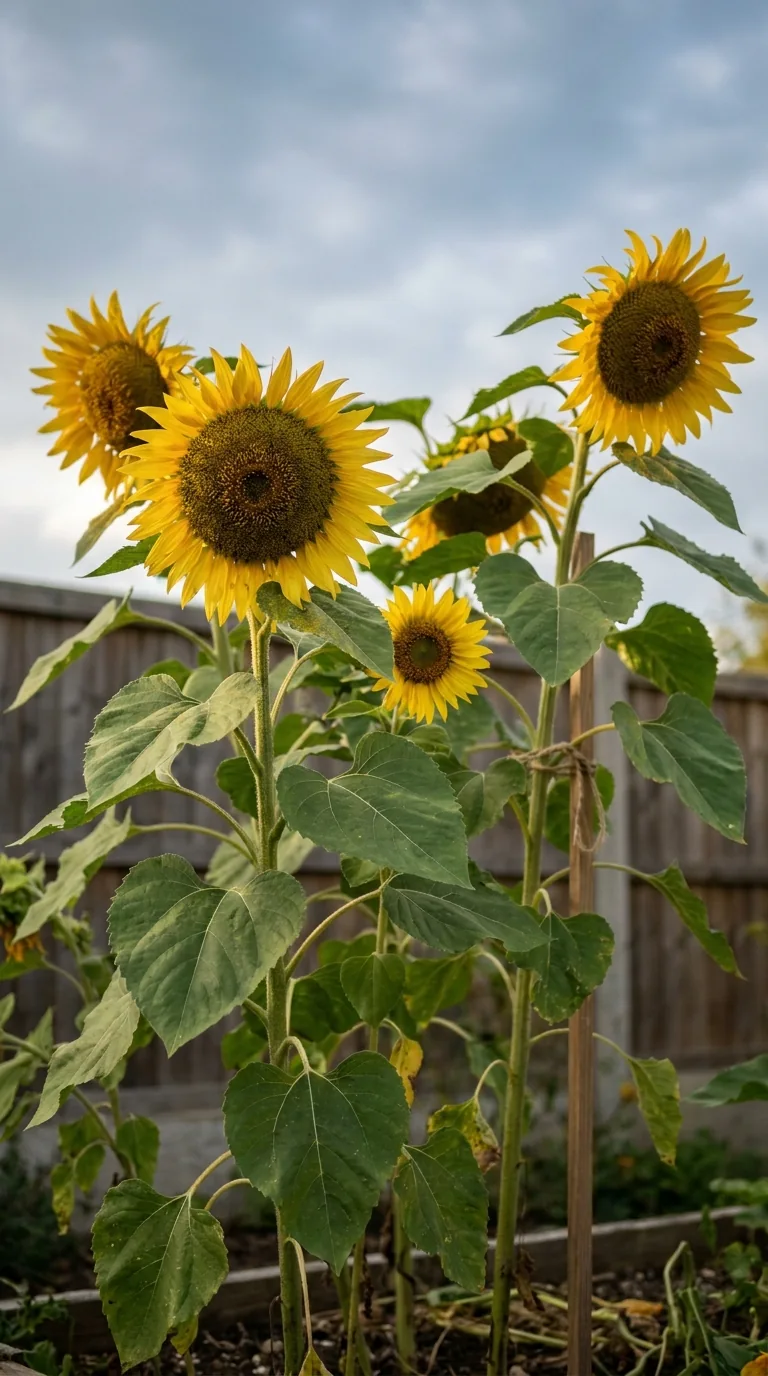
Sunflowers are straightforward to start, but choosing the right kind makes the difference between a manageable patio plant and a three-metre stem that needs serious support. Annual sunflowers grow, flower and die in one season. They are distinct from perennial Helianthus, which return in later years. This guide concerns the annual types commonly grown from packets of seed in UK gardens.
Plan for the mature plant before sowing. A large sunflower needs sunlight, a substantial root zone and protection from being rocked by wind. A compact branching cultivar may suit a container much better than a giant competition type. Both can provide a satisfying growing project, but their watering, spacing and support requirements differ. Read the cultivar description rather than buying solely by flower colour.
Choose height and flowering habit first
Annual sunflowers include dwarf forms, tall single-stemmed types and branching plants carrying several smaller flowers. A single-stemmed cultivar generally makes one main flower, so cutting it ends that stem’s display. Branching types can offer a longer sequence of blooms and material for cutting. The largest head is not automatically the best choice for a small garden or for flowers over a long period.
Check whether the seed is described as pollen-free. These cultivars may be useful for cut flowers, but they should not be assumed to offer the same pollen resource as fertile flowering forms. If wildlife is an important goal, select suitable open flowers and verify the cultivar rather than treating all sunflowers as equivalent. Seed production also depends on fertility and pollination, so not every impressive head will fill with viable seed.
| Type | Useful location | Main planning need |
|---|---|---|
| Dwarf or compact | Patio container or front of a sunny bed | Enough pot volume and regular moisture checks |
| Medium branching | Sunny border or cutting patch | Room for several stems and repeated harvesting |
| Tall single stem | Open ground with suitable support | Deep root space, strong staking and wind awareness |
| Very tall competition cultivar | Dedicated growing position | Realistic support and safe access as height increases |
Packet heights are approximate, influenced by soil, weather and cultivation. A plant sold as compact can still become top-heavy if its pot is narrow or its position is windy. Conversely, a tall cultivar may grow poorly in a small pot and never approach its advertised potential. Choose a location that works even if the plant becomes somewhat larger than expected.
Pick a sowing method you can maintain
Protected spring sowing gives seedlings a start away from some outdoor hazards. Direct sowing avoids transplant disturbance and requires less indoor space, but seeds and emerging shoots are exposed to slugs, birds and variable weather. Neither method is automatically superior. Choose based on the available light, protection and time for checking plants, then use the packet’s instructions for sowing depth and temperature.
In many UK gardens, April is a practical time to start a few pots under cover, followed by planting out after local frost risk has passed. Direct sowing usually waits for warmer, workable soil in late spring. These are broad guides. An exposed northern site can lag behind a sheltered southern one, and an unheated greenhouse can freeze at night. Delay sowing if you cannot keep young plants adequately protected.
Starting very early is not a shortcut to a taller plant when light is poor. Long weak seedlings on a warm windowsill are difficult to support and can suffer when moved outdoors. A later sturdy seedling often establishes better. Work backwards from a realistic planting-out period and allow enough time for germination and a short protected growing stage without keeping plants pot-bound for weeks.
Sow individually in suitable containers
Use clean pots or modules with drainage holes and a suitable peat-free seed compost. Moisten the mix before sowing and fill containers without compacting them excessively. Place one seed per small pot, or sow a limited number of reserves separately. Cover at the depth specified on the packet. Large sunflower seeds are easy to handle, so there is little reason to scatter them densely in a shallow tray.
Water gently and label the variety and date. Keep the compost moist, allowing drainage rather than leaving the pots standing in water. If a propagator cover is used, follow its ventilation guidance and remove it when appropriate after germination. Stagnant wet conditions encourage problems. Once shoots emerge, provide good light and avoid letting them stretch in a warm dark place.
If you sow two seeds in a pot as insurance and both germinate, do not allow them to compete indefinitely. Keep the strongest suitable seedling or separate them carefully while small if this can be done without damage. Pulling a large unwanted seedling out can disturb the roots of the one you want to retain. Snipping the weaker seedling at compost level avoids that disturbance.
Direct sowing needs preparation and protection
Clear weeds and make a workable seedbed in the final position. Avoid sowing into saturated ground or a surface full of large hard clods. Water dry soil before sowing if necessary, make holes at the recommended depth and place seeds at appropriate intervals. Mark each station so that emerging seedlings are not mistaken for weeds and so you can recognise missing plants.
Where practical, sow a few extra seeds in reserve pots rather than cramming several into every station. This provides replacements if an outdoor seedling is lost. Use suitable temporary protection where birds or other animals repeatedly disturb the site, checking it regularly and removing it before it constrains growth. Netting must be securely fitted and managed so wildlife cannot become tangled.
Slugs can remove a young sunflower surprisingly quickly. Check newly emerging plants and surrounding hiding places, especially during damp weather. A large established plant is generally less vulnerable than a fresh seedling, so the early stage deserves most attention. Avoid relying on a single folk remedy as a guaranteed barrier. Combine observation, sensible site management and appropriate protection.
Harden off before planting out
Plants grown indoors need gradual exposure to outdoor sunlight, wind and lower temperatures. Put them outside in a sheltered place for short periods during mild weather, then increase exposure over roughly one to two weeks. Bring them back to protection when cold nights threaten. A plant accustomed to indoor warmth may scorch or wilt if moved directly into full sun and wind for an entire day.
Hardening off is not frostproofing. If frost is forecast, delay planting or move pots back under suitable protection. Check the actual conditions in your garden, not only a regional average. Low spots can collect cold air, and pots may chill quickly. Keep the rootball moist during acclimatisation because outdoor air movement often dries small pots faster than expected.
Plant before roots become severely congested. Water the rootball, prepare a hole large enough to receive it without crushing, and set the plant at its previous growing depth unless the seed supplier gives specific guidance. Firm gently and water the surrounding root zone. Handle the rootball carefully; a sunflower is easier to establish while young and sturdy than after it has become tall and fragile in a small pot.
Allow enough space above and below ground
Spacing depends on cultivar and use. Follow the packet rather than applying one measurement to dwarf bedding types and giant sunflowers. Larger branching plants need room around their stems, while closely spaced cut-flower plantings have a different purpose from growing a single large head. A beginner growing for display should prioritise healthy mature plants over fitting the maximum number into the bed.
As a planning example, a three-metre row with plants at 50-centimetre centres could hold about six plants once end margins are considered. If the chosen cultivar needs 75-centimetre spacing, reduce the number. These figures illustrate the calculation, not a universal recommendation. Check how the plants will shade nearby crops and whether you can still reach the back of the border.
Container sunflowers need pots that remain stable after watering and as flower heads develop. Choose compact cultivars and substantial containers with clear drainage. A small decorative pot may look proportionate to the seedling but become inadequate later. Avoid trying to compensate for insufficient root volume with constant strong feeding; roots still need air, moisture and room.
Stake tall plants before they lean
Install a support early enough to avoid damaging an extensive root system. Position it firmly and use soft ties that hold the stem without cutting into it. Add or adjust ties as the plant grows, allowing room for thickening. A single tight loop near the base is not sufficient for a tall plant with a heavy head. Inspect after windy weather rather than waiting for obvious collapse.
The support must suit the expected height and exposure. A lightweight short cane may bend or pull out beside a very tall sunflower. Do not lean unsafe ladders against plants or improvise unstable structures to measure a competition specimen. Keep supports away from overhead cables and places where falling stems could obstruct access. Cover exposed cane tips near working height with suitable guards.
If stems begin to lean, correct gently while they remain flexible. Forcing an established bend upright can split the stem. Sometimes accepting a slightly angled plant with additional support is safer than aggressive straightening. A badly broken main stem may not recover into the original form, although branching types can sometimes continue from lower growth.
Water and feed according to the root zone
Check soil moisture regularly during establishment and in dry spells. Tall leafy plants can use considerable water, but demand changes with weather and soil. Water thoroughly at the base when needed instead of giving frequent tiny splashes. Containers require closer attention because their moisture reserve is limited. Rain that wets foliage may not have supplied enough water to the pot beneath.
Good garden soil may support a sunflower without frequent supplementary feeding. Container plants can need feeding after the initial nutrients in their compost are depleted. Follow a suitable product label and avoid stronger-than-directed mixtures. Excessive nitrogen may promote leafy growth without producing the result you want. If growth is weak, check sunlight, root restriction and water balance before adding more fertiliser.
Mulch can help conserve moisture in suitable beds, but keep it away from the stem base. Newly planted rootballs still need checking because surrounding moist soil does not guarantee the original potting compost is wet. Conversely, a poorly drained site can remain saturated after rain. Drooping leaves alone do not distinguish thirst from root problems; inspect conditions first.
Choose between cutting flowers and leaving heads
Cutting a single-stemmed sunflower removes its main display, so plan accordingly. For repeated picking, branching cultivars are generally more suitable. Use clean secateurs and place cut stems promptly in clean water. Avoid removing all flowers if the garden is intended to provide resources for visiting insects. Keep a few plants for outdoor display and others for cutting if space permits.
As flowers fade, decide which heads will be retained for seed. Developing heads may become heavy, making continued support important. Birds may feed directly where heads stand, provided the stems remain safe. Where heads must be cut, hang or place them securely in a suitable dry sheltered position. Do not leave decaying heads pressed against wet ground if you intend to collect viable seed.
Collect seed only from mature heads and dry it thoroughly before storage. Saved seed may produce plants different from the parent, particularly from hybrids or cross-pollinated varieties. Purchased ornamental seed should not be treated as food because it may have been prepared for sowing. Keep sowing seed clearly labelled and separate from kitchen ingredients.
Lower flowering plants can help a sunflower patch look complete while the tall stems develop. The guide to growing marigolds in pots and beds covers compact choices, frost-safe planting and deadheading that can complement a sunny annual display.
Review the plant rather than just its height
A useful end-of-season record includes sowing date, planting date, cultivar, support type and first flowering. Note whether the pot stayed stable, seedlings suffered damage and the plant shaded something important. Height can be enjoyable to measure, but a healthy manageable sunflower that flowers well is a better result than a taller specimen that continually falls across a path.
For the following year, change the part that caused difficulty. Use a shorter cultivar in a windy position, sow later if seedlings stretched, or raise a few protected reserves where direct-sown shoots disappeared. Sunflowers remain a simple project when their final size is respected and the vulnerable early weeks receive attention. Reliable establishment is more useful than rushing the earliest possible sowing.

