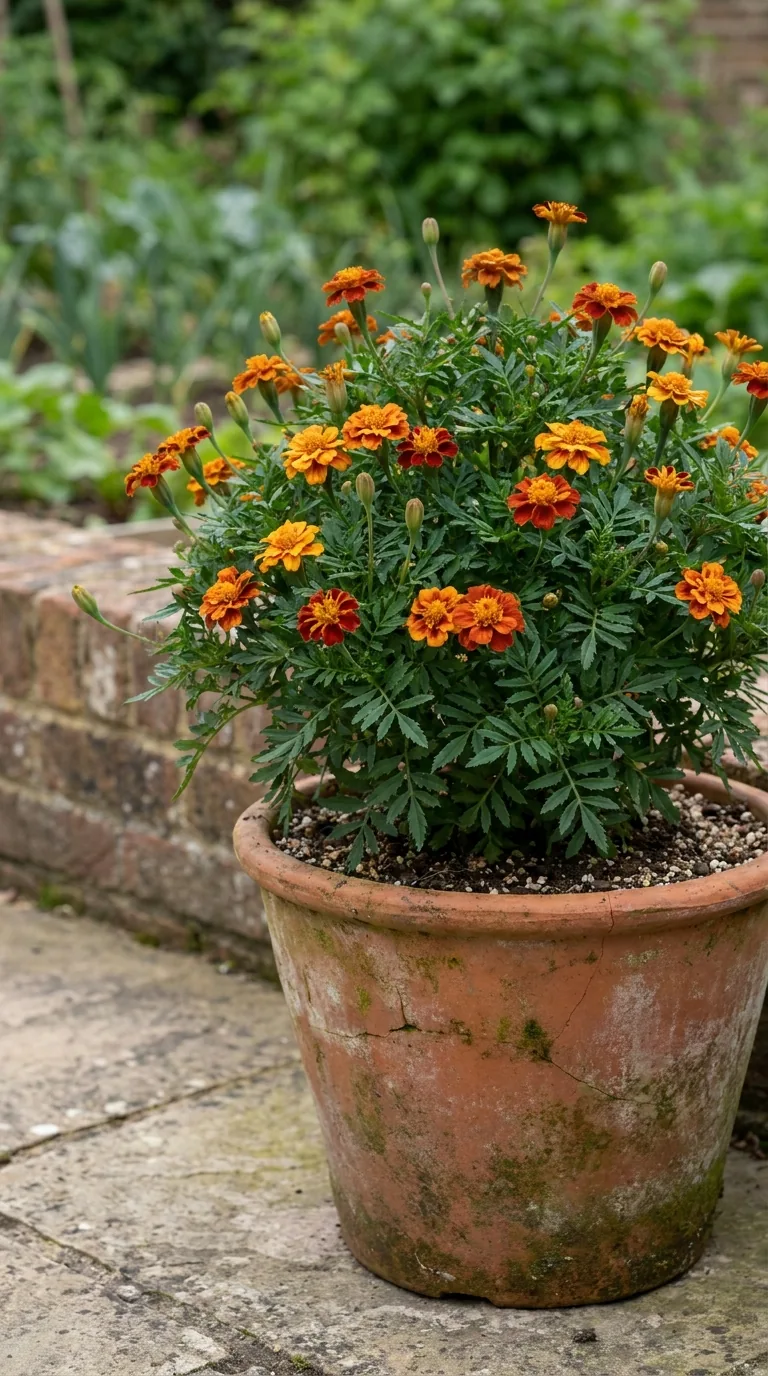
Marigolds bring warm colour to UK summer beds and containers, but the name can describe different plants. French and African marigolds are Tagetes, usually grown as frost-sensitive summer annuals. Pot marigold is Calendula, a different genus with a different tolerance of cool weather. Check the botanical name before following a sowing calendar; advice for hardy calendula should not be applied automatically to tender Tagetes seedlings.
This guide focuses on French and African marigolds. Both are raised from seed, enjoy sunshine and can flower well when their root zone remains suitably moist and drained. French marigolds commonly provide compact branching plants, while African marigolds often carry larger flower heads on taller stems. Cultivars vary, so the packet’s mature dimensions are more useful than the common name alone.
Choose the right Tagetes for the job
French marigolds, Tagetes patula, are useful for edging, smaller pots and the front of a summer display. Their flowers can be single, semi-double or double, with combinations of yellow, orange and red-brown. African marigolds, Tagetes erecta, often offer larger rounded flowers and a stronger upright presence. Compact African cultivars exist, and some French types spread generously, so avoid assuming one fixed size for either group.
There are also signet marigolds, including Tagetes tenuifolia, with finer foliage and smaller flowers. They can give a lighter appearance than densely doubled bedding types. If flowers for insects are a goal, consider accessible open forms and verify the cultivar. Flower size alone does not tell you how useful a plant will be for pollinating visitors.
| Group | Typical design role | What to check |
|---|---|---|
| French marigold | Edging, small groups, mixed containers | Mature spread and flower form |
| African marigold | Strong colour blocks and taller bedding | Height, exposure and support needs |
| Signet marigold | Fine-textured planting and open flowers | Spread, intended use and cultivar details |
| Pot marigold | Separate calendula planting plan | Different genus and sowing requirements |
Choose seed for the available growing space rather than buying the biggest mixture. A dozen well-grown plants can fill a useful small display. Hundreds of seedlings create pressure for light, pots and watering before you have anywhere to plant them. If you want an exact colour arrangement, a named cultivar may be more predictable than a mixed packet, though growing conditions still affect appearance.
Sow under cover in spring
Protected spring sowing is a practical method for UK gardens. Use the packet’s temperature and timing guidance, and work backwards from a frost-safe planting-out period. Starting too early on a dim warm windowsill often produces weak elongated growth. An unheated greenhouse can offer bright conditions by day but may still become cold at night. Check temperatures rather than assuming glass makes the space frost-free.
Fill a clean seed tray or small modules with suitable peat-free seed compost. Water the medium first and let excess drain. Sow thinly, cover at the recommended depth and label immediately. Marigold seeds are elongated and relatively easy to place, so avoid tipping a dense clump into one corner. Even distribution makes later handling easier and reduces competition between seedlings.
Maintain gentle moisture. A saturated tray can deprive roots of air and encourage collapse, while a dry surface can interrupt germination. Use a fine rose or careful bottom watering where appropriate, then remove standing water. If using a cover, ventilate and remove it as seedlings emerge according to the setup. Seedlings need bright light promptly after germination.
Give seedlings space before they become tangled
Move tray-grown seedlings into separate pots or modules when they can be handled safely. Hold a seed leaf rather than the stem and loosen roots gently. Make a hole before placing the roots so they are not bent into a tight curl. Water carefully after transplanting. Individually sown modules reduce root disturbance, but the plants still need enough space above the tray to receive light.
Do not keep seedlings crowded together until the outdoor planting date simply because they look small. Overlapping leaves shade neighbouring plants, and moist stagnant conditions become harder to manage. Space pots farther apart as plants expand. If roots fill their containers and outdoor conditions are still unsuitable, pot on carefully into a modestly larger container rather than letting the rootball become severely congested.
A small seedling does not need strong feed immediately. Suitable seed compost is designed for germination, and young plants are sensitive to excessive fertiliser. After potting into an appropriate growing medium, follow its nutrient guidance and observe growth. Pale leaves may reflect cold, poor light or wet roots as well as nutrition. Solve the actual condition rather than treating every delay with fertiliser.
Harden off and wait for suitable nights
Before planting out, gradually introduce protected plants to outdoor conditions over roughly one to two weeks. Begin with a sheltered mild part of the day, then extend exposure. Protect against strong wind and harsh sunshine at first. Bring frost-sensitive plants back under suitable cover when nights are cold. This gradual process helps leaves and stems adapt; it does not convert Tagetes into a frost-hardy plant.
Planting time varies across Britain. A sheltered urban patio may be ready before an exposed inland garden, and late frosts can affect apparently warm spring periods. Use the local forecast and your own site conditions. If planting must be delayed, continue giving seedlings light, space and water. It is better to manage a few plants in pots for another week than to lose the whole batch outdoors.
Water rootballs before planting and choose a mild day if possible. Prepare holes that accommodate roots without compression, set plants at their previous depth and firm gently. Water the surrounding soil so roots can establish beyond the original pot. Avoid burying the stem base beneath a thick damp mulch. Check young plants again during the first few days, especially if wind dries the soil.
Space beds for mature plants
Use the packet’s recommended spacing for the cultivar. Smaller French marigolds may be planted closer than large African types, but planting very tightly can reduce branching and make disease harder to manage. Consider the full spread, not only the current foliage. A border that looks a little open on planting day can become a balanced display once plants grow.
For a one-and-a-half-metre edging strip, a cultivar spaced at 25-centimetre centres might require about six plants, with suitable end margins. A larger cultivar needing 40 centimetres will need fewer. This is an arithmetic example, not a fixed prescription. Mark positions first and stand back to assess whether the plants will obstruct the path as they expand.
Taller marigolds in an exposed bed may benefit from discreet support. Put supports in before heavy flower heads begin to lean. Use soft ties that allow stems to thicken, and keep sharp cane ends away from face height near access routes. If wind exposure is severe, selecting a shorter cultivar is often simpler than building an elaborate support system around a tall one.
Set up pots with adequate root space
Choose containers with drainage holes and a stable base. A cachepot without an outlet can hold an inner pot, but accumulated water must be emptied. Do not assume a layer of stones replaces drainage. Use a peat-free container compost suited to summer bedding and leave a practical watering lip at the top. Filling right to the rim makes thorough watering difficult.
Mixed containers work best when companion plants have similar light and moisture needs. A compact marigold should not be buried beneath a much more vigorous neighbour. Count the mature plants in the design rather than following a temporary shop display that packs many young plants together. Fewer plants with room to grow can need less emergency watering and replacement.
Large containers are more stable in moisture and temperature than very small ones, but they are heavier. Position them before filling and keep doorways clear. On balconies or raised structures, confirm loading restrictions before adding large pots. In exposed locations, check stability after watering and as the display grows. Flowering plants can catch wind even when their pots seemed secure earlier.
Water consistently without keeping roots saturated
Check container compost frequently in warm or windy weather. Feel below the surface and learn the weight of a pot when it is adequately watered. A light dry surface does not always mean the rootball needs a full soak. Conversely, rain may wet the foliage while leaving compost beneath relatively dry. Water the growing medium when needed and allow excess to drain.
In beds, newly planted marigolds need closer attention than established plants. Water the root zone thoroughly during dry spells rather than splashing leaves repeatedly. Avoid a rigid rule that every plant needs water every day. Soil type, weather and root development alter demand. If a plant wilts, inspect moisture before watering because wet-root stress and drought can produce similar-looking symptoms.
Container plants may need supplementary feeding once their compost’s initial nutrients are used. Follow an appropriate fertiliser label and avoid concentrated mixtures. Strong feeding will not rescue plants with poor drainage or inadequate light. In reasonably fertile beds, less feeding may be needed. Watch the plant and the site rather than applying several products on a fixed weekly schedule without a reason.
Deadhead for a tidier, longer display
Remove faded flowers before seed development becomes the main use of the plant’s resources. Snip the spent head back to a suitable healthy junction rather than leaving a long bare stalk. Regular small checks are easier than stripping a plant after many flowers have deteriorated. Use clean snips for thicker stems and avoid tearing off neighbouring buds.
Large double heads can hold water during wet spells. Remove flowers that become brown and decayed, and keep the bed open enough for air movement. Do not mistake a developing bud for a spent flower; buds are firm and still forming, while faded flowers have lost their fresh colour and begin to dry or rot. A simple weekly inspection soon makes the difference recognisable.
Leave a few healthy heads only if you intend to save seed. Seed from hybrids or cross-pollinated plants may not reproduce the parent exactly. Let selected heads mature and dry, collect them in dry weather and finish drying in a breathable labelled container. Keep sowing seed separate from food and do not assume ornamental flowers are suitable for eating without reliable identification and appropriate growing history.
Investigate damage before choosing a remedy
Fresh seedlings can be vulnerable to slugs and snails. Inspect damaged plants and surrounding hiding places, particularly after damp nights. Protect the young stage and keep pots away from unnecessary sheltering debris. Avoid promising that crushed eggshells or another household barrier will reliably stop damage. Evaluate what is happening in the actual planting and adjust protection accordingly.
Aphids may gather on young shoots. Small populations do not necessarily justify spraying. Check plant vigour and look for natural predators before deciding whether intervention is needed. Powdery coatings, distorted growth or repeated collapse need diagnosis rather than a general cure-all. Improve obvious crowding, remove badly decayed material and avoid leaving the root zone persistently wet.
Marigolds are often advertised as companion plants that repel nearly every garden pest. Such claims are too broad. Effects reported for particular Tagetes species, pests and growing systems should not be turned into a guarantee that a pot beside tomatoes prevents infestations. Grow marigolds because they suit the site and provide flowers; continue checking vegetable plants using their own normal care routine.
If the wider aim is to fill a compact border, the guide to flowers for small UK gardens explains how to combine height, flowering season and container placement without overcrowding the space around marigolds.
Finish the season and plan the next batch
Tagetes usually finish as cold weather and frost end the summer display. Clear plants when they are no longer useful, checking whether diseased material needs separate handling. Empty and clean reusable seed trays, record the cultivar and note which pot sizes worked. Avoid overwintering annual bedding merely because it remains green for a short mild period unless you have a clear reason and appropriate space.
For the following year, retain the practical lessons: sow later if seedlings stretched, use fewer plants if pots dried constantly and choose a shorter cultivar where stems leaned. A successful marigold display comes from suitable conditions, frost-aware planting and steady attention to moisture and faded flowers. It does not need an excessive number of seedlings or unsupported promises about pest control.

