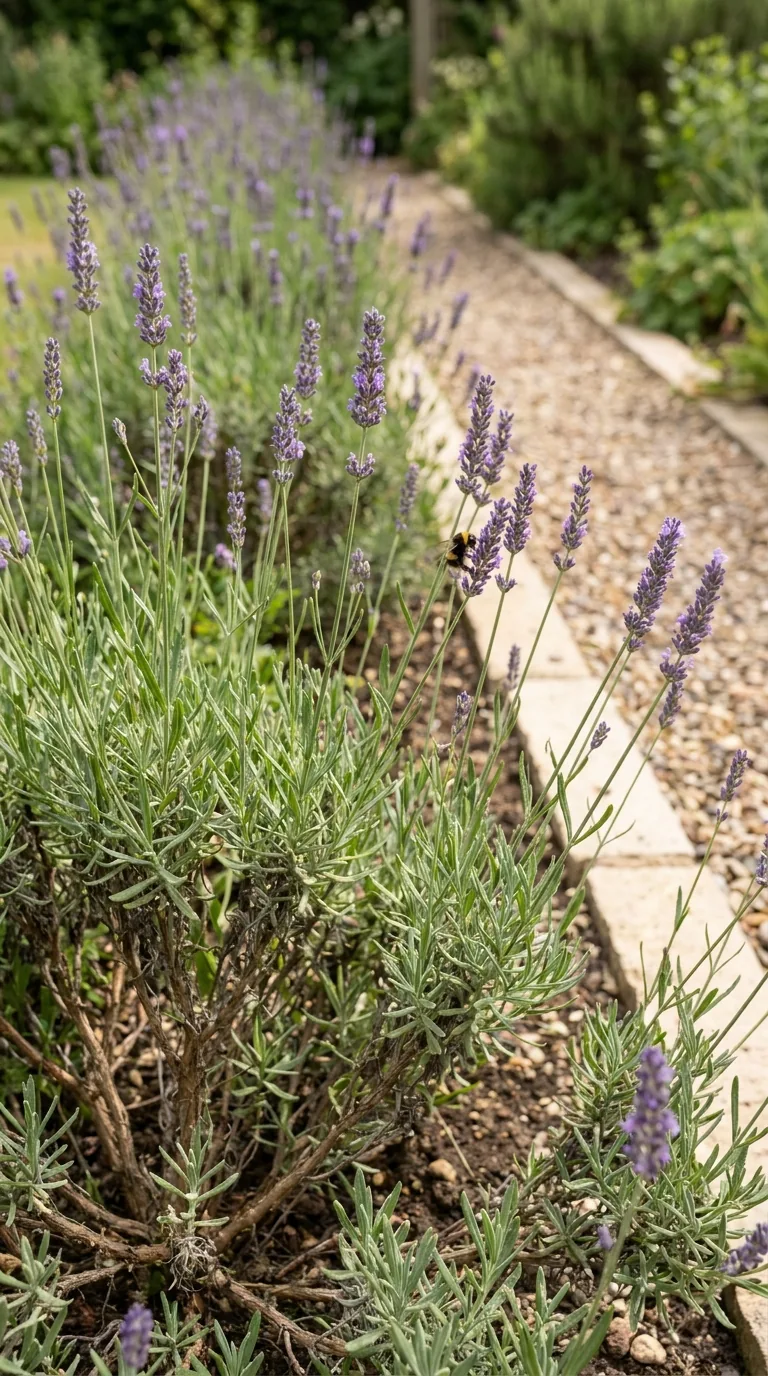
Lavender succeeds when its position suits it. Sun, air movement and soil that does not remain waterlogged matter more than frequent feeding or an elaborate pruning routine. In a British garden, a plant may cope with a dry summer yet fail in a wet winter, particularly if roots sit in cold saturated soil. Start by choosing a suitable species and deciding whether your ground can offer the conditions it needs.
The familiar name covers plants with different hardiness and growth habits. English lavender is generally the more dependable choice for year-round outdoor planting across much of Britain. French lavender has conspicuous flag-like bracts above its flowers and needs a more sheltered approach, especially in colder districts. The common names are not planting guarantees. Read the botanical name, cultivar details and hardiness information on the label before buying.
English and French lavender are different decisions
Lavandula angustifolia includes compact cultivars often used for low edging and smaller beds. Lavandula × intermedia, sometimes called lavandin, often grows larger and is useful where there is room for its wider flowering outline. French lavender commonly refers to Lavandula stoechas and related forms. These can make striking patio plants, but they are less dependable outdoors through a cold wet British winter than well-sited English lavender.
Plant dimensions on a label describe a mature plant, not the small pot being sold. A cultivar expected to spread 60 centimetres needs room to develop without being squeezed against a wall or smothered by neighbouring plants. Larger forms can outgrow a narrow path edge. Decide whether you want a clipped line, a loose group or one container specimen; each use calls for different spacing and sometimes a different cultivar.
| Situation | Useful starting point | What to verify |
|---|---|---|
| Low sunny edging | A compact English lavender | Eventual spread and access to the path |
| Generous open border | English lavender or a larger lavandin | Space for mature flower stems |
| Container moved to shelter | A cultivar matching the available pot | Hardiness and realistic winter storage |
| Cold exposed garden | A hardy English lavender in free-draining ground | Local winter conditions and drainage |
| Heavy wet clay hollow | Improve the planting arrangement first | Whether surplus water can actually escape |
Buying a less hardy lavender is reasonable if you can provide appropriate winter protection. It becomes a problem when a decorative container is too heavy to move or there is no bright frost-free shelter available. Make the winter plan before paying for the plant. A sheltered wall can improve conditions, but it does not remove every risk associated with freezing temperatures and prolonged wet weather.
Assess drainage before digging a hole
Observe the proposed position after sustained rain. Does water collect there? Is the soil still sticky and airless several days later? Does a downpipe discharge nearby? These clues are more informative than adding a handful of grit and assuming the whole site is fixed. Lavender dislikes persistently wet roots. A small gritty pocket surrounded by dense clay may still collect water rather than drain it away.
On workable soil, choose an open sunny place and remove competing weeds. If ground drainage is poor, a properly designed raised border or large container may offer a better option. Raising the soil level helps only when the arrangement can release excess water. Avoid blocking existing drainage routes or directing runoff towards buildings and neighbouring land. Where flooding or construction drainage is involved, obtain suitable local advice before major alteration.
Do not automatically enrich the planting hole heavily. Lavender generally suits relatively lean conditions, and lavish fertility can encourage soft growth. If soil is already suitable, planting carefully may be more valuable than adding several products. Where soil structure needs improvement, think about the whole bed and long-term water movement. Any amendments should address an identified limitation rather than follow a universal recipe.
Plant in spring when conditions are favourable
Spring gives new lavender time to establish before its first winter. Plant when soil is workable and not frozen or waterlogged. Autumn planting may be possible in favourable mild conditions, but it leaves less time for roots to settle before cold wet weather. A plant bought in winter can be kept in a suitable sheltered position until planting conditions improve rather than installed immediately into saturated ground.
Water a dry rootball before removing the pot. Dig a hole wide enough to accommodate the roots comfortably and set the plant at the same general depth it occupied in its container. Do not bury the crown under extra soil. Backfill gently, firm enough to remove large air pockets and water the root area. Keep soil and any mulch clear of the base of the stems.
For an informal line, calculate the approximate number of plants from the cultivar’s expected spread and the desired effect. A three-metre length planted at 45-centimetre centres might take around seven plants, depending on end margins. A 60-centimetre spacing would take fewer. This is a layout example, not a spacing rule for every lavender. Check the chosen cultivar and leave room for flowers that extend beyond the leafy mound.
Set up containers for winter as well as summer
Choose a robust container with unobstructed drainage holes and enough volume for the rootball and future growth. A pot that is attractive but has no outlet needs an appropriate inner pot or a different use. Do not fill the base with a thick layer of rubble as a substitute for drainage holes. Excess water still needs a route out, and the growing medium must suit the plant throughout the root zone.
Use a suitable free-draining peat-free container medium. Product composition varies, so assess how the mix behaves after watering rather than assuming all peat-free compost needs exactly the same routine. A loam-based mix formulated for long-term container plants can provide useful stability. Avoid guessing large amendment quantities if a manufacturer already supplies a balanced mix. The aim is moisture that is available to roots without long-lasting saturation.
Position the pot where rainwater can leave freely. A saucer full of winter rain defeats good drainage. Raise the pot slightly if necessary to keep holes clear, using stable feet appropriate to its size. Shelter from repeated driving rain can help, but do not crowd plants into a dark airless corner. In exposed gardens, consider how the pot will remain upright when flowering stems catch the wind.
Water new plants, then respond to actual need
Freshly planted lavender needs help while its roots are confined to the original rootball. Check moisture during dry spells and water thoroughly when needed, allowing the surrounding soil to drain. Repeated tiny splashes near the stem are less useful than wetting the root zone properly. The fact that established lavender tolerates dry conditions does not mean a newly planted specimen can be ignored through its first warm spell.
Once established in suitable ground, lavender usually needs much less attention than thirsty bedding plants. Containers remain different because roots cannot search beyond the pot. Check beneath the surface and judge the weight of smaller pots before watering. A dry top layer can sit over damp compost. Equally, a rootball can dry while rain wets only the outer surface, particularly where dense foliage sheds water away.
Yellowing leaves, drooping shoots and poor growth are not instructions to add water automatically. Inspect drainage and the compost first. A plant with damaged wet roots may wilt despite being surrounded by moisture. Do not apply feed as the first response to a struggling plant either. Fertiliser cannot restore oxygen to a waterlogged root system or compensate for a deeply shaded position.
Prune little and regularly
Annual trimming helps maintain a compact shape. The important boundary is green leafy growth versus old bare wood. Lavender does not reliably regenerate from deeply cut old woody stems. A severe haircut intended to turn a large old plant back into a small mound can leave permanent bare branches. Establish a gentle routine while the plant is young instead of waiting until its framework has become leggy.
After flowering, usually in late summer for many English lavenders, remove spent flower stems and lightly shorten suitable leafy growth. Keep visible foliage below the cut. Exact timing varies with the type, flowering pattern and local conditions. Avoid making a late severe cut that leaves vulnerable new growth as colder weather arrives. French lavender should be treated according to its type and condition rather than clipped hard by an English-lavender calendar.
In spring, assess the plant once growth shows which shoots remain alive. Lightly tidy untidy foliage and remove clearly dead material with clean tools. Frost damage can be misleading immediately after cold weather, so avoid removing the entire framework in haste. Where an old plant has a large bare centre, replacing it or propagating a healthy young replacement may be more successful than an ambitious rescue prune.
Understand winter problems before adding protection
Winter wet is often as important as low temperature. Dense organic mulch pressed around the crown can retain moisture where you want air movement. Clear fallen leaves from the plant’s centre and keep neighbouring growth from collapsing over it. These small maintenance jobs do not make a tender plant hardy, but they avoid creating an unnecessarily damp environment around a plant already facing challenging weather.
For container plants, choose shelter that matches their hardiness. A bright unheated greenhouse offers rain protection but can still experience freezing temperatures. A frost-free location needs to be genuinely suitable, not simply indoors somewhere dark. Ventilate protected spaces when conditions allow and water sparingly according to actual moisture. Stored lavender can still dry out, so “keep dry in winter” should not be interpreted as never checking the roots.
Wind can loosen newly planted roots or rock pots. Firm loose plants gently when soil conditions permit and inspect container stability. Heavy snow may bend branches, so brush it off carefully where this can be done without snapping frozen growth. Avoid wrapping foliage continuously in impermeable plastic; trapped moisture and poor ventilation can create new problems while leaving roots vulnerable to cold.
Make replacement plants from healthy material
Cuttings provide a way to maintain a favourite cultivar more consistently than saving seed. Take suitable non-flowering shoots at the appropriate stage, prepare them cleanly and insert them into a free-draining propagation medium. Keep them protected from harsh sunshine and drying winds while roots develop. Do not use diseased or collapsing shoots simply because they would otherwise be discarded.
Propagation requires modest but regular attention. Label the parent cultivar and date, check moisture and remove material that rots. Success varies with the cutting stage and conditions, so take a small number of spare cuttings without stripping the parent. Once rooted, young plants need gradual adjustment to ordinary growing conditions. A newly rooted cutting is not ready to face an exposed winter position just because its parent is hardy.
Lavender can contribute flowers to a wider wildlife planting, but one brief flowering period should not carry the entire plan. The guide to flowers for bees and butterflies explains how to combine different flowering seasons and shapes so that a sunny lavender patch becomes part of a more varied garden.
A practical yearly routine
In spring, check drainage, inspect winter damage and plant replacements when soil conditions suit. During the first growing season, monitor root-zone moisture and allow enough space around the young mound. After flowering, trim lightly within leafy growth and keep the base clear. In autumn, check that pots drain and decide which less hardy plants need shelter. Through winter, observe moisture and stability rather than repeatedly feeding or pruning.
This routine is deliberately simple because lavender benefits from an appropriate site more than constant intervention. If a plant repeatedly fails in one location, reconsider the location before buying the same type again. A different cultivar may help with size or hardiness, but it cannot turn a sunless waterlogged corner into suitable lavender ground. Matching the plant to a realistic position is the most useful improvement you can make.
Keep the original label with your garden notes. Knowing the exact lavender makes future pruning, replacement and winter-care decisions much easier than relying on flower colour alone.
Keep neighbouring plants in proportion
Inspect the space around lavender as neighbouring perennials expand in summer. A plant installed in an open sunny gap can become shaded and crowded within a few months. Trim or divide neighbours according to their own needs rather than repeatedly watering the lavender to compensate for competition. Leave enough room to reach its base for weeding and to make a light post-flowering trim without cutting adjoining stems accidentally.

