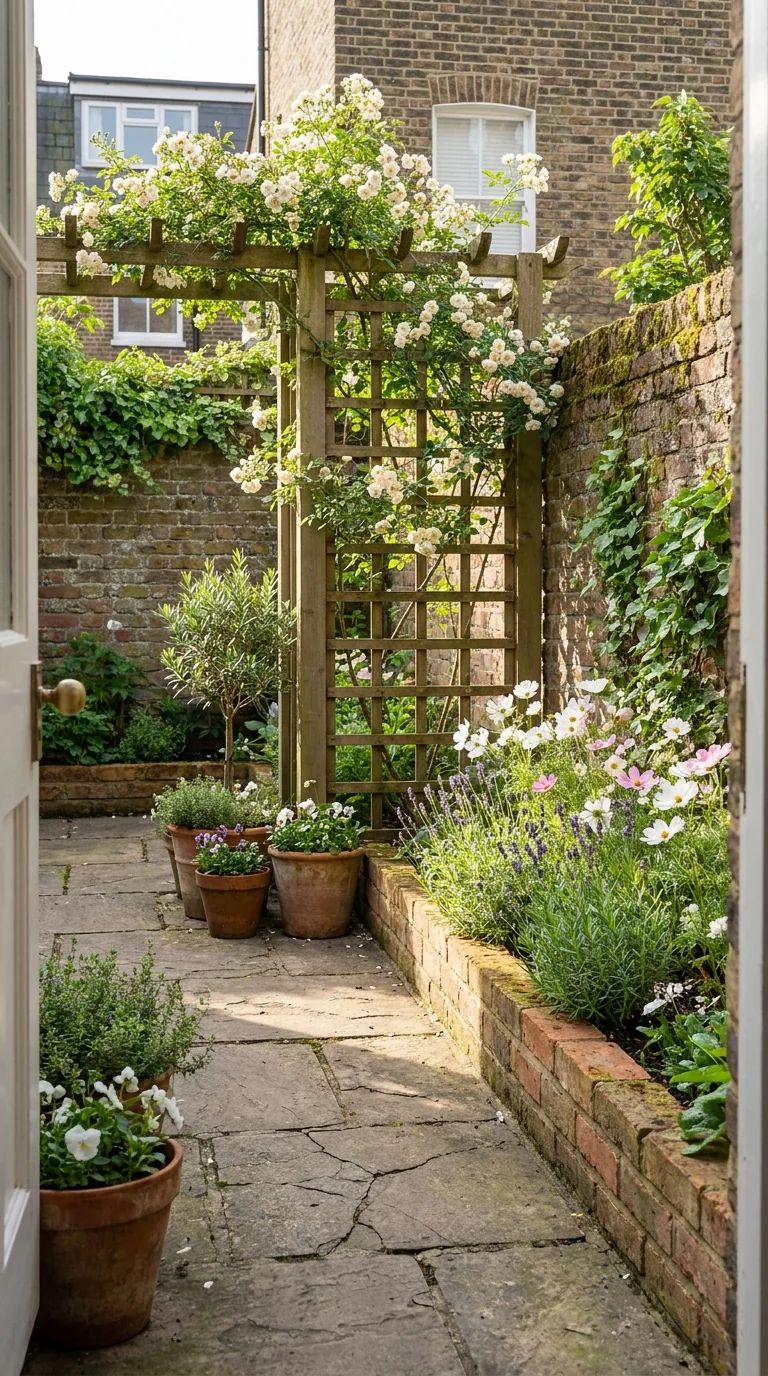
Choosing flowers for a small garden is an exercise in matching plants to space over time. A modest border or patio can carry colour for much of the year, but only if mature sizes, light and maintenance are considered together. Buying several attractive plants on the same spring afternoon often creates a short burst of flowers followed by a crowded summer and an empty-looking winter.
Start with the places where plants can grow well and the jobs you can realistically maintain. A sunny doorstep, a shaded fence and a narrow bed beside a path need different selections. The best flowers for your garden are those that fit these conditions and remain manageable when fully grown. This guide offers a way to choose them rather than a rigid shopping list.
Map light and usable ground
Watch the garden on a reasonably clear day, noting where sunlight falls in the morning, around midday and later in the afternoon. Repeat in another season if possible. A spot that is sunny before a deciduous tree leafs out may become shaded in summer. Tall buildings can also limit light differently as the sun’s angle changes. Identify the genuinely bright positions before assigning sun-loving plants to them.
Measure the border, but also measure its relationship to everyday use. A bed 60 centimetres wide beside a narrow path cannot comfortably contain a plant that spreads a metre unless it is allowed to overhang somewhere. Leave access to taps, drains and meters. Flowers should make the space pleasant without forcing people to push through foliage whenever they carry shopping or move a bin.
Assess soil moisture as well as shade. Dry shade under established shrubs is different from cool moist shade beside an open wall. A flower described as suitable for shade may still need moisture that the location cannot supply. Containers can create a separate root environment, but they introduce watering responsibilities. They are not a way to avoid understanding the light available.
| Position | Possible starting plants | Decision to make first |
|---|---|---|
| Sunny, freely drained edge | Compact lavender, suitable hardy geraniums, low catmint cultivars | Will the mature spread remain off the path? |
| Sunny summer container | Compact marigolds, dwarf cosmos, suitable petunias | Can watering be maintained during warm weather? |
| Part shade with suitable moisture | Primroses, pulmonaria, selected hardy geraniums | Does the actual soil match the plant? |
| Seasonally light ground | Spring bulbs suited to the site | Can foliage remain until it dies back naturally? |
| Vertical sunny surface | A suitable restrained climber or trained annual | Are supports secure and eventual size realistic? |
These suggestions require cultivar checks. Some hardy geraniums and catmints spread much farther than others. A plant sold in a small pot is not necessarily a small plant. Record the expected height, spread, flowering season and hardiness before buying. If the label offers little information, postpone that purchase until you can establish whether it fits.
Build a framework before adding seasonal colour
A small garden benefits from a few plants that give structure when annual flowers are absent. This could be a compact shrub, an evergreen perennial or a well-placed container with year-round form. The framework should not consume all the growing space. One oversized shrub can create more shade and root competition than the rest of the garden can accommodate.
Think of permanent plants as anchors and seasonal flowers as changeable layers. If you rent or expect to rearrange the garden, containers can provide movable anchors, provided they are physically manageable. Avoid buying several large heavy pots without deciding where they will stay. A full container can be difficult to move safely, even when its dimensions appear modest.
Leave room for plants to mature. Bare ground between new perennials can be temporarily occupied by suitable annuals, but these should not become permanent competitors. Photograph the bed after planting and again later in summer. The comparison helps you recognise which gaps were genuine and which were simply waiting for a perennial to develop.
Layer a border without turning it into a wall
Place taller plants where they will not hide everything behind them or cast unwanted shade. In a border viewed from one side, taller plants often go towards the back, with lower flowers near the front. An island bed viewed from several sides may need a different arrangement. Height is a starting principle, not a rule that every plant must fit into a straight staircase.
Airy stems can provide height without the same visual bulk as a dense shrub. However, airy does not mean maintenance-free. Plants with tall flexible stems can lean across paths or need support. Choose cultivars with an appropriate mature height and plan where supports will go. A decorative support installed early is easier to integrate than a large rescue frame added after collapse.
Repeat a limited number of plants instead of placing one of everything. A two-metre border might look more coherent with three small groups than with twelve unrelated specimens. Repetition also makes care easier because groups with similar needs can be watered and trimmed together. You can still include variety through leaf shape, flowering time and a few contrasting flowers.
Use containers where they solve a real problem
Containers are useful where there is no soil, where ground conditions are unsuitable or where you want seasonal flowers close to a seat. Choose pots with adequate drainage and enough volume for the planned plants. Several tiny pots often demand more frequent watering than one larger container. Large pots need less frequent attention in some conditions, but they remain dependent on you for moisture.
Use a peat-free growing medium suited to the plants and expected lifespan. Summer bedding and long-term woody plants do not necessarily need the same mix. Leave space below the rim for watering. Avoid filling the base with rubble as a substitute for proper drainage; drainage holes and the properties of the root-zone medium are what matter.
Group containers so they form a clear composition without blocking access. A cluster near a water source is easier to maintain than pots scattered wherever there was room. Keep enough space to inspect compost and reach the back plants. If containers sit on a balcony or roof, check loading restrictions and secure placement before adding large quantities of wet growing medium.
Plan successive flowers, not continuous perfection
No small garden needs every plant to flower all the time. A changing display is more realistic. Select early flowers, a main summer group and something for later interest. Foliage and seed heads can bridge intervals. A calendar helps expose the common mistake of choosing only plants flowering at the garden centre during one visit.
Spring bulbs can use space beneath later-growing perennials, provided their fading foliage is allowed to remain until it has finished supporting the bulbs. Do not tie leaves into tight knots or cut them immediately after flowering simply to tidy the bed. Choose placement where emerging summer foliage can soften the appearance without deeply shading leaves while they are still useful.
For summer, combine reliable perennials with a limited number of annuals. Annuals offer flexibility and can fill a planned container or a temporary gap, but they need sowing or replacement each year. Late-season plants can extend interest, though local frost and weather affect how long flowers last. Think in overlapping periods rather than exact dates printed on a chart.
| Layer | Function | Space discipline |
|---|---|---|
| One modest permanent anchor | Shape outside the main flower season | Check its mature width before planting |
| Two or three repeated perennial groups | Reliable seasonal flowers and foliage | Use the cultivar’s proper spacing |
| Small spring bulb groups | Early colour in suitable gaps | Allow foliage to finish naturally |
| One seasonal pot or annual patch | Flexible summer colour | Keep its watering needs manageable |
A worked narrow-border example
Imagine a sunny border three metres long and 80 centimetres deep beside a path. Its area is 2.4 square metres, but that does not mean every part can be filled with large plants. Keep the path edge clear and place mature plant outlines on a sketch. One plant expected to spread 80 centimetres can occupy nearly the entire depth, so a row of such plants may leave little space for smaller flowers.
Instead, choose a compact anchor at one end, repeated smaller perennials through the middle and a low seasonal edge only where it will not be overtopped. Mark the expected mature circles using string or temporary pots. Walk the path and check access from both directions. If the arrangement feels cramped before planting, removing one plant is easier than trying to prune all of them permanently undersized.
Reserve a small section for experimenting with annual flowers. Their short life makes them useful for testing colours and heights before committing to another perennial. The guide to easy flowers to grow from seed explains direct sowing, modules and thinning for a manageable first patch.
Water a small garden efficiently
Check the root zone rather than watering every visible flower whenever the surface looks dry. Ground beds and pots behave differently. Containers exposed to wind may dry quickly even on a cool day, while sheltered soil can remain moist below a dry surface. Use a finger or suitable moisture check and learn how each position behaves after rain.
Group plants with comparable moisture needs. A drought-tolerant plant beside thirsty bedding can be difficult to manage if every watering wets both equally. Where possible, give the most demanding pots positions close to the tap. Mulch suitable beds to reduce moisture loss, keeping material away from stems and crowns. Mulch does not remove the need to water newly planted rootballs during dry weather.
Consider holidays before choosing a display. A garden based on many small hanging baskets may need frequent attention during hot weather. Arrange reliable help or use a simpler container plan. Automatic watering can help when properly installed and checked, but it should be tested before you leave. A blocked outlet or empty reservoir can undo an otherwise well-designed arrangement.
Keep maintenance proportional to the space
Small gardens make untidy or failing plants very noticeable, but excessive trimming can be as harmful as neglect. Prune plants according to their type and flowering habit. Do not shear every perennial and shrub into the same mound. Removing all growth at one time can eliminate flowers, seed heads and habitat while creating a bare interval.
Deadhead annuals where this encourages more flowers, and leave selected seed heads where useful. Divide or replace congested perennials when appropriate rather than continually squeezing new plants between them. Remove invasive weeds while they are small, particularly near slow-growing flowers. A short regular inspection is usually easier than a major rescue session after several weeks.
Take care with strongly self-seeding plants. They may be welcome in a relaxed border but inconvenient in paving joints or around delicate seedlings. Keep a few desired volunteers and remove others early. Similarly, a vigorous climber can overwhelm a small fence and nearby plants. Check ultimate growth and pruning requirements before choosing vertical flowers as a space-saving solution.
Judge the garden by use as well as flowers
Leave room to sit, walk and carry out ordinary tasks. A small garden filled completely with plants may be difficult to enjoy or maintain. Keep some open surface and visible edges so the planting feels intentional. Position scented flowers where they can be appreciated without requiring people to brush through a dense cluster of stems.
At the end of each season, note which areas gave pleasure, which needed excessive watering and which plants outgrew their positions. Change one or two weak points instead of redesigning everything. Successful small gardens usually develop through restraint and observation: suitable plants, enough room to mature and a sequence of interest that fits the time and space available.
Keep plant labels in a small notebook or envelope with a rough location sketch. When growth becomes crowded, knowing the cultivar helps you distinguish a naturally compact plant from one that was never suitable for the bed. Include photographs taken from the same viewpoint each month; they reveal seasonal gaps and encroaching growth more clearly than memory alone.
Use colour choices to simplify buying
Choose a limited colour range if shopping decisions feel overwhelming. Repeating two or three compatible colours can make unrelated flowering periods feel connected without requiring every plant to bloom together. Include foliage as part of the arrangement, and check the view from the place you actually sit. A flower that is attractive close up may disappear against a similar-coloured fence, while a pale flower may remain visible from indoors.

