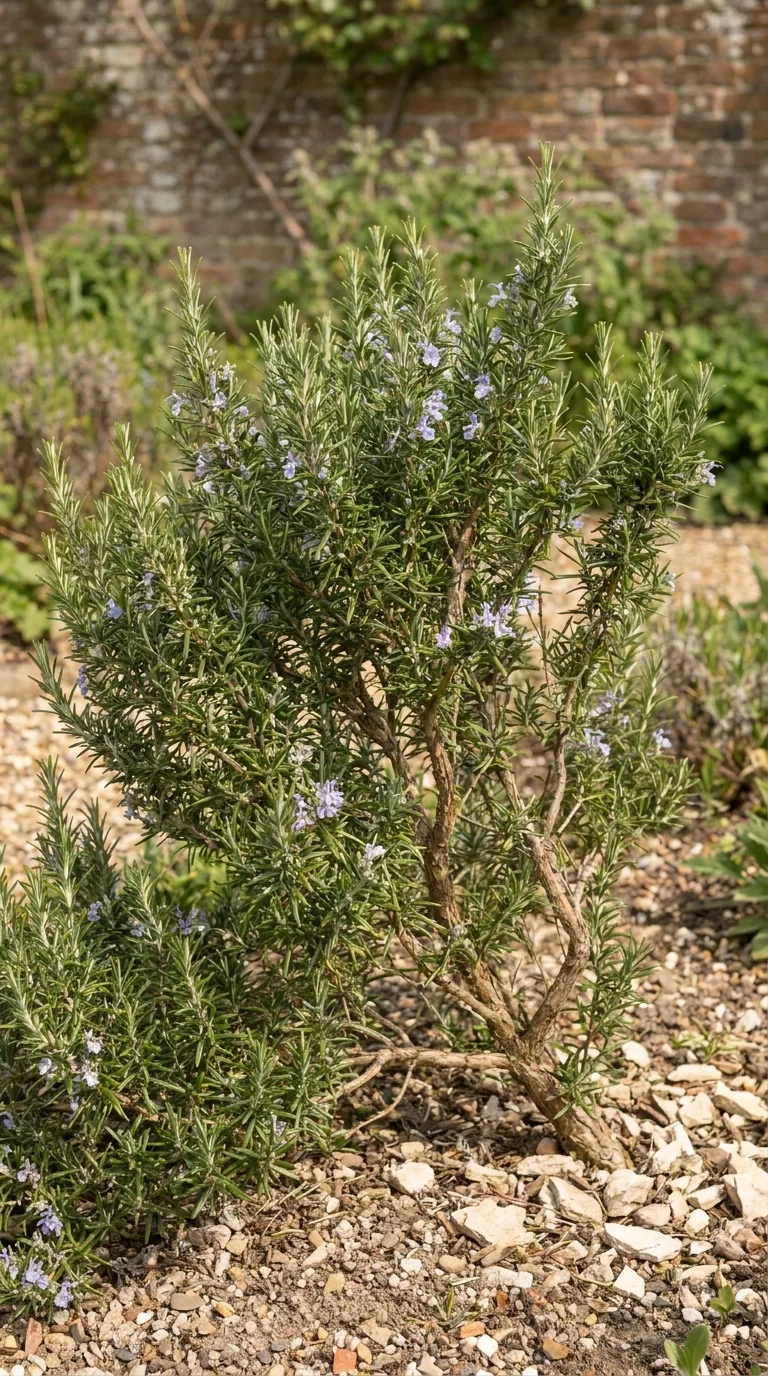
Rosemary can supply fresh sprigs through much of the year, but a healthy plant depends on a suitable root environment. In Britain, prolonged winter wet is often a more persistent problem than a lack of summer water. A sunny position, dependable drainage and modest pruning give this evergreen shrub a better chance of remaining leafy than repeated feeding or severe cutting into bare stems.
Begin by deciding whether the plant belongs in the ground or in a pot. A dry, sunny border may suit it well. A small hole in waterlogged clay will not become a Mediterranean growing site simply because a handful of grit is added. A container can be a useful alternative, provided the compost drains, the pot is stable and winter rainfall can escape.
Choose a plant that fits the space
Rosemary is a woody shrub rather than a small seasonal herb. Upright forms can eventually become substantial plants, while spreading or trailing forms have a different outline. Read the mature dimensions and hardiness information for the named variety. A compact young plant in a nursery pot does not indicate how much space it will occupy in five years.
Choose a variety for the form you need: an upright plant for a permanent border, a compact selection for a large container, or a trailing form where stems can hang without becoming a trip hazard. Flower colour and leaf size vary, but health and suitability matter more than novelty. Check that the plant has green growth near the lower part of several stems, not only a tuft at the tips.
Avoid a plant with consistently wet compost, widespread stem dieback or roots forming a tightly circling mass. Rosemary leaves naturally have a pale underside, which should not be confused with disease. Examine new shoots, older leaves and the rootball together. A plant raised under cover may still need gradual acclimatisation before it moves into a windy garden.
Assess sunlight and drainage together
Full sun is the most useful starting point. Choose an open position where surrounding shrubs will not soon shade the rosemary. A south- or west-facing border can work, but aspect alone does not guarantee enough light: fences, buildings and trees alter the hours of sun. Look at the site in winter as well as summer if the plant will remain there permanently.
After heavy rain, observe whether water lies on the surface or the soil stays sticky and airless for long periods. Do not plant into a spot where the rootball will sit in standing water. If the whole border drains poorly, improve the site on an appropriate scale or choose a raised growing position with a clear route for surplus water. A gritty planting pocket surrounded by dense clay can act like a sump.
On reasonably draining soil, incorporate organic matter only as needed rather than creating an excessively rich, soft planting mix. Rosemary does not need a heavily manured bed. Avoid trampling wet soil during preparation. If the ground is frozen, saturated or too dry to settle properly around the rootball, delay planting and maintain the plant in its pot until conditions improve.
Planting in a garden border
Spring is often a convenient planting time because the shrub can establish roots before winter, particularly in colder or wetter districts. Container-grown plants can be planted at other suitable times, but avoid extremes and consider how much establishment time remains. Water the nursery rootball before planting so it does not begin its new life dry inside otherwise damp soil.
Dig a hole broad enough to accommodate the roots without folding them. Set the shrub at the same depth as in its pot, with the top of the rootball level with the surrounding soil. Loosen severely circling outer roots carefully if necessary. Backfill, firm gently and water to settle soil around the roots. Keep soil and mulch away from the base of the stems.
Allow room for mature growth and maintenance. Planting directly against a wall can put the roots in a dry rain shadow, while pressing foliage against masonry reduces access for inspection. Leave enough space to reach the plant and remove dead material. If it is intended as a low hedge, base spacing on the chosen cultivar's eventual spread and the effect you want, rather than copying a single spacing for every rosemary.
Set up a long-term container
Choose a frost-resistant pot with several unobstructed drainage holes. It should be wide enough to resist wind and large enough to support root growth, but a tiny new plant does not need an enormous wet volume of compost around it. Pot on progressively as roots establish. A container with a wide opening makes later repotting easier than a narrow-necked ornamental urn.
Use a suitable peat-free, free-draining container mix. A loam-based compost intended for long-term shrubs can be useful, with horticultural grit incorporated where appropriate for the product and site. Do not substitute unwashed building sand, and do not assume a layer of rubble in the base fixes poor compost. Effective drainage comes from open holes and a growing medium with a suitable structure throughout.
Raise the pot slightly if needed to keep holes clear of paving or debris. Remove outdoor saucers before wet weather, or empty them promptly after watering. Stand the container where rain can escape freely but wind is not constantly rocking the shrub. If you plan to move it in winter, consider its full weight after watering before choosing a very large ceramic container.
Water new roots, then adjust to establishment
Drought tolerance describes an established plant's capacity, not a licence to leave a newly planted shrub dry. Check the rootball through its first growing season and water during dry spells so roots can move into surrounding soil. Apply enough water to wet the root zone, then allow drainage. Occasional deep watering is more useful than constantly dampening only the surface.
Once established in suitable ground, rosemary usually needs much less intervention. Check during prolonged drought, especially on shallow soil or beside competing roots. In a pot, continue checking throughout summer because roots cannot explore beyond the container. Dry surface compost does not always mean the entire pot is dry, so assess beneath the top layer before adding water.
During winter, water demand falls markedly. Rain may supply more than enough for outdoor pots. If the plant is under a roof or in a greenhouse, however, it can still dry out while evergreen leaves continue losing moisture. Check occasionally on mild days rather than forgetting it until spring. Do not water a frozen rootball or leave standing water beneath the pot.
Feed only where there is a reason
Rosemary in ordinary garden soil generally does not require heavy feeding. Excessively lush growth is not the aim, particularly when soft new shoots must face cold weather later in the year. If a plant is failing, inspect drainage, light and root condition before applying fertiliser. Brown shoots do not automatically diagnose a nutrient shortage.
A long-term container eventually uses the nutrients in its compost. A modest feed during active growth, following the compost and fertiliser labels, can maintain it. Refreshing worn compost and repotting when roots are crowded are also important. Adding stronger liquid feed repeatedly cannot replace a physically exhausted root environment.
Keep a simple note of when you repotted and fed. This prevents accidental doubling of slow-release and liquid products. If the plant is healthy, leafy and growing at a suitable rate, there may be little reason to change the routine. The objective is a durable shrub with usable shoots, not the fastest possible extension growth.
Prune lightly while green growth remains
Regular light cutting keeps rosemary more compact and gives you kitchen sprigs. Cut back the current season's leafy growth while leaving green foliage below the cut. Avoid treating an old, bare framework like a deciduous hedge that will reliably reshoot after hard renovation. Rosemary often responds poorly when cut far into leafless wood.
After flowering is a useful time for a light shaping trim, provided conditions allow new growth to mature before winter. In cold districts, be cautious about late-season pruning that removes protective foliage or encourages tender growth. Remove dead or frost-damaged tips when the extent of damage is clear and active growth is resuming, rather than immediately cutting back the entire shrub after one cold night.
Use clean, sharp secateurs for woody stems. Stand back periodically so that you do not remove an uneven amount from one side. If the plant has become very leggy with no green shoots near the base, take replacement cuttings from healthy tips before deciding whether to replace it. A slow replacement strategy is more dependable than a promise that severe pruning will rejuvenate every old rosemary.
Make winter drainage the priority
Before autumn rain becomes persistent, remove accumulated leaves from the pot surface and check drainage holes. Roots emerging through holes can block them, and a pot that drained when new may no longer do so. Empty saucers, check that pot feet remain stable and move the container away from a gutter overflow. These checks are more useful than wrapping a waterlogged pot in multiple layers.
In colder exposed locations, position pots beside a sheltered wall or use a cold greenhouse where available. Keep foliage in good light and allow ventilation. Protection from severe frost can help, but a warm indoor room with poor light is not a suitable permanent substitute for an outdoor rosemary. Avoid sealing the whole shrub in plastic, which can trap moisture around foliage.
A plant cover can reduce exposure during a brief cold spell, but it cannot guarantee survival at every temperature. The variety, root moisture, duration of freezing and wind all matter. Check after the event and wait to see which buds resume growth. If the roots remain sound, some damaged tips may be removed later; a plant with extensive basal decay is a different problem.
Propagate healthy shoots as insurance
Cuttings let you keep a suitable cultivar and create a replacement for an ageing plant. Take healthy, non-flowering shoots during the appropriate softwood or semi-ripe stage in the growing season. Prepare a small clean pot of free-draining peat-free propagation compost. Use a sharp blade, remove leaves from the portion that will sit below the surface and insert the cuttings without crushing their bases.
Keep cuttings in bright, sheltered conditions away from harsh direct sun. Maintain modest moisture and enough humidity to reduce wilting, while allowing air exchange. A tightly closed wet bag can encourage decay, so inspect frequently. Rooting time varies with shoot condition and temperature; resistance to a very gentle tug and new growth are clues, but avoid pulling cuttings up repeatedly to check.
Pot rooted cuttings individually once they can be handled with a coherent root system. Give them time to establish before exposure to severe weather. Do not propagate from a shrub with unexplained systemic decline simply to preserve it at any cost. Healthy source material is a better starting point than many cuttings carrying the same problem.
Troubleshoot the pattern, not one leaf
Brown foliage can follow drought, waterlogging, frost or root damage. Check whether the affected part faces the prevailing wind, whether the whole rootball is dry and whether the compost smells sour or stays saturated. Recent changes, such as moving a pot beneath an overhang or repotting into a much larger container, may explain the timing.
Fine pale speckling and small insects on the leaves require a closer look, but minor feeding damage does not always threaten the shrub. Rosemary beetles are distinctive metallic beetles that may occur on rosemary and related herbs; inspect leaves and shoots before deciding on control. Hand removal can be practical on a small plant. Do not spray edible foliage with improvised household mixtures.
If using a plant-protection product, verify that it is currently authorised for the crop and situation, and follow its label. Product availability and permissions can change. For a small kitchen shrub, correcting poor conditions and physically removing a limited problem often offers a straightforward first response. Recheck the plant so that you can judge whether the action helped.
Harvest without unbalancing the shrub
Take small sprigs from several parts of the plant, preferably from fresh leafy growth. Leave enough green foliage to support continued growth and maintain the shape. A pot used heavily every day may need a second plant to share the harvest. Winter picking should be modest because replacement growth is much slower than in summer.
Wash sprigs as needed and dry them before use or storage. Rosemary can be dried for cooking, though the texture and strength differ from fresh shoots. Remove tough woody stems from finished dishes where appropriate. Keep preserved herbs clearly labelled and use suitable food-storage practices rather than assuming aromatic oils preserve any homemade mixture safely.
The most reliable routine is simple: give rosemary sun, keep the roots draining, water according to establishment and container conditions, and trim within leafy growth. If you also want a fast-growing annual herb, growing coriander from seed requires a contrasting approach based on repeated sowing and avoiding heat stress rather than maintaining a permanent woody shrub.

