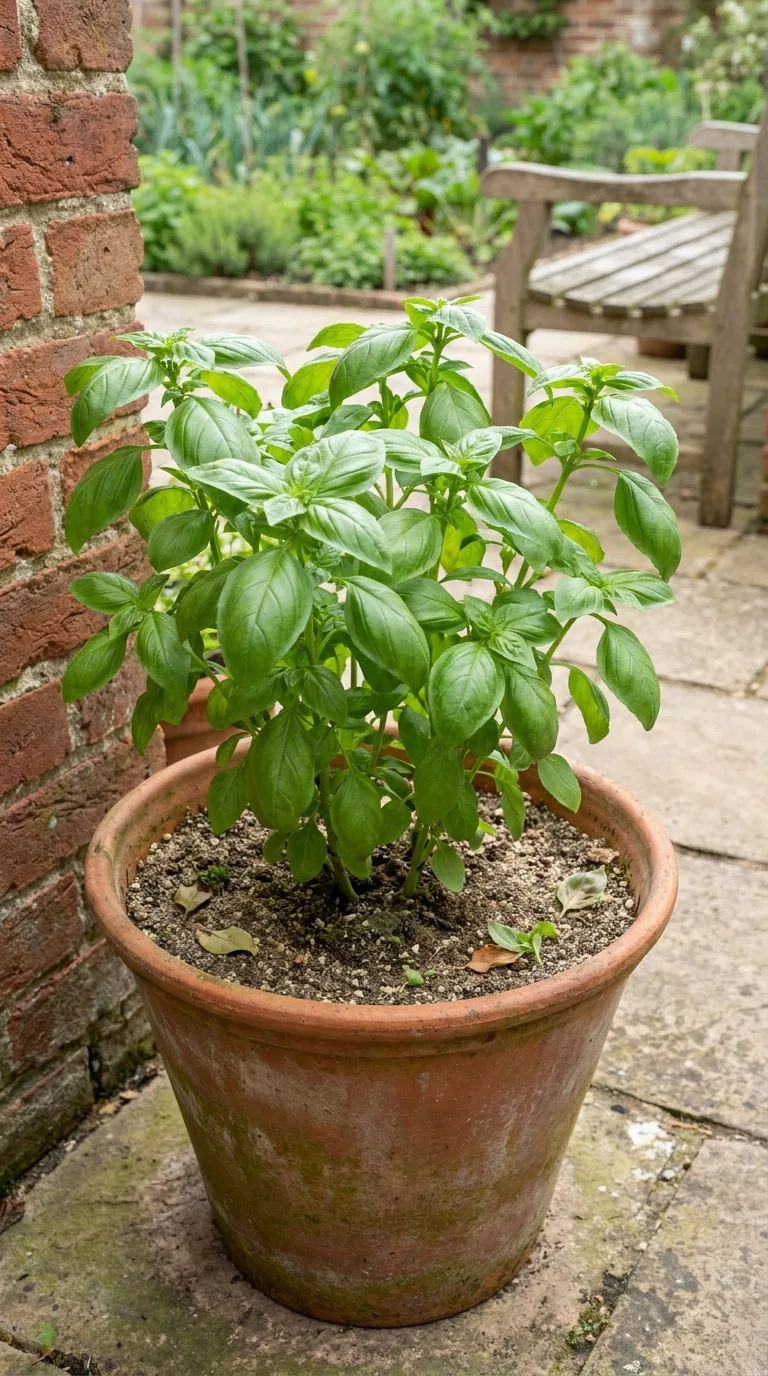
Basil is a warmth-loving herb, so growing it successfully in Britain begins with finding the right place rather than the earliest possible sowing date. A bright kitchen window, a greenhouse bench and a sheltered patio can all work, but they offer different temperatures and drying conditions. Treat basil as a tender summer crop outdoors. A plant that stays alive through a cool spell may still stop making the soft, aromatic leaves you want to harvest.
The aim is a compact plant with several leafy stems, a healthy root system and enough new growth to replace what you pick. You can start with seeds or a nursery plant. Either route is useful, but a crowded supermarket pot is a different starting point from a single well-spaced garden plant. Understanding that difference prevents many early disappointments.
Choose basil for your kitchen and growing space
Sweet basil is a useful first choice for pesto and tomato dishes. Its fairly large leaves give a worthwhile harvest from a small number of plants. Greek basil has smaller leaves and a naturally compact habit, while Thai basil has a different flavour and usually firmer stems. Purple-leaved forms can be attractive in containers, although they still need strong light and warm conditions. Choose by the flavour you want rather than assuming every packet produces interchangeable leaves.
Look at the expected plant size on the label. A compact type suits a small window better than a vigorous variety that will soon press against the glass. If buying a plant, choose several healthy shoots with fresh leaves and no sticky deposits. Lift the nursery pot gently: roots should hold the compost together without forming a solid, dry felt. Avoid plants standing in water or carrying blackened stems at compost level.
Buy enough seed for small repeat sowings rather than raising a full packet at once. Two or three well-grown pots are usually easier to manage than a tray of seedlings that cannot all fit into the brightest space. A later sowing also provides younger replacement plants when the first pots begin flowering or lose vigour.
Start seeds with warmth and sufficient light
Sow indoors in spring when you can provide both warmth and good light. March or April is a reasonable starting point in many homes, while a later sowing can catch up quickly on a bright window. Starting in January on an unlit windowsill commonly produces stretched growth because the room is warm enough for development but daylight is limited. Follow the packet for the particular basil type, including its germination temperature and covering depth.
Use clean small pots or modules filled with fresh peat-free seed compost. Moisten the compost before sowing so that subsequent watering does not wash seeds into corners. Sow thinly over a level surface, cover lightly as directed, and label the pot. A clear lid or propagator reduces drying during germination, but check underneath it each day. The compost should remain moist, not saturated, and the pot needs drainage holes.
Once shoots appear, remove the lid gradually and give seedlings the brightest suitable position. Do not leave a closed propagator in direct sun: the temperature inside can rise rapidly. Rotate pots when seedlings lean towards the window. If the stems become very long and pale, more heat is unlikely to solve the problem; improve light, reduce crowding and consider sowing a fresh pot at a better time.
Let seedlings develop enough roots to lift with their compost intact. Handle them by a leaf rather than pinching the tender stem. Move small groups or individual plants into pots before their roots become tightly tangled. There is no benefit in shaking every speck of compost away. Water after potting and keep the plants sheltered while they establish.
Potting up a purchased basil plant
A supermarket herb pot often contains many seedlings packed closely together to give an immediately full appearance. Those seedlings compete for water, light and nutrients once you keep the pot at home. If the plant is healthy, water it first, slide out the rootball and divide it gently into a few sections. Replant the sections in separate pots at their original depth. Do not promise yourself that every stem will survive the disturbance.
A pot about 20cm wide and deep is a useful starting size for a summer basil plant or a modest group, provided it has open drainage holes. Use peat-free multipurpose compost suitable for container growing. Leave watering space beneath the rim, and avoid squeezing the compost into a hard block. A decorative outer pot is fine indoors only if you remove trapped water after watering.
Keep newly divided plants in bright conditions without immediately exposing them to fierce midday sun. Harvest lightly until you see new growth. If the original plant is already yellowing, wilting despite wet compost or rotting at the base, dividing it may simply distribute weak roots among more pots. Starting again from seed or a healthy nursery plant can be more effective.
Decide when basil can go outdoors
Use the weather and the actual position rather than a calendar date alone. Basil needs frost-free conditions and consistently mild nights; waiting until overnight temperatures are reliably around 10°C or above is a cautious practical approach, rather than a claim that 10°C is a sharp biological boundary. A sheltered southern patio may become suitable earlier than an exposed northern garden. Cold wind can check growth even when no frost occurs.
Harden plants off gradually over roughly one to two weeks. Begin with a few sheltered daytime hours outdoors, then extend exposure as conditions allow. Bring pots indoors on cold nights. Protect soft leaves from strong wind and sudden intense sun. Hardening off increases tolerance of outdoor conditions, but it does not make basil frost hardy.
Choose a sunny, sheltered place within easy reach of the kitchen. A wall can provide useful shelter, although pots beneath roof overhangs may receive very little rain. Avoid a position where gutters drip onto the foliage or cold wind funnels through a passage. When planting in soil, wait until it has warmed and drains well. Containers often offer more control because you can move them during a deteriorating forecast.
Give enough light without overheating the roots
Indoors, use the brightest practical window while keeping leaves from touching cold glass. A plant on a shelf several metres from the window may look decorative but receive too little useful light. Pale, widely spaced leaves and stems leaning strongly in one direction are reasons to reassess the position. Clean glass and avoid shading the pot behind larger houseplants.
A very sunny window can also make a small pot hot and thirsty. Check the rootball rather than assuming a wilted plant must be dry. If the compost is wet and the leaves wilt during the hottest part of the day, move the pot slightly back from the glass and check again later. Avoid dramatic repeated moves between a dark room and a blazing greenhouse, because each change asks the foliage to readjust.
In a greenhouse, allow space between plants and ventilate during warm weather. A greenhouse can be much hotter than the outdoor forecast suggests. Keep basil where it receives light without being crushed beneath tomato foliage. Ventilation helps foliage dry and reduces stagnant humid conditions, but do not aim a cold draught directly across recently moved seedlings.
Water according to the rootball
Check compost with a finger and by lifting the pot. A light pot with drying compost needs water; a heavy pot with damp compost may not. Apply water slowly until the rootball is moistened and excess drains away, then empty the saucer or outer cover. Frequent tiny splashes can leave the lower roots dry while keeping the surface misleadingly dark.
Try to water the compost rather than wetting every leaf. Morning watering is convenient because foliage has time to dry and you can check the pot again in hot weather. The important point is a consistent moisture supply with drainage, not a rigid instruction to water at one particular hour. A windy patio pot can dry much faster than an indoor plant of the same size.
If compost becomes very dry and water runs down the gap beside the pot, apply it in stages. Allow the first application to soak in before adding more. A brief soak of the pot base can help rewet a resistant rootball, but drain it afterwards. Do not leave basil sitting permanently in a bowl of water, especially during cool weather.
Feed modestly and pinch for branching
Fresh container compost usually includes some nutrients. Check its label before adding feed immediately. When those reserves are being used and the plant is growing actively, a balanced liquid feed at the label rate can help maintain leaf production. More fertiliser cannot compensate for cold roots or poor light. Never add extra concentrate to force recovery from a drying episode.
Begin pinching once the plant has several pairs of true leaves and is growing strongly. Cut a stem just above a pair of leaves, leaving those leaves and the buds beside them on the plant. Those buds can develop into two new shoots. Repeating this on different stems creates a bushier plant and supplies tender tips for cooking.
Picking individual large leaves from the bottom of a single stem does not shape the plant in the same way. Avoid stripping every leaf or cutting right down into a nearly bare base. Keep enough leaf area to support regrowth, and pause heavy picking if growth slows. The appropriate harvest depends on plant vigour, light and temperature rather than a fixed number of leaves per day.
Flowers, pests and declining growth
Remove developing flower spikes if your priority is a sustained leafy crop. Flowering is a normal stage, not proof that you have failed, and the flowers are edible. A plant can still become tired or woody as the season advances. Maintaining a younger second sowing is often more productive than trying to reverse a fully mature plant indefinitely.
Inspect soft shoot tips for aphids and check leaves near the compost for slug or snail damage outdoors. Remove small pest colonies by hand where practical and inspect again a few days later. Avoid using washing-up liquid mixtures on edible leaves; household products are not automatically suitable plant treatments. If using any authorised product, confirm that basil is an approved edible crop and follow every label instruction.
Darkened leaves after a chilly night, holes after a damp evening and yellowing over wet compost need different responses. Record what changed before the symptoms appeared. Cut away badly damaged material with clean scissors, correct the likely growing condition and watch the new growth. If stems are collapsing at the base, isolate the pot and consider replacing it rather than repeatedly soaking it.
Harvest and keep usable leaves
Pick clean shoot tips just before cooking when possible. Use scissors for thicker stems and support the shoot so that the plant is not pulled from its compost. Rinse leaves as needed and dry them gently. Avoid crushing a large harvest into a deep container, where bruised leaves can blacken before you use them.
For surplus, freeze chopped leaves in small portions or prepare a suitable recipe for freezing. Freezing changes texture, so these portions suit sauces better than a fresh garnish. Follow food-storage guidance for the recipe, particularly any mixture containing oil; a home herb mixture is not automatically safe for prolonged room-temperature storage. Drying basil is possible but gives a different result from fresh leaves.
As autumn nights cool, bring a healthy pot indoors before growth is badly checked. Check it for pests first and use a bright window. Expect slower production as daylight falls. A warm kitchen does not guarantee a winter harvest equal to midsummer, and sometimes the best final step is to harvest what remains and plan a fresh spring sowing.
A practical first-season routine
Start with one sowing and one purchased plant if you want to compare the routes. Keep the purchased plant productive while seedlings establish, then pot seedlings on only as space permits. Note the sowing date, pot size, first outdoor night and first harvest. These observations reveal whether your main constraint is light, warmth or simply too many plants for the available window.
Check pots frequently during summer, pinch little and often, and sow a replacement before the original plants decline. Group basil with plants that share its need for warmth and attentive summer watering. For a separate perennial herb with a very different habit, the guide to growing mint in containers explains how to manage spreading roots without allowing them into the rest of the garden.

