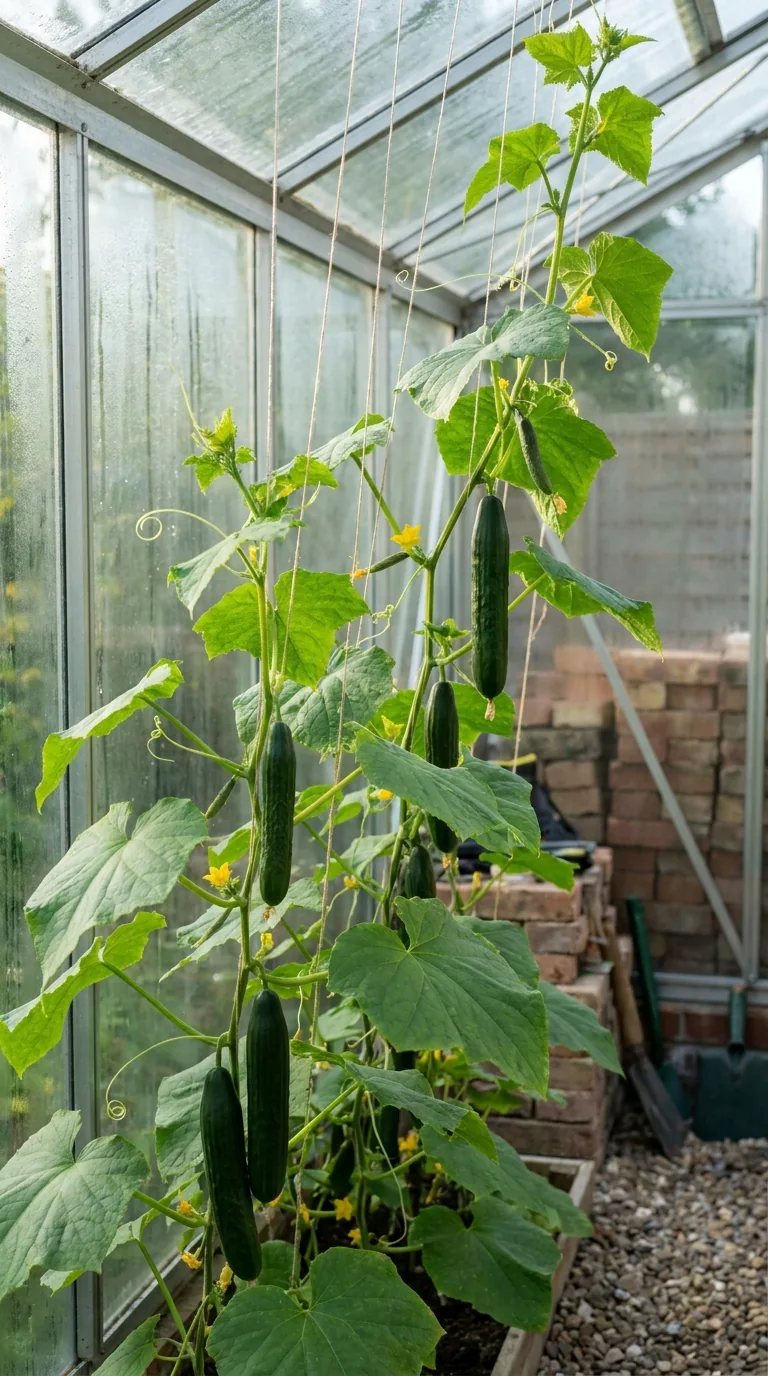
Cucumbers can grow successfully in UK gardens, but the choice between a greenhouse type and an outdoor type must come first. The two groups differ in their preferred conditions and, importantly, in how pollination should be managed. A plant labelled simply cucumber without further details leaves you missing information that affects both training and fruit quality.
A greenhouse provides more dependable warmth and shelter, while an outdoor crop needs a sunny, protected site and a suitable variety. Neither setting removes the need for steady moisture, enough root space and regular picking. Start with one or two plants and learn their growing habit before filling a small greenhouse with vigorous climbing stems.
Greenhouse and outdoor cucumbers are different choices
Greenhouse cucumbers are bred for protected conditions and often produce long smooth fruits. Many modern varieties are all-female and set fruit without pollination. Outdoor varieties, often called ridge cucumbers, are selected for less controlled conditions and may produce shorter, more textured fruit. Exact appearance varies, so use the variety description rather than fruit shape alone to identify the type.
| Feature | Greenhouse type | Outdoor type |
|---|---|---|
| Growing conditions | Warm protected position | Warm sunny sheltered garden |
| Pollination | Many types should remain unpollinated | Traditional outdoor types need pollination |
| Support | Usually trained vertically | Can trail or climb a suitable frame |
| Buying decision | Check all-female and training instructions | Check suitability for UK outdoor growing |
Some cultivars suit more than one growing situation or have specialised flowering characteristics. Their packet instructions take priority over a broad rule. Keep the label after purchase, especially if growing several types together. Confusing their flower management is more damaging than forgetting the fruit's exact commercial description.
Match the plant to your site
An unheated greenhouse can give a useful summer environment, but it can still be cold at night in spring. Measure conditions with a minimum thermometer rather than assuming glass prevents frost. Check the practicalities too: can you open vents daily, reach the plants for picking and water while away from home?
Outdoors, look for sun, shelter from cold winds and soil that holds moisture without remaining saturated. A south-facing or otherwise warm protected position can help. Avoid a narrow dry strip directly beneath a thirsty hedge or tree. A sheltered site should still allow enough airflow for leaves to dry after wet weather.
Container growing works where soil is unsuitable, provided the pot is substantial and stable. A tall frame attached only to a lightweight pot can topple when the plant becomes leafy. Anchor the support appropriately and think about the mature plant's wind resistance before planting.
Sow when you can keep seedlings growing
Start greenhouse cucumbers under cover in spring, with the exact timing depending on whether the growing space is heated and reliably warm. Outdoor types are often started indoors in April or May for planting after frost risk. Direct outdoor sowing can work in late May or early June in suitable warm conditions.
Cucumbers grow quickly once established, so very early sowing can create a large tender plant before you have a safe final position. Work backwards from realistic planting conditions. A later healthy seedling often performs better than one held in a small pot through several cold weeks.
Use clean pots, fresh peat-free compost and one seed per small pot. Sow at the depth on the packet, water gently and keep warm for germination. Remove covers after emergence and provide strong light. Do not leave seedlings in an overheated propagator where the compost stays continuously wet.
Pot on and transplant with care
Handle plants by the rootball or a leaf, avoiding pressure on the stem. Pot on before the roots become congested if planting must be delayed. Keep the rootball intact during each move. Cucumbers can respond poorly to careless root disturbance, so separating a crowded pot of seedlings is an avoidable complication.
Outdoor plants need gradual acclimatisation to wind, sunlight and cooler air. Begin with short sheltered daytime exposure, increase it over roughly one to two weeks and bring plants under cover when cold conditions threaten. Hardening off cannot make a cucumber frost hardy.
Plant at approximately the original growing depth and avoid burying the neck deeply in cold wet compost. Water the rootball before planting and settle the surrounding compost gently afterwards. A plant that droops immediately needs assessment of roots, moisture and exposure; automatically adding more water may make an already saturated situation worse.
Prepare beds and large containers
In greenhouse borders or outdoor beds, improve the soil with well-rotted organic matter where appropriate and remove persistent weeds first. Allow generous spacing according to the variety so plants do not form an impenetrable tangle. Plan the position of supports before planting rather than forcing posts into established roots later.
For pots, use suitable peat-free multipurpose compost and drainage holes that remain clear. A container around 45cm across is a useful substantial starting size for one plant, but check the variety and growing system. Small pots dry quickly and make both watering and feeding less forgiving.
Leave room at the top for watering and inspect drainage after the first thorough soak. Do not allow a decorative outer pot to become a hidden reservoir unless you are using a designed self-watering system with the correct setup. Water at the base should reach roots without keeping the stem neck constantly wet.
Train upward growth without constricting stems
A vertical string, trellis or suitable netting can support a climbing cucumber and keep fruit easier to find. Install it securely, considering the combined weight of wet foliage and developing fruit. Guide stems gently and tie loosely where needed. Check ties as stems thicken.
Training and pinching vary by variety and system. Some greenhouse types are trained on a main stem with managed side shoots; outdoor ridge types may be allowed to branch more freely. Follow the cultivar instructions rather than applying tomato pruning rules. A cucumber's tendrils and side growth serve a different growth pattern.
If plants trail outdoors, leave enough clear ground for their spread and keep developing fruits away from persistently wet soil where practical. Do not repeatedly lift and rearrange long mature stems, which are easy to damage. Arrange access so harvesting does not require stepping over or onto the plant.
Water consistently and assess the rootball
Cucumbers need a reliable water supply during active growth and fruit development. Check below the compost surface daily in warm weather, particularly in pots. Water when needed so the rooting medium becomes evenly moist, then allow excess to drain. Avoid a cycle of severe drying followed by flooding.
A wilted plant may be dry, but saturated roots, damaged stems and extreme heat can also cause wilting. Feel the compost before acting. If the rootball is wet and the plant repeatedly collapses, investigate drainage and root condition rather than applying another watering can.
In a greenhouse, manage moisture alongside ventilation. Cucumbers prefer humid growing conditions, yet a closed overheated structure is not a healthy solution. Damping down paths may help humidity during hot conditions where the growing system permits it, but avoid leaving a slippery wet floor or treating humidity as a replacement for root watering.
Feed as cropping develops
Container compost supplies nutrients initially, but a vigorous fruiting plant will eventually need supplementary feeding. Use a suitable liquid feed following its dilution and frequency instructions. Choose a routine you can maintain consistently rather than alternating long gaps with very strong applications.
Keep track if an irrigation system also supplies fertiliser. Adding a separate full-strength hand feed without accounting for that supply can overdo the total. In soil beds, requirements depend on preparation and plant growth. Yellowing is a symptom to investigate, not proof that every cucumber needs the same extra fertiliser.
Water alone may be needed between feeding days. Do not withhold necessary moisture simply because the next scheduled feed is not due, and do not feed a dry stressed rootball at a stronger rate to catch up. Follow the product's label and correct underlying conditions first.
Get flower management right
Female flowers have a small immature cucumber behind them; male flowers have a slender stalk without the swelling. In traditional pollinated outdoor types, male flowers provide pollen and must remain. Insect access matters, so a protective covering left over plants at flowering may prevent the crop from developing normally.
Many greenhouse varieties are intended to set fruit without pollination. Male flowers, if they appear on those types, may need removal because pollination can affect fruit quality and sometimes bitterness. Check the seed packet: do not remove every male flower from an outdoor variety after reading general greenhouse advice.
All-female does not mean that every flower will inevitably become a perfect cucumber. Temperature, root moisture and plant vigour still influence development. Likewise, a failed tiny fruit is not sufficient evidence to blame pollination without checking the broader conditions. Keep different types clearly labelled if growing them together.
Manage greenhouse heat and pests
Open vents as conditions warm and use suitable shading when necessary. Temperature can rise quickly in a small greenhouse, so check the inside rather than judging by outdoor comfort. Plants need enough light as well as protection from extreme heat; permanent heavy shade is not a general solution.
Inspect leaf undersides for pests such as red spider mite, particularly in hot dry conditions. Fine webbing, speckling and declining foliage deserve closer examination, but dust or one pale leaf does not establish a diagnosis. Early identification gives you more choices, including appropriate biological controls in a suitable greenhouse environment.
Powdery mildew may affect older leaves. Maintain sensible spacing and watering and remove badly decayed tissue where appropriate. Do not spray household chemicals onto an edible crop. If considering a commercial treatment, confirm it is appropriate to the crop and situation and follow its current label precisely.
Troubleshoot fruit quality
| Observation | Possible checks | First action |
|---|---|---|
| Tiny fruits yellow and stop growing | Stress, temperature and type-specific pollination | Review conditions and remove failed fruit |
| Misshapen fruit | Water supply, crowding and development | Keep moisture steady and check new fruit |
| Bitter fruit | Cultivar, stress and pollination requirements | Do not eat unusually bitter cucumbers |
| Leaves collapse while compost is wet | Drainage, stem and roots | Investigate before watering again |
One imperfect fruit does not predict the entire season. Remove unusable fruit and watch the next flowers while correcting conditions you can influence. Do not promise yourself a particular yield based on the number of flowers alone. A cool outdoor summer and a well-managed greenhouse are very different environments.
Harvest before fruit becomes overmature
Pick at the size and appearance recommended for the cultivar, while fruit is firm and tender. Use clean secateurs or a knife, supporting the cucumber so its weight does not tear the stem. Avoid leaving mature fruit hidden behind leaves, where it can grow oversized and divert the plant's resources.
Check every few days during productive weather. Long greenhouse types and small snack types cannot be judged by the same length, so keep the packet or label accessible. Use the crop promptly and remove damaged or decaying material. Particularly bitter fruit should be discarded rather than made acceptable through cooking.
Review the season and rotate
After cropping ends, remove spent plants and clean supports and reusable containers. Record whether warmth, watering or access was the main difficulty. If greenhouse space was the limiting factor, one properly trained plant may be more manageable than several competing vines next year.
For a crop with a different seasonal pattern, see planting and growing garlic in the UK. Its autumn or spring establishment options can complement summer growing, but choose the next crop according to soil condition and the time actually available.
A useful comparison is to record indoor minimum temperature, days when a pot dried noticeably, and the first harvest from each type. These notes help explain performance without claiming the same variety will behave identically next summer. If you have only one suitable position, select for that position rather than buying a greenhouse plant and hoping outdoor weather will make up the difference.
Leave a clear route to the greenhouse door and vents throughout the season. A support that initially seems tidy may obstruct access once side growth expands. Planning that route before sowing makes daily ventilation and harvest easier when the plants are at their largest.

