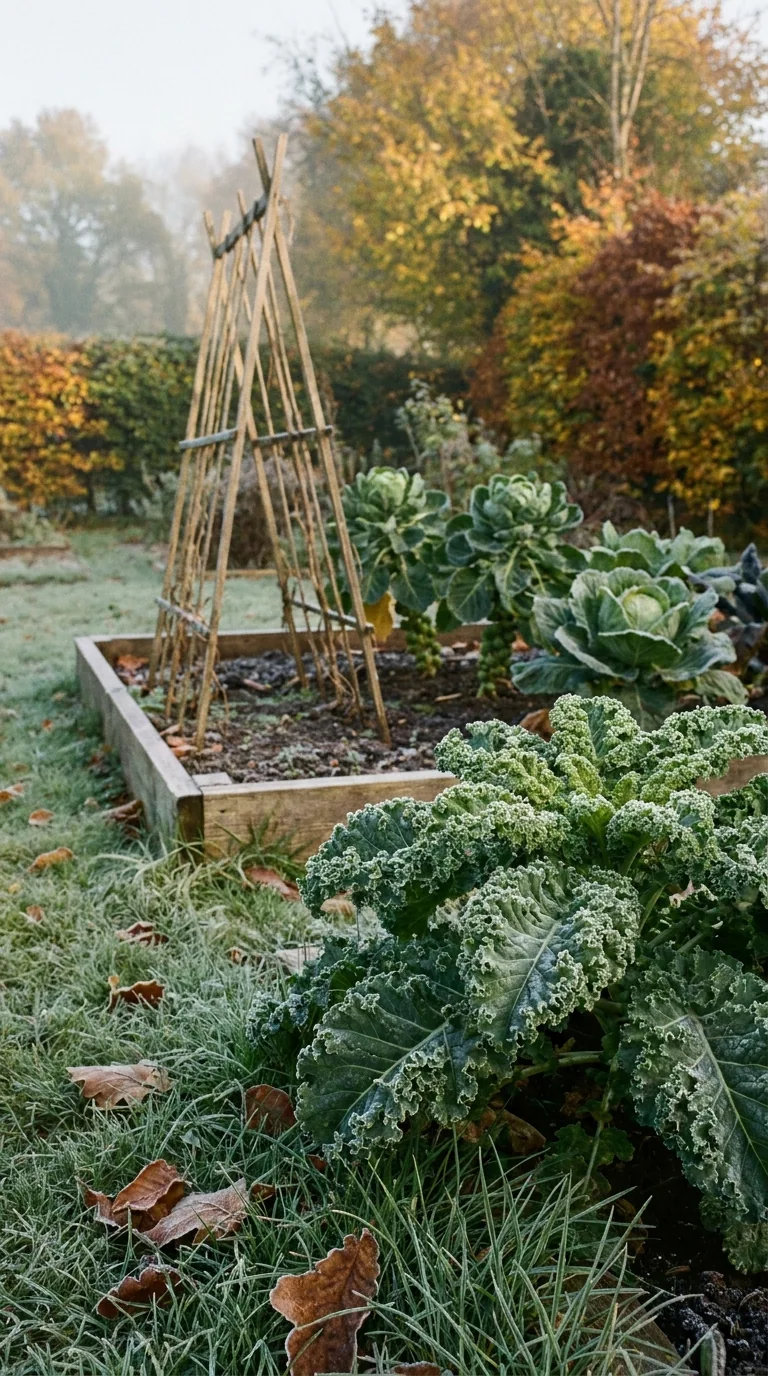
The first autumn frost is a risk to prepare for, not a date that can be guaranteed in advance. Across the UK, the end of the tender growing season varies with altitude, distance from the sea, local terrain and the year's weather. A sheltered coastal garden may keep summer crops going after an inland frost pocket has experienced damage. Even within one plot, exposed leaves and protected pots can face different temperatures.
The practical aim is to identify what matters, prepare shelter and harvest vulnerable produce before a cold night causes avoidable losses. You do not need to wrap every hardy shrub or clear every bed at the first cool forecast. Prioritise tender crops, container roots, recently established plants and fragile structures. Use climate information to organise autumn work and the current forecast to decide what needs doing now.
Understand what first frost means A first-frost record describes the earliest frost in a defined autumn period at a particular observation site. Summaries may show an average date or a probability-based threshold over many years. Neither is a promise about the coming season. An average can sit between years with markedly different outcomes, and a date based on air temperature may not capture frost that develops close to the ground.
Before using a calendar or calculator, check what the date represents. Is it based on a nearby weather station, a broad regional estimate or a date entered by the gardener? Does it describe air frost or ground frost? Is the underlying observation period stated? Precision on the screen is not necessarily precision in the evidence. Treat an unexplained date as a reminder to prepare, and make actual protection decisions using local conditions and updated forecasts.
Distinguish ground frost from an air reading The ground and exposed plant surfaces can cool below the temperature of the air above them. This is particularly relevant during clear calm nights when heat is lost rapidly after sunset. Ground frost is therefore possible when a forecast air minimum remains slightly above freezing. A tender plant near the soil can suffer while a thermometer at a different height records a positive temperature.
Do not rely on a visible white coating as the only sign of a damaging night. Frost appearance varies with moisture and surfaces, and plant injury does not have to match what is visible on a lawn or car. Leaves may become dark, water-soaked or collapsed after freezing and later blacken. Check the crop itself and consider other causes of wilting too. Cold damage, drought and root problems can coexist, so the overnight event is context rather than a complete diagnosis.
Read regional patterns without fixed promises High and inland gardens tend to encounter autumn frost earlier than sheltered maritime locations, while urban buildings may retain warmth locally. These are broad tendencies. A valley bottom in the south can be colder on a clear night than a sheltered northern coast. Western mildness may also arrive with persistent wet, creating problems for plants that dislike winter moisture even before severe frost occurs.
Plan more conservatively where you know the garden is exposed, high, shaded or a cold-air collection point. Avoid assigning every place in a county the same deadline. If you have recently moved, ask nearby gardeners when they normally begin protecting tender plants, then observe your own plot. Keep records of where damage occurs and which plants were covered. Local evidence improves planning, but a handful of mild autumns still cannot prove that future frost will wait until the same week.
Make a frost priority list List tender annual vegetables, tender herbs, potted perennials and any plants whose minimum temperature requirements are uncertain. Tomatoes, courgettes, cucumbers and beans are examples of crops vulnerable to freezing. Basil can deteriorate in cold conditions even without frost. Check individual plant requirements instead of assuming that all edible crops should remain outdoors until the forecast reaches exactly 0°C.
Divide the list into plants to move, plants to cover temporarily and crops to harvest. Then identify what can remain with ordinary care, such as suitable established winter brassicas. A plant described as hardy may still need attention if it is newly planted, in a small exposed container or already stressed. Record the plant's name on the pot if identification is uncertain. Knowing what you are protecting prevents spending time on a robust shrub while a vulnerable container is left in the open.
Harvest tender crops before damage Pick ripe and usable tender produce when a credible cold risk approaches. Separate sound fruit from damaged or diseased material. For tomatoes, consider whether remaining fruit is mature enough to ripen under suitable indoor conditions rather than collecting every tiny immature fruit. Handle produce gently and avoid packing it wet into an airtight container. Check frequently and remove decay promptly.
For squash and pumpkins intended for storage, maturity and intact skin matter. Bring suitable fruit under cover before frost damages it, and use crop-specific curing and storage conditions. A frost-damaged squash should not be treated as a reliable long-term store. Do not carry heavy fruit by the stalk. Leave enough time in the plan for harvesting rather than expecting a last-minute fleece cover to save every crop during a prolonged freeze.
Move pots before they become difficult to manage Choose winter accommodation before the forecast becomes urgent. Check whether each plant needs bright frost-free conditions, cool dormancy or another arrangement. A dark shed and a warm windowsill are not interchangeable. Measure the doorway and assess the weight of large pots while there is time to arrange safe help or a suitable trolley. Avoid attempting heavy moves after surfaces become icy.
Inspect plants for pests and remove loose dead material before placing pots close together. Check drainage and do not bring a waterlogged container into a cool enclosed space without considering root health. Leave room for access and airflow so winter inspections remain possible. If a plant is staying outdoors, move it to an appropriate sheltered position and protect vulnerable container walls where useful. Shelter reduces exposure but cannot guarantee survival of a plant unsuitable for the local winter.
Use fleece with realistic expectations Horticultural fleece can reduce heat loss and shelter plants during some cold events. Protection depends on fabric, condition, arrangement and weather. It is not a fixed shield against every temperature. Inspect old material for tears and measure enough to cover the plant or bed with edges secured. Hoops or a light frame can keep wet fabric from pressing onto delicate growth.
Place covers before temperatures fall significantly, and fasten them against wind. Leave no dangerous loose loops of string or netting. Check underneath during suitable daytime weather for moisture, slugs and plant condition. In mild sunshine, open or remove covers as needed to prevent overheating. A cover that stays closed for weeks may exchange one problem for another. If a plant must remain frost-free during a severe spell, use an environment capable of providing that condition rather than adding unlimited layers without checking the temperature.
Know the limits of cloches and greenhouses Cloches and cold frames can moderate exposure and protect against rain and wind, but their internal temperature changes with the weather. An unheated greenhouse can freeze. Transparent walls allow light; they do not create an automatic frost-free zone. Monitor conditions near plants and give tender specimens additional suitable protection or move them when required.
Ventilate on mild days to reduce persistent condensation, while closing in time before cold nights. Secure lids and panels before storms and keep gutters clear so water drains as intended. Do not place plastic directly against tender leaves. If using a heater, follow instructions for the location and equipment, consider running costs and keep ventilation appropriate. A forecast of several freezing nights needs a different plan from a brief local ground frost after a sunny day.
Protect roots and soil appropriately Container roots can cool more rapidly than roots buffered by surrounding ground. Insulating the pot walls, grouping suitable containers in shelter and keeping drainage open may help. Keep pots off surfaces where drainage holes become blocked, and remove saucers that collect winter rain outdoors. A cold wet rootball can be a serious problem even when foliage is covered.
A suitable organic mulch over garden soil helps moderate the root environment and protect the surface. Apply to moist, workable ground and keep the material clear of trunks, stems and vulnerable crowns. Mulch does not keep exposed tender leaves frost-free, and piling it deeply against a plant is not automatically helpful. Consider the species and purpose. Plants adapted to dry winter conditions may need excellent drainage more urgently than a thick moisture-retaining blanket.
Continue sensible watering Cooling weather usually reduces water demand, but rain does not reach every pot. Containers beneath eaves and plants in greenhouses need moisture checks. Feel below the surface and assess weight where possible. Water according to the plant and rootball, allowing drainage, rather than continuing a summer schedule automatically or stopping completely at the first frost forecast.
Do not flood plants in an attempt to prevent all freezing damage. Wetting foliage or saturating poorly drained soil can create further problems. The aim is an appropriately moist root zone, not maximum water content. Evergreens may continue losing water in wind while frozen roots struggle to replace it, so placement and root protection matter. Keep watering equipment arranged so it does not become a trip hazard, and drain vulnerable hoses and fittings when freezing weather makes damage likely.
Use the frost planner with a forecast A planner is useful for setting a preparation window: inspect covers, identify tender plants and clear suitable indoor space before autumn risk usually rises. Read the assumptions behind the result. A broad regional estimate cannot account for a low hollow behind your fence, and a precise calendar day does not guarantee that this year's weather will follow it.
Check the local forecast more closely as the window approaches, particularly changes in overnight minima, wind and cloud cover. Update plans after new information rather than waiting for an old estimate to arrive. If your own minimum thermometer consistently records colder conditions than the nearby forecast location, allow for that difference cautiously. Keep notes about the instrument and its position so readings remain comparable. The purpose of a planner is timely preparation, not permission to ignore an earlier cold event.
Prepare a practical cold-night kit
Keep usable fleece, suitable clips or weights, labels and a torch together where they can be reached easily. Check that the covering material is large enough for the plants it is meant to protect. A kit prepared in advance saves time when a forecast changes, but it also helps reveal gaps while there is still time to solve them. Several small sheets may not cover a tall plant safely in wind.
Place a note beside the kit identifying which plants move indoors and which stay outside under temporary cover. Include where movable pots will go so valuable space is not already occupied by unrelated items. If help is needed for a heavy container, arrange it during ordinary conditions instead of planning a late move on an icy path.
After using covers, dry and store them appropriately when they are no longer required. Check for tears, broken fasteners and places where rain collected. Replace or repair only what is needed. Preparation is most useful when followed by inspection and adjustment; a box of old material that has not been opened since last spring may offer less usable protection than expected.
Keep the response proportionate to the forecast and the plant. A brief cold risk may justify a temporary cover, while a prolonged freeze may require moving a tender specimen into genuinely suitable accommodation. Decide the fallback before the first attempt is tested by severe weather.
Review plants after a cold night Allow frozen foliage to thaw naturally and avoid crushing or pruning brittle growth immediately. Assess damage over the following days, recognising that some effects appear gradually. A blackened annual vegetable late in autumn may be better cleared, while a perennial may retain healthy roots or stems and need patient assessment. Do not remove all protective dead top growth from a marginally hardy plant without considering its winter needs.
Record which crops were affected, where they stood and what protection was used. That record will improve next season's decisions about sowing and planting. The indoor seed-starting guide helps connect the next spring's sowing plan to realistic outdoor conditions. Autumn preparation is successful when valuable plants and harvests are managed before cold becomes an emergency, even if the precise first-frost date remains uncertain until it has happened.

