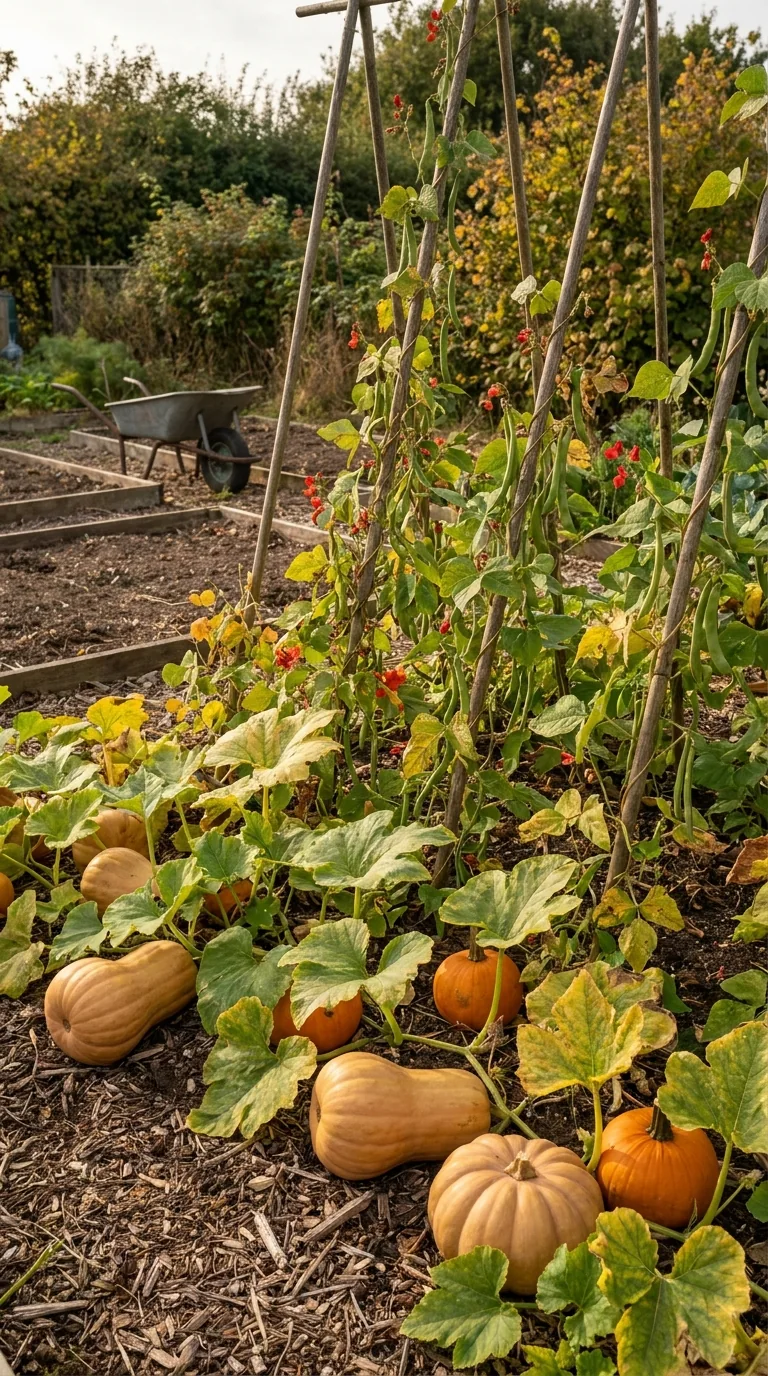
September is a changeover month in a UK garden. Tomatoes may still be ripening while the first autumn salads germinate nearby. The useful question is not simply what can be sown, but whether a particular crop can establish before short days and cold soil slow it down. A sheltered southern plot has more opportunities than a windy upland allotment, and an early September sowing has substantially more growing time than one made at the end of the month.
Separate your plans into leaves to eat this autumn, plants to overwinter for spring, and beds to protect without growing another food crop. That distinction prevents disappointment. A tray of winter lettuce seedlings can be a sensible investment; a new sowing of slow-growing winter leeks will not produce the same winter harvest as plants started months earlier. Work with the space, light and protection you actually have.
Assess the garden before buying seed Walk around after rain and again during a dry afternoon. Note which beds retain moisture, where shade now reaches, and whether a fence shelters a space or creates a cold hollow. The sun is lower than in June, so a bed that supported a good summer crop may receive too little autumn light. Remove weeds before sowing, but do not tread or cultivate soil that sticks heavily to boots and tools.
Check existing plants before clearing them. Productive beans or healthy courgettes may provide a better return than a late replacement sowing. Remove exhausted annual crops selectively, freeing one manageable strip rather than emptying the whole plot in one session. Keep labels from the old crop so that next year's plan can take previous plant families into account. Record which beds become waterlogged; that information matters more than a general regional calendar.
Choose hardy leaves with a realistic purpose Winter lettuce, spinach, rocket and other suitable salad leaves offer useful September options, provided the variety and local conditions match the packet instructions. Choose cultivars described for autumn sowing or overwintering. A lettuce sold for summer production is not automatically suitable for cold, damp months. Sow modest quantities because growth slows later, and a small number of healthy plants is easier to protect and harvest than a crowded patch.
Early sowings can provide small leaves before winter; later ones may chiefly establish plants that resume growth in spring. Do not promise a harvest date from the packet's summer estimate. Make shallow drills in prepared soil, water the drill if necessary and cover the seed at the stated depth. Label both crop and sowing date. Once seedlings emerge, thin them to the spacing for your intended use, allowing more room for full heads than for baby leaves.
Use modules when beds are still occupied Modules let you start a few hardy salads while an earlier crop finishes. Fill clean cells with suitable peat-free seed compost, settle it gently and sow without compressing the surface into a hard crust. Keep moisture even rather than saturated. A bright sheltered place is useful, but a closed propagator in September sunshine can overheat. Ventilate and remove covers when seedlings no longer need the humid conditions used for germination.
Check roots before planting. Seedlings should hold a modest rootball without becoming a dense, circling mass. Water the tray before removal and handle plants by the rootball or a leaf, avoiding delicate stems. Set them into moist, workable soil and water around the roots. Plants raised in a protected environment need gradual exposure to outdoor conditions. The aim is sturdy establishment, not maximum leaf size before transplanting; very soft growth is harder to settle into autumn weather.
Plant overwintering crops already started Spring cabbage seedlings raised earlier in summer can be planted as space becomes available. Use healthy plants of an appropriate variety, leave the recommended spacing and firm them sufficiently to resist wind rock. Check the undersides of leaves before planting, and do not introduce obviously infested or diseased seedlings into a clean bed. A secure net can reduce pigeon damage, but it must be taut and regularly checked so wildlife cannot become entangled.
Autumn-planting onion sets are another possibility on suitable soil. Buy sets intended for overwintering rather than assuming any leftover spring stock will do. Plant according to the supplier's spacing and depth instructions and check afterwards for sets pulled up by birds. Winter drainage is a deciding factor: a wet, compacted bed can be a poor choice even in a mild part of Britain. If conditions are unsuitable, retaining space for spring planting is a reasonable decision.
Understand regional differences Northern and higher gardens often lose useful growing warmth sooner than sheltered coastal or urban gardens. Western plots may remain relatively mild yet become too wet for successful establishment. Eastern gardens can have lighter soil but face colder nights or drying winds. These are broad tendencies, not instructions to move every job by a fixed number of weeks. Aspect, drainage, altitude and the weather pattern can outweigh the name of a county.
Use the local forecast to decide immediate jobs. A warm afternoon does not cancel a cold overnight minimum. If a spell of heavy rain is approaching, delay transplanting into sticky ground and keep modules somewhere airy and protected. In an exposed garden, prioritise established winter crops and soil cover over speculative sowings. In a mild garden, try a short row of suitable leaves while keeping expectations modest. A small experiment records useful evidence without risking the whole bed.
Clear finished beds without wasting useful material Cut down healthy pea and bean stems once their crop has finished and compost the tops; their roots can generally remain to decay in place. Remove twine, clips and plastic labels first. Different crops leave different residues: tough sunflower-like stems need chopping, while soft leaves combine readily with drier material. A compost heap containing only wet green tops can become compact and airless, so mix them with suitable dry garden waste.
Assess diseased material separately instead of applying one rule to every blemished leaf. Ordinary senescence is not the same as a persistent soil-borne disease. Plants with suspected serious disease need identification and disposal suited to that problem and local waste arrangements. Remove weeds that are about to shed seed before adding more mulch. There is no need to strip every border bare; leave healthy standing stems and undisturbed corners where they do not interfere with crop health or access.
Feed the soil rather than forcing leaf growth Bare soil can be covered with mature garden compost or another suitable organic mulch. Apply to moist, workable ground and keep material clear of stems and crowns. A surface layer helps reduce exposed soil and supports gradual improvement, but it does not turn a waterlogged plot into a freely drained one. Keep access paths clear so autumn harvests do not require walking repeatedly over growing areas and compacting them.
Avoid treating every cleared bed as a place for fresh manure or a strong fertiliser dose. Crop requirements differ, and a nutrient-rich surface is not always suitable for immediate seed sowing. If you intend to sow, prepare a fine seedbed appropriate to small seeds. If the bed will remain empty, a mulch or a suitable green manure may be more practical. Check the green manure's autumn sowing window and how you will terminate it before the following crop needs the space.
Keep watering as a measured task September rain can disguise dry compost in pots, especially under eaves or beneath leafy plants. Check below the surface and lift smaller containers to judge weight. Water when needed, allowing excess to drain, rather than continuing a summer routine automatically. Newly planted seedlings have limited roots and need close attention even when established plants elsewhere appear comfortable. A light shower may wet the leaves while leaving the rootball dry.
Conversely, cool nights and shorter days reduce water use. Pots standing in saucers may remain wet for too long outdoors. Empty standing water and ensure holes are unobstructed. Water at the base of leafy crops where practical, preferably early enough for foliage to dry. If a sowing fails, inspect the soil before assuming cold was responsible: drought, surface crusting, slugs and excessive depth can all leave an apparently empty row. Resowing blindly may repeat the same problem.
Prepare protection before it is urgent Check fleece for holes, clean cloches and repair cold-frame catches while the weather is manageable. Measure the bed so covers reach the ground and can be secured. Hoops keep material away from fragile leaves and prevent it pressing onto seedlings under rain. A loose cover that blows away during a cold night offers little value. Keep fastening materials together so that protection can be deployed without searching through a shed after dark.
Protection reduces exposure; it does not guarantee that tender plants survive any temperature. An unheated greenhouse can still freeze. Plan where movable tender pots will go, including the light they require and the room available. Keep ventilation in mind for winter salads: a tightly closed cover in mild damp weather encourages condensation. Inspect beneath covers for slugs and damaged leaves. Use weather forecasts and actual conditions, removing or opening covers when daytime warmth makes overheating more likely.
Finish ripening and harvesting summer crops Pick beans, courgettes and cucumbers regularly while plants remain productive. Harvest suitable ripe tomatoes and remove spoiled fruit before it spreads decay. For squash intended for storage, allow the skin to mature on the plant where conditions permit, then bring fruit under cover before damaging frost. Handle fruit gently and do not use a stalk as a carrying handle. Storage quality depends on maturity, sound skin and suitable conditions, not simply the month of harvest.
Lift potatoes carefully when the crop is ready and let sound tubers dry before storage away from light. Exclude damaged or suspect tubers and check stored crops periodically. Keep harvesting records simple: note what cropped well, which planting was too crowded and what went unused. A productive garden need not produce everything. Choosing fewer crops that suit household meals makes next year's seed order more useful than replacing every packet out of habit.
Troubleshoot a slow autumn sowing
If a September row emerges unevenly, check several points along it rather than assuming all the seed has failed. Dig gently beside a short unproductive section to see whether seed has germinated, rotted or remained dry. Compare shaded and sunny parts of the row. A crust after heavy rain may prevent delicate shoots emerging, while birds or slugs can remove seedlings soon after they appear. Choose a response based on what you find, keeping undamaged sections intact.
Where there is still time within the variety's sowing window, fill a small gap with a modest second sowing or suitable module-grown plants. If useful light and warmth have already declined, do not keep using seed merely to maintain the appearance of activity. Cover the gap and plan an earlier start next year. A missed row is a manageable setback, whereas repeatedly disturbing wet soil can create a larger problem.
Keep a simple autumn inventory with three columns: established crops, seedlings still to plant and spaces that will remain covered. Mark which protection fits each area and where it is stored. This makes short evening visits efficient and avoids discovering that a cloche is too narrow after plants have grown. It also reveals whether your plan contains more young plants than suitable overwintering space. Give away sound spares if useful, rather than crowding them into a bed whose light and drainage are already limited.
A practical September plan for a small plot For a single raised bed, keep a productive half intact, clear one finished strip and sow a short row of autumn-suitable spinach or winter lettuce. Use the remaining cleared space for a mulch if there is insufficient light for another crop. On a patio, one clean trough of hardy leaves may be enough; do not fill every available pot if you lack a sheltered position or time to check watering. This approach balances harvest, establishment and manageable work.
Repeat the inspection each week rather than following a long list rigidly. Harvest first, water where needed, weed small seedlings and check covers before adding another task. As the month progresses, shift attention from starting crops to helping established plants enter winter in good condition. The October planting guide explains how that balance changes as garlic planting, falling leaves and drainage become more prominent. September success is healthy progress and protected soil, even when the next harvest lies in spring.