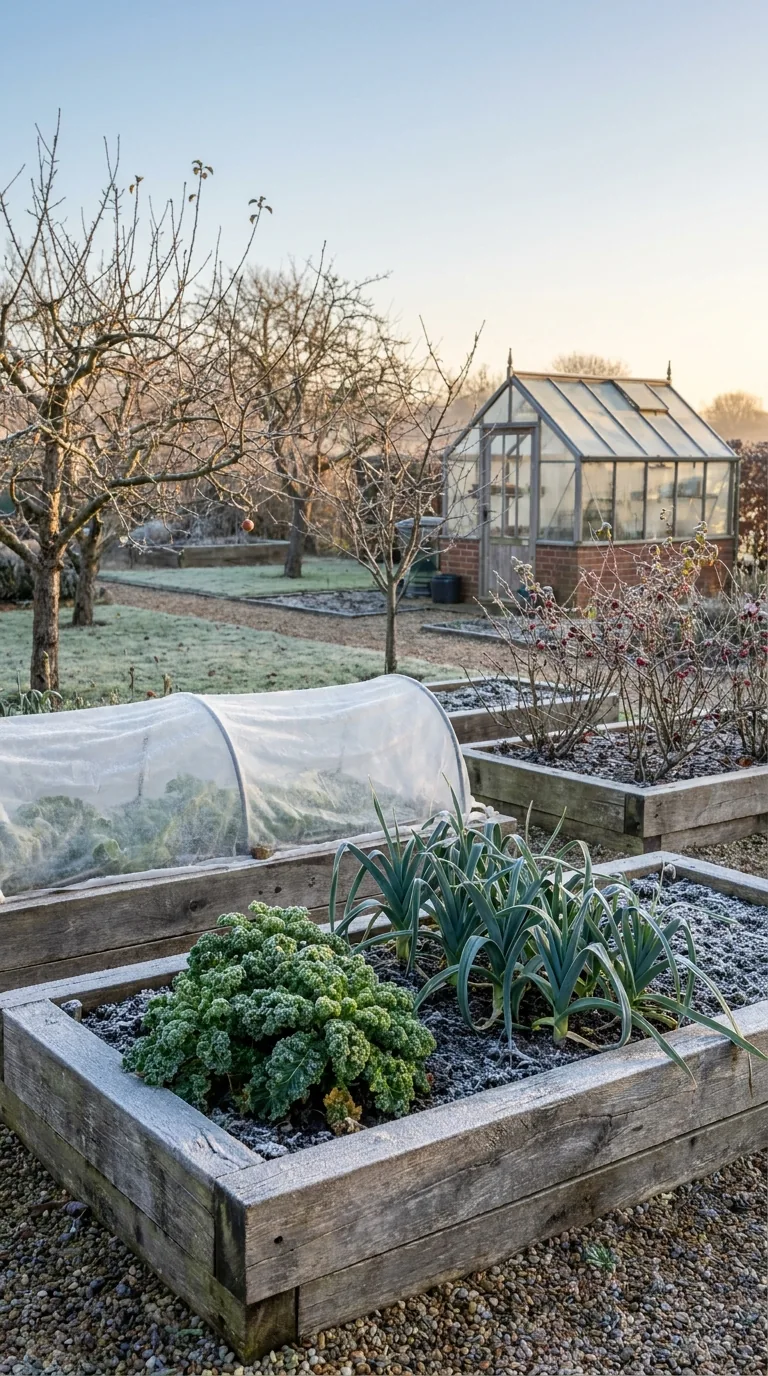
December gardening in the UK is about judgement more than a long sowing list. The shortest days restrict growth, and a heated windowsill cannot supply summer light by itself. Some dormant plants can be planted in suitable ground, and established winter crops still need attention, but many gardens are better served by protecting soil and planning next year's season. Choosing not to sow is often the most sensible December decision.
Work within the weather and the facilities you have. A frost-free greenhouse with good light offers different possibilities from an unheated plastic cover on an exposed allotment. Mild coastal weather may permit planting when an upland plot is frozen, yet mildness can arrive with waterlogged soil. Treat every proposed job as conditional on soil, plant stage and the coming forecast, rather than assuming that a calendar month makes it appropriate.
Understand why December growth is limited Temperature matters, but light is equally important. Seeds that germinate in a warm room may produce long weak stems when the available daylight cannot support compact growth. Increasing heat can make that imbalance worse. For many ordinary spring vegetables, waiting until days lengthen produces stronger seedlings with less effort and less demand for indoor space. Early germination is useful only when the plants can be grown well afterwards.
A winter crop outdoors may be surviving or providing previously formed leaves rather than rapidly replacing what is picked. Harvest with this in mind. Removing most leaves from a small plant can leave it with little capacity to recover until spring. Distinguish a plant's cold tolerance from its growth rate: a hardy vegetable does not necessarily make much new growth in December. A modest harvest from established plants is more realistic than continuous summer-style production.
Be selective about indoor sowing Do not sow tomatoes, courgettes or other fast-growing tender summer crops simply because seed packets have arrived. Without an appropriate heated and well-lit growing system, plants can become oversized or weak long before outdoor planting is possible. Check each variety's recommended sowing window. There are specialised winter sowing projects, but they need a clear purpose and suitable conditions rather than a generic promise of an earlier harvest.
For a small indoor growing activity, selected microgreens can be grown with appropriate light, clean equipment and seed sold for that purpose. They are a separate crop, harvested young, not a method of producing large outdoor transplants months early. Keep edible shoots clean and discard any mouldy batch. Do not assume all vegetable or ornamental seed is suitable for eating as seedlings. If conditions are poor or time is limited, organising spring seed stocks is the better project.
Plant dormant fruit when conditions allow Bare-root fruit plants may be planted during dormancy if the ground is neither frozen nor waterlogged. Check the plant's requirements for soil, room, pollination and support before choosing its final position. Do not create a hole in saturated clay and hope that fresh compost inside it will provide drainage. Wait for workable conditions, protect delivered roots from drying and follow the supplier's advice if planting must be postponed.
When planting, spread roots naturally, set the correct depth and keep a graft union clear of soil. Firm carefully and water as needed to settle soil around the roots. Stakes and ties should support the tree without rubbing or constricting it. Mulch can help protect the soil surface, but keep it away from the stem. Mark the plant's identity permanently and schedule aftercare, including checks after wind and watering through dry weather during the first growing season.
Treat garlic as a site-dependent possibility Some autumn-planting garlic can still be planted in early winter where variety and local conditions permit. Buy healthy planting material and check supplier guidance rather than using any bulb left in the kitchen. Many garlic varieties need a period of cold for normal bulb development, but waterlogged soil is not beneficial cold treatment. A sunny, freely draining bed matters more than meeting a traditional calendar saying.
If outdoor soil is unsuitable, cloves can be started in modules under cool protection for later planting. Use drainage holes, label the variety and keep compost lightly moist. Inspect occasionally for rot and roots filling the cells. This is not an invitation to grow garlic in a hot dim room. In gardens with persistent wet ground or a missed planting window, selecting an appropriate spring-planting variety is a sensible alternative. Avoid sacrificing sound planting stock to a bed that is clearly not ready.
Harvest winter vegetables carefully Leeks, suitable kale and winter brassicas may provide useful December harvests when they were established earlier in the year. Pick according to the crop, taking usable leaves or heads without unnecessarily damaging plants still expected to continue. Remove badly decaying material that holds moisture around stems. Check netting and supports while harvesting so routine visits also prevent avoidable wind or pigeon damage.
Some roots can remain in suitable soil until required, but frost may make lifting difficult. Before a prolonged freeze, consider lifting a manageable quantity for appropriate storage. Do not walk over frozen or saturated beds to save a few minutes. Use paths or temporary access that spreads your weight where suitable. If a plant is frozen solid, allow it to thaw naturally before handling fragile foliage. A slower visit is better than breaking leaves or compacting the soil around a crop meant to last.
Check stored produce with a plan Look through stored potatoes, apples, onions and squash regularly, using storage conditions suited to each crop. Remove decay promptly and keep damaged produce separate from sound long-term stores. A cool dark potato store is not the same as a dry airy onion store, while squash has its own temperature requirements. Avoid treating the shed as one universal storage environment simply because it is outside the house.
Label harvest batches and use varieties with shorter keeping quality first. Look for condensation, rodent activity and blocked ventilation as well as obvious rot. Do not store produce beside chemicals or fuels. A small inventory helps prevent edible food being forgotten behind newer batches. If the storage area becomes unsuitable during severe weather, move produce thoughtfully rather than placing everything into a warm room where deterioration may accelerate. Growing a crop successfully includes managing the harvest after it leaves the garden.
Protect pots without forgetting water Check containers under eaves, in porches and in greenhouses because rain may not reach them. Feel the compost below the surface and assess the pot's weight where practical. Water only as needed for the plant and allow drainage. Cool dormant plants may need little, while evergreen foliage can continue losing water, particularly in wind. Neither a daily routine nor a complete winter watering ban accounts for these differences.
Group suitable hardy pots in shelter and protect vulnerable container walls if needed. Keep drainage holes free and remove saucers that collect rain outdoors. Roots in a small exposed pot can experience more severe conditions than roots of the same plant in open ground. A label saying hardy does not make every pot and position equally safe. Inspect insulation after storms and avoid wrapping foliage in airtight plastic that traps persistent condensation against leaves.
Monitor protected growing spaces An unheated greenhouse or cold frame may still experience freezing temperatures. Check a minimum thermometer and do not assume that transparent walls guarantee frost freedom. Place tender plants according to their actual minimum temperature and light needs. Where heat is used, follow equipment instructions and consider running costs and ventilation. Electrical equipment must be suitable for the damp environment in which it is installed.
Ventilate during appropriate mild daytime conditions to reduce persistent humidity, then close protection before temperatures drop. Clear fallen leaves from vents and keep pots spaced enough for inspection. Inspect for aphids, slugs and rot rather than relying on cold weather to solve all pest problems. Clean up dead foliage without stripping healthy plants. If a cold frame is difficult to reach in bad weather, move essential monitoring equipment or valuable plants to a more accessible arrangement before conditions deteriorate.
Keep soil and access in good condition Covering suitable empty beds with mature organic matter protects the surface and adds material that soil organisms can incorporate gradually. Weed first and avoid burying existing plant crowns. On a plot that is already saturated, postponing bulk delivery and spreading may prevent more damage than a rushed winter tidy. Keep heavy equipment and repeated foot traffic off growing areas whenever possible.
Review where paths become slippery or muddy. A clear route to winter crops is a practical part of garden planning, especially when visits happen in limited daylight. Avoid covering drains or creating channels that divert water onto neighbouring properties. Persistent standing water, erosion or a suspected high water table needs diagnosis. A layer of compost can improve soil over time, but it is not a guaranteed solution to every drainage problem. Note what happens during winter rain before redesigning beds in spring.
Maintain tools in small batches Clean soil from hand tools, dry them and inspect handles, blades and joints. Sharpen suitable cutting tools using the correct method and protect edges during storage. A damaged handle or loose blade should be repaired or replaced before the busy season. Follow the manufacturer's instructions for powered equipment and disconnect power before maintenance. Store fuel, chemicals and batteries according to their specific requirements and away from food crops.
Sort labels, pots and supports without trying to clean the entire shed in one afternoon. Reuse sound equipment after appropriate cleaning, and recycle damaged items through suitable local facilities where possible. Keep seed trays together and check that propagation equipment actually works before the sowing season. A small box containing labels, a pencil, sowing tools and clean pots can remove much of the friction from spring jobs. Organisation is valuable when it makes the next action easier, not when it becomes an endless task itself.
Plan crops around the space they will occupy Draw a simple outline of beds and containers, marking sun, shade, access and any drainage limitations noticed during winter. Choose crops the household will use and allow for their mature size. A courgette, a row of climbing beans and a few lettuce plants make very different demands on space and support. Seed packets usually contain more plants than a small garden needs, so quantity should follow the plan rather than the packet size.
Include sowing, transplanting and harvest stages separately. Winter leeks for next December must appear in the earlier part of the plan, not just beside a winter harvest heading. Leave some room for successive sowings and for replacing failed plants. Consider where seedlings will live before the bed is free. A realistic plan can include fewer crops, bought young plants for difficult stages and a deliberately empty period for soil cover or maintenance.
Choose a no-sow project with a clear result
If December conditions rule out planting, select a small project that will be useful in spring. Sort one crop category, checking packet dates and storage condition, then make a short replacement list. Alternatively, measure a bed and mark the actual spacing for two intended crops on a sketch. These jobs produce a decision or prepared resource, rather than simply browsing more varieties.
Check that the plan includes the less visible stages: where trays will sit after germination, how many plants need potting on and which containers will hold them. A packet of seed occupies little space; its growing plants may occupy every bright window. Reducing the order now can prevent weak crowded seedlings later.
Set aside a small set of sound pots and labels for the first planned sowing. Clean and dry them, then keep them together. Leave the remaining equipment until another session. Completing one useful preparation is a realistic December outcome, especially when daylight, frozen ground or persistent rain limits outdoor work.
Build a useful winter record Write down varieties that performed well, sowings that were late and crops that were harvested but not eaten. Separate failure caused by weather from problems caused by crowding, insufficient light or missed watering. This makes next year's adjustments specific. Buying a different variety will not solve a pot that repeatedly dries out, while changing watering alone may not rescue a crop unsuited to deep shade.
Use frost information for planning, with the understanding that an average date cannot guarantee safe planting. The UK last-frost guide explains how climate records, local conditions and forecasts fit together. In a cold December garden, the best outcome may be no new sowing, sound stored produce and a workable spring plan. Protect established plants, finish a few manageable jobs and leave the soil undamaged for the season ahead.

