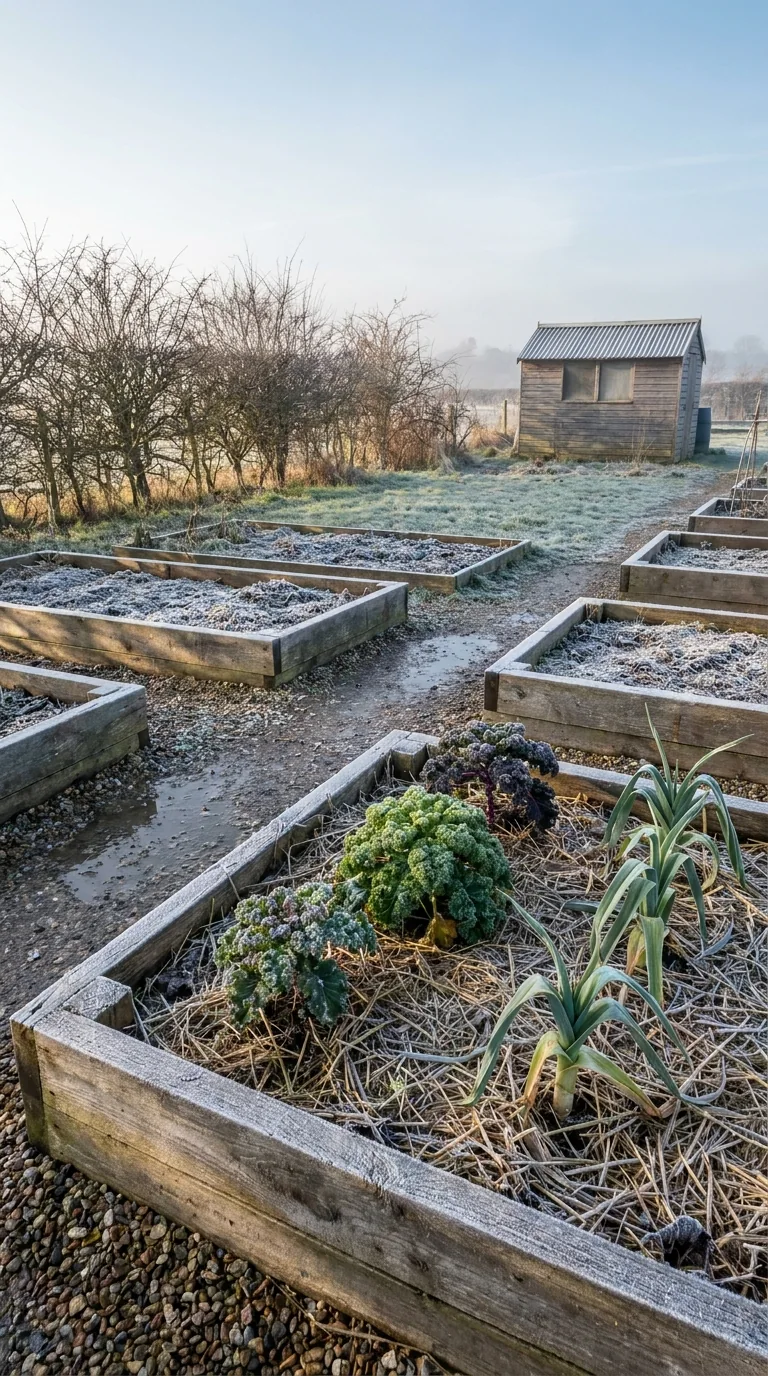
January planting in the UK is mostly a question of choosing what you can support through the rest of winter. A packet may allow an early sowing, but the resulting seedlings still need light, space and suitable temperatures for many weeks. Most outdoor beds are better left undisturbed when wet or frozen. A useful January garden can therefore contain very few newly sown seeds, alongside well protected winter crops and a clear plan for spring.
This guide separates modest protected starts from outdoor planting and preparation. A sheltered coastal garden, a shaded northern allotment and an exposed inland balcony will need different decisions. Work from the conditions in your own growing space rather than treating the first month of the year as a national planting deadline. Strong plants raised a little later often catch up with weak seedlings started before suitable conditions were available.
Start with an honest check of your growing space
Look first at light. A bright windowsill may suit a small pot of short-lived greens, but a centrally heated room with little daylight encourages stretched seedlings. Check how many hours the window is genuinely bright, whether curtains trap cold air against the glass, and whether pots stand directly above a radiator. A warm germination spot is useful only if you also have somewhere appropriate to grow the plants after emergence.
An unheated greenhouse or cold frame provides shelter from heavy rain and wind. It does not guarantee frost-free conditions. Place a maximum and minimum thermometer inside and read it regularly, particularly after clear nights. A sunny afternoon can make the structure feel springlike while the following night remains bitterly cold. Record that range before deciding whether the space can hold hardy seedlings or needs to remain a storage and preparation area.
Inspect seed trays, pots and drainage holes before filling anything. Wash away old compost and allow containers to drain. Use fresh, suitable peat-free seed compost rather than dense garden soil for small indoor sowings. Label each container with the crop, variety and actual sowing date. Those details become valuable if germination is slow, because you can compare the packet's instructions with the conditions you have provided instead of guessing.
What can reasonably be started under cover?
Broad beans are an option in mild districts when a suitable hardy variety is sown in pots and kept in a cold frame or unheated greenhouse. Give each seed enough root space and avoid leaving the compost saturated. The object is to produce compact plants for later planting, not rapid soft growth. Where prolonged hard frost is likely, delaying until conditions improve is a sensible choice rather than a lost opportunity.
Onions raised from seed can be started with controlled warmth where the variety and packet instructions support January sowing. Sow sparingly, because crowded seedlings are awkward to manage and weak plants are easily damaged during separation. Once seeds germinate, provide the brightest suitable conditions available. You will need space for them as they grow. If that space is missing, later onion sets can be a much simpler route for a beginner.
Small protected sowings of suitable lettuce, spinach, salad onions or summer brassicas may be possible with adequate light and appropriate temperature control. Choose varieties described for the intended season. Do not assume every lettuce or cabbage packet has the same requirements. Start a trial pot rather than a full tray. A handful of healthy seedlings tells you much more about your setup than several hundred seeds competing for inadequate winter light.
Microgreens offer a different kind of January project because you harvest them young rather than carrying large plants through winter. Use seed intended for edible sprouting or microgreen production and clean containers with drainage. Keep the medium evenly moist, provide light after germination and follow food hygiene instructions. Discard anything mouldy or foul smelling. Do not use chemically treated garden seed for edible shoots, and check the species is suitable before eating it.
What to postpone, even if seed catalogues are tempting
Outdoor tomatoes, courgettes, squash and runner beans generally gain little from being started this early in an ordinary home. They grow into large plants before outdoor conditions are suitable, making light, potting and temperature management increasingly difficult. Specialist heated growing systems can change that calculation, but they are not the default. Make a note of the crop's eventual planting conditions first, then work backwards to a realistic sowing window for your equipment.
Likewise, scattering carrots or parsnips into cold wet ground is not an efficient way to get ahead. Slow emergence leaves seeds exposed to decay and seedlings vulnerable to competition. Check packets, local conditions and soil readiness before considering outdoor sowing later. January preparation can make a bigger difference than January seed. Removing weeds on a dry day and planning access to the bed may save far more work when spring finally arrives.
Outdoor planting when the ground allows
Dormant bare-root fruit trees and bushes can be planted while the soil is workable, provided it is neither frozen nor waterlogged. Unwrap delivered plants promptly and check the roots remain protected from drying. If the permanent site is unsuitable, use an appropriate temporary holding method rather than forcing roots into a flooded hole. Planting instructions for the particular fruit and rootstock take precedence over a generic calendar, especially for depth, supports and spacing.
Prepare the site across a useful rooting area, remove persistent weeds carefully and confirm the plant will have enough room at maturity. Water after planting when needed to settle soil around the roots, but do not create a permanent sump. Keep mulch away from direct contact with the trunk or stems. Secure any required support and inspect ties so they hold the plant without rubbing or constricting it as growth begins.
Container-grown hardy plants can sometimes be planted during a mild spell, but the same soil restrictions apply. Buying a plant does not make the bed ready. In exposed gardens a pot may also need shelter while waiting. Stand it where drainage is free and check moisture occasionally, because winter rain may miss a container beneath eaves. A plant can become dry in a sheltered corner while the rest of the garden appears thoroughly wet.
Protect soil without trapping trouble
Walk around beds rather than across them whenever possible. Wet soil compressed by repeated footsteps loses useful pore space, and repairing that damage can take much longer than postponing a job. If access is essential, distribute your weight from a board placed safely on firm supports. Do not cultivate soil that smears into a sticky ribbon or clings heavily to boots. Wait until it crumbles more naturally before attempting a fine seedbed.
A surface layer of well-rotted organic matter can protect vacant ground and support soil life, provided it suits the planned crop and site. Keep records of what you added. A rich fresh application is not automatically right for every future crop, and material containing persistent weeds creates new problems. Remove obvious rubbish first. Leave enough access to observe drainage, because covering a bed does not correct a blocked outlet or an underlying waterlogging problem.
Cloches and covers can shelter a small area intended for early sowing later, but secure them properly against wind and check underneath. Warm sheltered spaces can also shelter slugs. Lift or ventilate covers when conditions require it, and avoid pressing non-breathable material tightly over living plants. Protection needs inspection rather than abandonment. A cover that blows loose, floods at the edges or overheats in sunshine can undo the benefit of installing it.
Care for crops already in the garden
Winter vegetables deserve attention before new sowings. Remove badly deteriorating leaves where appropriate, keep brassica protection taut and check that wildlife cannot become trapped in loose netting. Firm supports on tall Brussels sprout plants if wind has loosened them. Harvest what is ready without trampling neighbouring beds. Make a short route through the plot so regular winter picking does not gradually compact the entire growing area during weeks of rain.
Check stored onions, potatoes and fruit separately, using suitable storage conditions for each crop. Remove rotting items promptly and investigate whether damp, damage or poor ventilation is involved. Do not treat every blemish as harmless or attempt to rescue food that has become unsafe. Keep seed potatoes distinct from potatoes intended for eating. Order certified seed stock from a reputable supplier and plan a cool, bright, frost-free place for chitting early varieties later.
Useful January jobs beyond sowing
Draw a simple bed plan with north, permanent shade and water access marked. List the crops you actually want to eat, then assign realistic space to them. A small productive patch is easier to maintain than a large assortment of plants squeezed together. Consider previous crop families and known disease problems when arranging rotations. In a tiny garden, focus on soil care, crop health and sensible variety choice rather than chasing an impossible perfect rotation.
Check tools before the busy season. Tighten loose handles, clean soil from blades and store sharp tools safely. Look at watering cans and hoses for leaks, and clear gutters feeding water butts where this can be done safely from ground level. Clean greenhouse glazing carefully to improve incoming light. These practical jobs improve growing conditions without requiring heat, early seed or a large budget, and most can be divided into short manageable sessions.
Adjust the plan to your location
In a mild sheltered southern or western garden, a small trial of protected hardy crops may be reasonable. In a frost pocket or at altitude, January may be almost entirely about maintaining existing plants and preparing equipment. Urban warmth can help but is uneven: a sunny courtyard wall and a shaded passage in the same property behave differently. Compare actual temperatures and soil conditions instead of relying solely on your postcode or county.
For balcony gardeners, wind and container drainage are particularly important. Raise suitable pots on stable feet if drainage is obstructed, and keep them away from unsafe edges. Grouping pots may offer some shelter, but it does not turn tender plants hardy. Check building rules and weight limits before adding large wet containers. A shallow tray of greens indoors and a well-organised seed collection can be a perfectly useful January project in limited space.
A practical small-garden example
Suppose you have two raised beds, a cold frame and a bright kitchen window. Leave the wet bed alone, check the winter brassicas in the other and clean the frame. Sow one small pot of a suitable hardy broad bean only if the frame's recorded temperatures support it. Use the kitchen window for a modest microgreen crop. Keep the remaining seed packets dry and labelled rather than trying to fill every available surface with trays.
At the end of each week, record what changed: minimum temperature, compost moisture, seed emergence and any pest damage. If seedlings become pale and stretched, improve light or reconsider the sowing schedule rather than adding more fertiliser. If the ground remains saturated, change the next job to planning or cleaning. This flexible approach turns observation into a decision, which is much more useful than completing an outdoor checklist regardless of conditions.
Looking ahead without rushing
Before buying more seed, check how many seedlings your protected space can comfortably hold in another month. Allow room for potting on and for existing winter plants. Make a separate list of crops you will sow later in warm soil. The next stage is covered in the February sowing and preparation guide, which helps distinguish useful early starts from jobs that still need to wait.
January success is measured by readiness and plant health, not by the number of trays filled. Keep roots protected, soil uncompacted and expectations suited to daylight. A small, well-timed start leaves you with options when the weather changes. If you finish the month with clean equipment, viable seed, a workable bed plan and healthy existing crops, you have made meaningful progress even if most packets remain unopened.
Keep seed storage dry and organised
Check opened packets before returning them to storage. Fold them securely, keep the variety information attached and store them somewhere cool and dry rather than beside a warm damp greenhouse bench. Separate seed intended for food production from any treated seed and keep everything away from children and pets. List the packets you already own before ordering replacements. This simple inventory prevents duplicate purchases and makes it easier to use suitable viable seed at the correct later sowing time.

