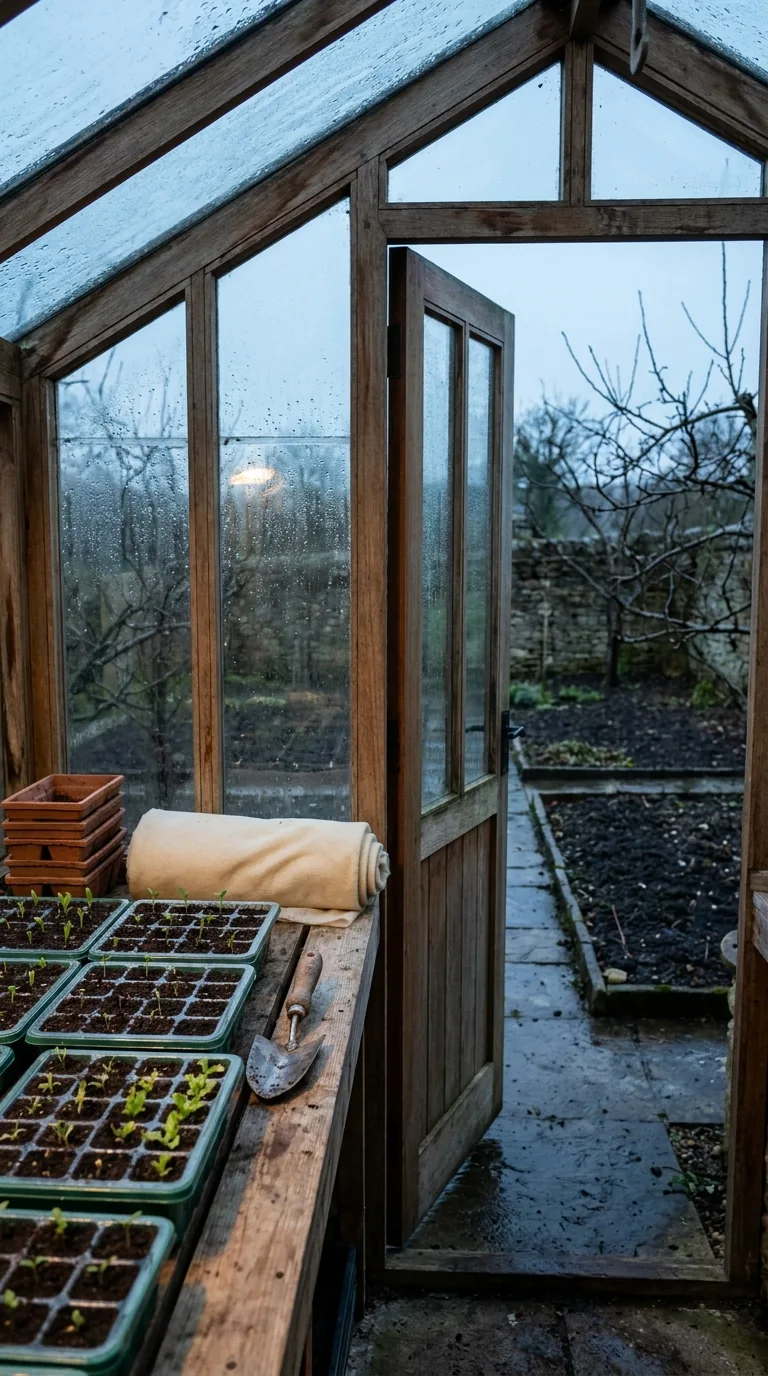
February can feel like the beginning of the growing season without yet providing the conditions that young plants need. Days lengthen, seed potatoes arrive and sunny greenhouse afternoons encourage ambitious plans. Yet cold nights, sodden soil and limited indoor light still restrict planting across much of the UK. The most useful February approach is selective: start crops you can accommodate properly, prepare ground only when workable and leave a clear route for later sowings.
This guide distinguishes heated propagation, unheated protection and genuinely suitable outdoor conditions. Those are three different environments, not interchangeable versions of the same garden. A crop that germinates indoors may still need warmth afterwards. A cold frame can shelter hardy seedlings while remaining freezing at night. Outdoor sowing in a mild sandy garden does not establish a safe national starting date for a wet clay allotment or an exposed northern site.
Make a February sowing matrix
| Growing environment | Possible activity | Important condition |
|---|---|---|
| Warm propagation with good follow-on light | Selected greenhouse tomatoes, chillies or aubergines | Check variety instructions and space after germination |
| Unheated greenhouse or cold frame | Protected hardy peas and broad beans | Compost must drain; severe frost still matters |
| Mild site with light workable soil | Small trial sowings of suitable hardy vegetables | Wait if soil is cold, frozen or waterlogged |
| Heavy wet soil or exposed site | Preparation, crop planning and later starts | Do not cultivate merely to meet a calendar date |
Use this matrix to decide what fits your resources. It is not a shopping list that needs to be completed. One successful tray with appropriate conditions has more value than ten trays that cannot be kept healthy. Before sowing, identify the eventual planting position, the potting space needed between now and then, and who will water or ventilate the plants if you are away for several days.
Early sowing with warmth and adequate light
From around the middle of February, some gardeners start tomatoes, chillies, cucumbers and aubergines intended for greenhouse growing. This assumes appropriate propagation conditions and a suitable protected growing season afterwards. Check the packet because varieties differ. Outdoor tomatoes usually do not need the same early start. Cucumbers also develop quickly once established, so starting them early without enough warm space can create a problem long before planting time.
Sow in clean containers of suitable peat-free seed compost and follow the recommended depth. Moisture should be consistent rather than excessive. A covered propagator reduces water loss, but stagnant wet conditions are unhelpful once seedlings appear. Check daily and follow the crop's temperature requirements. Heating a tray on a dark shelf may germinate seeds, but it does not provide the light needed to build compact, sturdy plants afterwards.
Give each crop a simple space budget. For example, four greenhouse tomato plants may require more than four seeds initially, but they do not justify a whole packet if you have no way to use the surplus. Label varieties separately. If you want to compare two varieties, keep the sowing date and conditions similar so the comparison is meaningful. Record disappointments honestly instead of assuming every failure comes from poor seed.
Onion seedlings started earlier may now need careful thinning, more light or protection from overwatering. Check existing plants before sowing a new batch. Pale stretched growth usually calls for a review of conditions, not an automatic feed. Let the compost guide watering rather than following a fixed daily routine. Warm rooms, cool windows and different pot sizes all affect drying rates, even when the seedlings share the same windowsill.
Hardy crops in an unheated greenhouse
Peas can be started under cover in suitable pots, modules or clean sections of guttering with drainage holes. Choose a manageable container that you can move without spilling the contents. The aim is to transfer a coherent row or individual root systems later, without excessive disturbance. Protect seeds from mice where they are a problem, while ensuring any barrier remains safe and allows light and ventilation as the shoots emerge.
Broad beans started in pots are another practical option where conditions suit the variety. Avoid crowding them into shallow trays. Check beneath pots as roots develop so plants do not become stuck to the bench or neglected in an undersized container. Keep growth compact and prepare the destination bed before transplanting becomes urgent. If outdoor conditions deteriorate, having spare potting space gives you more flexibility than a tray already packed beyond capacity.
A cold frame needs active management. Open or vent it on mild bright days and close it appropriately before temperatures fall. Secure lids against wind and make sure supports cannot collapse onto plants. Do not leave a frame wide open during a sudden cold spell just because it was comfortable at lunchtime. Equally, do not leave it sealed through several sunny afternoons. A thermometer makes these changes visible instead of relying on touch alone.
Outdoor sowing: an opportunity for some gardens
In mild parts of the UK with light, workable soil, small February sowings of appropriate hardy vegetables may be possible. Potential crops include broad beans, salad onions, spinach, radish and suitable early salads. Treat the packet's outdoor window as a starting point and assess the bed itself. Slow cold germination is not necessarily an advantage over sowing the same crop a few weeks later into noticeably better conditions.
Choose a short trial row rather than committing the whole growing area. Mark both ends and write down the sowing date. Protect it if the crop and conditions warrant protection, then inspect regularly for drying, slugs and disturbed seed. Keep some seed for a later comparison. If emergence is poor, you will have lost a small area and gained information instead of having to restart an entire bed at once.
Garlic and shallots may be planted on suitable light soils, but cold heavy ground often needs more time. Use varieties intended for the planting season and follow spacing guidance. If drainage is doubtful, review the site rather than pushing cloves into sticky ground. Modules can sometimes hold suitable planting material temporarily, provided they drain and the plants are moved on promptly. Avoid assuming every supermarket bulb is appropriate planting stock for your conditions.
Prepare beds without damaging their structure
Pick up a little soil from the intended sowing depth. If it smears heavily, holds excess water or comes away in sticky lumps, wait before cultivating. A dry crust can hide a saturated layer beneath, so do not judge only by the surface. Work from established paths and remove weeds carefully when access is possible. The aim is a usable growing surface, not a freshly dug appearance achieved at the expense of structure.
Review drainage before adding amendments. A low bed receiving runoff from a paved area needs a different response from naturally slow-draining clay on level ground. Avoid directing water onto neighbouring property or making unplanned excavations. Organic matter can improve soil over time, but it does not instantly solve every drainage problem. Keep a note of where water stands after rain so later bed design and crop choices respond to evidence.
Use soil testing when there is a concrete question, particularly if you are new to the plot or considering lime. Different crops have different needs, and a blind annual application can create an unsuitable pH. Follow product instructions and separate any incompatible treatments. For a first season, modest additions of well-rotted organic matter and attentive crop observation are often more useful than applying several fertilisers without understanding what is already present.
Chit potatoes and plan their planting space
Place seed potatoes for early crops in a cool, bright, frost-free position, with the end bearing most eyes uppermost. Egg boxes can keep them upright. Check regularly for decay and avoid warm dark storage that produces long fragile shoots. Chitting is particularly useful for early varieties, but it is not a reason to plant into unsuitable ground. The eventual soil and frost outlook still determine when tubers should go outside.
Calculate the area before deciding how many tubers to keep. Potatoes need room for foliage, access and harvest, and container crops require substantial compost and reliable watering. A small family does not necessarily need several large bags of seed potatoes. If using containers, make sure drainage is adequate and the location is stable. Large wet containers become heavy, which matters on balconies, raised platforms and surfaces that must remain accessible.
Fruit, flowers and the rest of the garden
Continue planting dormant bare-root fruit only where the ground is suitable. Check stakes, ties and guards on existing young trees. Winter pruning applies to particular fruits and forms, so identify the plant before cutting. Apples and pears have different pruning considerations from stone fruit, and summer-fruiting raspberries differ from autumn-fruiting types. If identification is uncertain, leave the secateurs aside until you have reliable crop-specific guidance rather than treating every woody plant alike.
Protect vulnerable fruit blossom during cold nights where practical, while restoring access for pollinating insects during the day. Covers should be supported safely and removed when unnecessary. In ornamental beds, check emerging shoots and avoid trampling them during tidying. Existing seed heads and stems may still provide wildlife shelter. Clear only what the next job requires, keeping paths safe without turning the entire garden into bare ground before active growth returns.
Two realistic February plans
For a sheltered garden with a greenhouse, a sensible weekend might include sowing a few peas under cover, starting a measured number of greenhouse tomatoes with warmth, and setting early potatoes to chit. Spend the remaining time cleaning glazing and checking vents. Keep tender seedlings out of the unheated greenhouse overnight until it genuinely suits their requirements. The presence of glass alone does not make it an extension of a warm indoor room.
For a wet allotment without protected growing space, the best plan may involve no new seed this week. Check winter crops from paths, collect suitable containers, order a short list of varieties and identify the first bed likely to become workable. Put a thermometer and labels with the seed kit. That preparation supports a prompt March start and avoids creating weak indoor plants that have nowhere suitable to go when they outgrow the windowsill.
Common problems to catch early
If compost stays wet for days, review drainage, temperature and the amount of water being applied. Small seedlings cannot use the same volume as established plants. If seedlings lean strongly towards the window or develop long thin stems, increase suitable light and reassess temperature. If the greenhouse becomes warm by day but freezes at night, separate hardy and tender plants. Each symptom points to a growing condition that needs attention, rather than a general need for more seed.
Do not repeatedly disturb a tray to see whether seeds are germinating. Check expected emergence times and conditions first. Keep a spare packet or reserve seed for a later sowing, but avoid making three replacement sowings before the original has had a fair chance. Your records should help you decide when to wait, when to adjust care and when to restart. Clear labels are especially valuable when several similar-looking trays occupy the same shelf.
Get ready for the busier month ahead
By late February, prepare labels, supports and a simple bed sequence for hardy spring crops. Check what will be harvested before the next planting and leave room to reach it. Arrange spare protection where it can be deployed quickly instead of buried beneath equipment. The March planting guide builds on these preparations with outdoor sowing decisions based on warming soil and local weather.
Keep the final week's list flexible. A mild spell may allow a short outdoor row; a cold wet spell may require another week of indoor preparation. Neither outcome means you have fallen behind. February's main achievement is matching each early start to the light, warmth and space it will actually receive. That leaves you with manageable plants, usable beds and enough capacity to respond when the wider growing season begins.
Reserve space for the next pot size
Place a few empty larger pots beside your seed trays to see how much room the seedlings will eventually occupy. A single propagation tray can produce far more plants than its windowsill can hold after potting on. Decide the number you will keep before roots become crowded. If you intend to share surplus plants, arrange that while they are still healthy. Space planning now prevents an avoidable bottleneck when daylight improves and several trays need attention together.

