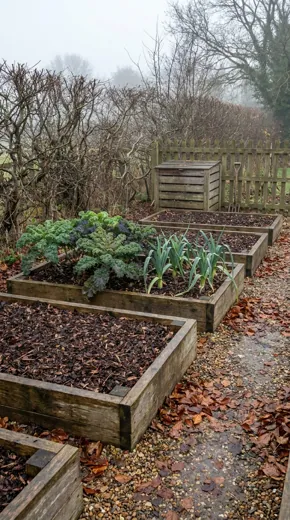
October planting in the UK is selective. Garlic and certain overwintering crops can make good use of autumn soil, but shorter days mean the garden is no longer behaving like a summer growing space. A mild spell can encourage activity without providing enough light for a late sowing to become a substantial winter crop. Start with suitable varieties, workable ground and a clear reason for using each bed.
Much of the most valuable October work is preparation rather than planting. Improving access, keeping leaves out of drains, protecting tender pots and covering empty soil all support future harvests. A garden in a wet western valley may need a different plan from one on a sheltered, freely draining eastern slope. The month supplies a starting point; the condition of your soil and the next weather spell supply the decision.
Decide whether the ground is ready Lift a small handful of soil from the intended planting area. If it smears into a sticky ribbon and water glistens in the planting hole, delay the job. Working saturated soil can damage its structure and make later planting harder. A surface that appears dry may conceal wet soil below. Keep to paths and reach into beds rather than standing in the growing area whenever possible.
Do not plant into frozen ground or simply bury cloves between hard clods. On heavy plots, consider starting suitable crops in modules under cool protection while conditions improve. Raised beds may improve the rooting environment, but they still need an outlet for water and enough depth. Adding a small amount of grit to an entire clay garden is not a reliable instant solution. Record where water sits after rain so that drainage problems can be addressed deliberately.
Plant garlic suited to autumn conditions Choose healthy planting garlic from a reputable supplier and check whether the variety is intended for autumn planting. Many garlic varieties benefit from a cold period for bulb formation, but not every type has the same planting requirements. Separate bulbs into individual cloves shortly before use, retaining the papery covering. Reject soft, mouldy or damaged cloves rather than placing doubtful material into clean soil.
For ordinary garlic in prepared ground, a useful RHS spacing is about 15cm between cloves and 30cm between rows, with the pointed tip around 2.5cm below the surface. Follow variety-specific instructions where they differ. Plant with the flat base down and the pointed end up, then firm gently. Label the row clearly because shoots may not appear immediately. Avoid heavy watering of already moist autumn soil, and check that birds have not disturbed newly planted cloves.
Use modules when winter wet is the main problem Starting garlic in modules is useful where the outdoor bed is too wet. Use cells large enough to develop roots before spring planting, with drainage holes and suitable peat-free compost. Place one healthy clove in each cell and keep the tray in a cold frame or similarly sheltered, cool position. The purpose is controlled establishment, not producing lush foliage on a warm indoor windowsill.
Keep the compost moist enough for rooting but never continually saturated. Water only after checking beneath the surface and allow the tray to drain. Watch for roots filling cells, because prolonged confinement creates another problem. Plant out when the ground becomes workable and plants can be moved without damaging the rootballs. Write the variety and starting date on a durable label. If the tray becomes crowded early, pot on selectively rather than leaving roots compressed for months.
Treat broad beans as a conditional option Autumn-sown broad beans are most dependable in suitable mild, well-drained situations. Choose a variety specifically recommended for overwintering and sow at the depth and spacing stated on its packet. Seed in cold saturated soil may rot before it establishes. In a colder garden, starting a modest number under unheated protection or waiting until late winter or spring can be more practical than losing a full bed.
Young plants may need protection from birds, mice and harsh weather. Secure covers so they do not repeatedly rub the stems, and inspect rather than leaving a cloche closed indefinitely. Autumn sowing does not guarantee an earlier or larger harvest than a spring sowing. It is a way of spreading workload and exploring the local season. Keep a note of survival and eventual yield so that future decisions reflect your garden rather than a general promise.
Finish planting appropriate established vegetables Spring cabbage plants raised earlier can be planted out while the soil is suitable. They are not equivalent to a fresh October sowing of a slow-growing cabbage. Set plants at their recommended spacing, firm the root area and water if it is dry. Protect from pigeons with well-secured, taut netting that is checked for wildlife safety and adjusted as the plants grow.
Autumn onion sets may still be planted where their recommended window and the ground allow it. Distinguish autumn-planting sets from spring varieties and avoid using deteriorated leftovers just because a bed is empty. October peas are a specialist choice for mild areas and appropriate overwintering varieties; they are not a general recommendation for all UK gardens. If the packet, drainage or exposure does not support the plan, leave the space protected for spring instead.
Sow green manure only with an exit plan A suitable autumn green manure can cover empty ground and capture nutrients. Winter field beans or grazing rye are examples used at this time, but selection depends on the available sowing window, soil and following crop. Check the packet carefully. Seed scattered onto compacted ground or buried under thick wet leaves is unlikely to provide an even cover, regardless of the crop's theoretical hardiness.
Before sowing, decide how and when the cover will be terminated. Vigorous rye can become difficult to manage if left too long. A no-dig bed still needs a realistic method to remove or suppress the growth before the next vegetable is planted. Allow time for residues to break down where incorporation is planned. If the bed is needed very early next spring, mature compost as a surface cover may be simpler than another living crop.
Manage fallen leaves by location Leaves are useful material, but their best destination depends on where they land. Remove slippery accumulations from steps and paths. Clear gutters and drainage channels safely, and keep leaves off small seedlings whose light and airflow they block. On open soil beneath suitable established shrubs, some leaves can remain as a natural surface cover. There is no reason to treat the entire garden as a surface that must be swept clean.
Make leafmould by gathering suitable fallen leaves into a ventilated enclosure or perforated bags and allowing them to decay. Moisture helps decomposition, but a waterlogged, tightly packed mass is difficult to handle. Label the collection year and expect a slow process rather than immediate seed compost. Woody twigs and litter can be removed during collection. Keep material that is known to carry a specific persistent disease separate until appropriate disposal advice has been checked.
Cover cleared soil thoughtfully Remove weeds before applying a mature organic mulch. Spread it over moist soil, keeping it away from plant stems and crowns. A layer around 5cm can be useful on suitable beds, although the right material and depth depend on the plants and purpose. Do not cover low-growing seedlings or bury the base of a woody plant. Leave a clear space around trunks so moisture is not held continuously against bark.
Mulch protects the surface and adds organic matter over time. It is not a substitute for investigating persistent standing water or correcting a blocked drainage outlet. Avoid repeated unnecessary digging of wet soil. For a new bed, map its edges and access first, because a carefully placed path can prevent months of accidental compaction. Calculate the amount of material needed before ordering; a modest bed can require more bulk than a few small bags suggest.
Protect crops already worth harvesting Pick remaining ripe tomatoes and other tender fruits before frost damages them. Keep sound and damaged produce separate. Mature squash for storage needs sound skin and suitable curing and storage conditions; frost-damaged fruit should not be stored as though it were intact. Check apples and potatoes periodically and remove decay promptly. A store is only useful when its contents remain accessible enough to inspect.
Brassicas, leeks and some other established winter crops may remain outdoors, but they still need care. Firm wind-rocked plants gently, support tall stems where appropriate and remove badly decaying leaves without stripping healthy growth unnecessarily. Identify the crop and variety before assuming that all members of a plant family tolerate the same weather. Keep harvest paths usable and plan ahead if frozen ground could prevent access to roots needed for meals.
Bring tender pots under suitable cover Move frost-sensitive container plants before a damaging cold night is forecast. Check leaves and pot rims for pests before placing them beside indoor plants. Choose a location that suits the plant's winter light and temperature requirements: a dark shed is not appropriate for every leafy tender perennial, and a warm living room may produce weak growth in plants better kept cool and frost-free.
An unheated greenhouse is shelter, not guaranteed frost freedom. Monitor its temperature and allow enough space for air circulation. Reduce watering according to growth and compost moisture rather than stopping by the calendar. Pots against a wall may receive little rain yet remain vulnerable to cold roots. Raise containers on suitable feet where needed to maintain drainage, and make sure their position does not block a doorway or create a trip hazard during dark evenings.
Use weather information at the right scale A seasonal average tells you what has often happened, while a forecast estimates the coming weather. Neither gives an exact minimum temperature for every leaf in a garden. Frost pockets, clear skies and the distance from the coast can make a local plot colder than a nearby town forecast suggests. Follow overnight minima, wind and cloud changes, and prepare covers before temperatures fall.
Do not respond to every chilly night by sealing everything permanently. Mild October sunshine can heat a cold frame rapidly. Ventilate during suitable daytime conditions and close it in time when colder weather returns. Inspect covers after strong wind and heavy rain. In exposed gardens, drainage and secure structures can matter as much as the insulating material itself. Keep a basic garden log of conditions, protection used and visible effects to improve future decisions.
Choose one autumn project that fits your facilities
A beginner with one patio container could plant a modest quantity of suitable garlic in a sufficiently large, freely draining pot and keep it in a sunny position. Check the variety's spacing rather than packing every clove tightly. The same gardener may sensibly leave broad beans until spring because there is no secure protection or spare growing space. Success comes from matching the project to the facilities, not assembling the longest possible planting list.
On a heavy allotment, a different October project might be starting garlic in modules while applying mature compost to a cleared bed when conditions allow. Record the bed's drainage through winter and keep the garlic tray somewhere cool, bright and easy to inspect. Plan how the plants will move outdoors later, including whether there is enough room for rootballs and mature spacing.
For either setting, write down the decision and its reason. Notes such as soil saturated after three wet days or container remained dry beneath the porch are more useful than October planting failed. They identify something that can change. Revisit the notes before next autumn's purchases, because the same crop may work well with a different method, while another may remain an unsuitable choice for that site.
Make October manageable A practical weekend can contain only three priorities: harvest vulnerable produce, plant one suitable garlic row and collect leaves from paths. The remaining work can follow in stages. Keep a list separated into jobs that depend on dry ground and jobs that can be done under cover. That prevents good intentions from turning a wet afternoon into damage to the soil.
Prepare labels, clean trays and check seed stocks while rain prevents outdoor work. Review how much growing space you genuinely have before ordering next year's varieties. If a bed is too cold or wet to plant, protecting it is a completed task. The November planting guide continues the transition towards limited planting, container protection and winter crop checks. Good October gardening leaves plants secure, soil covered where practical and the next stage clearly planned.